As anyone who
followed this blog for many years, you can easily guess that Stanley Kubrick is my favorite movie
director, it is also a given that The
Shining is my
favorite film from his filmography (note : as favorite I don’t say that it
is his greatest film, the answer to that topic might be 2001 : A Space Odyssey). When I got aware of this Blogathon, I immediately wanted to write about
Jack Torrance. Apart from the fact that I deeply love this film and that
Stephen King hates it (note : King is one of my favorite contemporary
author but I disagree with him on many subjects especially this one) I like the
fact that Torrance is not completely a movie villain as the classic definition
of the term would designate.
First, a movie
villain must impersonate an antagonist position with the hero of the story, he
is the cause of evil or bad things happening to the hero. In The Shining, Torrance is at first
presented as the central character and in some way he is the protagonist of the
story. But he is also the father who brings his family to keep in order a
closed resort during the winter. He is the bringer of evil since the Overlook
Hotel is supposedly haunted. The last element stated as supposedly, the
haunting of the hotel, is never really clear and depending on the reading of
the film you choose to pick out, the spirits might be visions of Torrance’s
mind.
Since the
family is isolated in the hotel Jack suffers of writer’s block, of a clear
sexual repression from an unsatisfied need for encounter, and a severe need for
alcohol. Sober for a long time, Torrance seems to be rekinkling with his old
habits as long as the film evolves. Even taking part at an evening in the
Golden Age ballroom drinking a bourbon in a room filled with ghosts. At this
point, Jack’s implication with the hotel is more than just a job. He is possessed
by the power of the hotel and he is given a mission to take care of his family
just like Grady did before. Grady was his predecessor and murdered his twin
girls with an axe in a bloody way. He was then promoted by the hotel as a
permanent resident something Jack now seeks for his career.
On some
level, the character might be read as the evil counter part of Danny, his son
who is gifted with the shining, deliberately bringing his young family to a
resort where solitude and ennui is right at the corner. However, Jack is happy
and seems to need to get there and take this job. His motivation is never
really clear except from having some quiet time to finish his novel. From the
beginning he seems to have a natural attirance towards this job and is fearless
to do it.
Towards his
job, we never see him actually taking care of the hotel or even his family. His
wife, Wendy, takes care of all of this. She checks the furnace and plays with
Danny while Jack tries to work on his novel. Most of the time he is wandering,
throwing a ball to the wall and struggling to get words onto the paper.
There are
many facets of Jack that I think that can be linked to the author’s
personality; Stephen King was a noticeable alcoholic in his early days and I’ve
always read the novel The Shining as
a play on a writer having to write through writer’s block. King often put
teachers or writers as his protagonist’s occupations and this is one of his
recurrent themes. An old master has said that you have to write about what you
know. He sure put it to value giving Torrance both the writer and the teacher
titles.

Jack Nicholson is in the role of Jack Torrance in
one of his most famous characters with the legendary scene where he’s trying to
open the locked door toilet door with an axe. The documentary by Viviane
Kubrick, Stanley’s daughter, shows the preparation of the actor for this highly intense scene.
Nicholson seems to have no trouble getting into the right piece of mind to do
those scenes while actress Shelley Duvall, who plays Wendy Torrance, struggled
with Kubrick’s dictatorial directing. She often complained that Kubrick asked
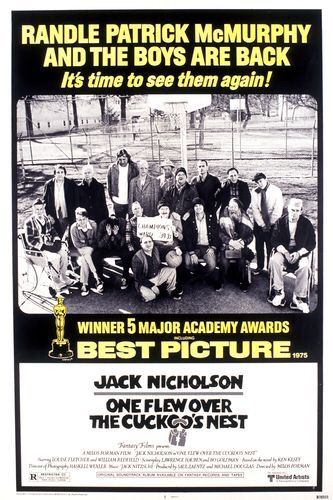
him to redo some scenes more than a hundred times. Following The Shining and also One Flew Over the Cuckoo’s Nest,
Nicholson will often be asked to play over the top and his acting will be
reduced to be a caricature of himself.
Let’s get
back to our villain Jack Torrance, his job was to bring his family to keep the
hotel from the possible degradation from the difficult winter elements. In the
supernatural reading of the film, Jack was mandated to bring his super powered
son to be a gift or an offering to the power of the hotel.

While another
reading of the film is a Freudian one, which is probably more accurate when
considering the many Freudian elements from Kubrick’s filmography, Jack the
biological father of Danny must get Dick Halloran (the hotel’s chef and the man
who exposes to Danny all about the shining) out of the way. Halloran is taking
the role of Danny’s father figure because Jack is not a potent father figure.
In Freudian words, a child who doesn’t feel that he is getting the right kind
of fatherly love and strong father figure will try to get it from a more
convenient and potent man. In this case, a man that understands him and that
knows how to correctly protect him. One could add the Oedipus Rex complex to
that where Wendy compensate for Jack’s lack of attention to his son and the
child will get rid of his father to be the partner of his mother. A strong
father figure has to be imposing a presence of the right kind of authority and
indulge fear in his son’s mind that if he tries to get intimate with his mother
his father will castrate his son.
It is useless
to say that Jack is a failure and at the end of the film he is tricked by his
son when at the same time the sacrifice of Halloran helped Danny and his mother
to save them from another horror at the Overlook.
A great
villain makes a great film and I personally think that Jack is a great villain
with a complex construction and he is not easy to define but always interesting
to observe and enjoy.