Showing posts with label Akira Kurosawa. Show all posts

2016-01-23

Takashi Shimura and Akira Kurosawa

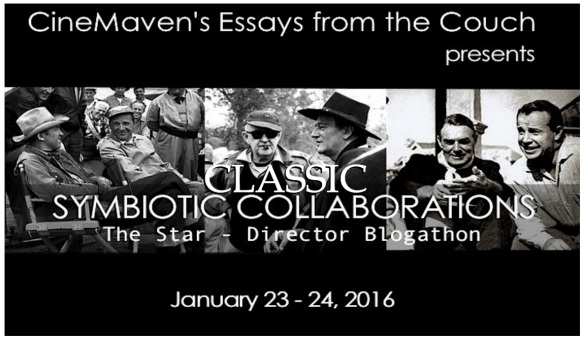
Note : this review is a contribution to Symbiotic Collaborations blogathon hosted by CineMaven’s Essays From the Couch.


Takashi Shimura and Akira Kurosawa


While Japanese film director Akira Kurosawa doesn’t need an introduction amongst cinephiles, actor Takashi Shimura is a more obscure actor name for the majority of film fans. The actor who is generally linked with Kurosawa is Toshiro Mifune, especially as the samurai archetype. Well, Takashi Shimura made 21 films under the directing mastery of Akira Kurosawa while Mifune did 16 and a bunch of them were overlapping the two actors. Shimura was the lead actor in Drunken Angel, Ikiru, and Seven Samurai. Not a bad resume a all.

2012-11-30

Dersu Uzala


Dersu Uzala (Akira Kurosawa, 1975)

The Russian army sends an explorer on an expedition to the snowy Siberian wilderness where he makes friends with a seasoned local hunter.

A few months after master director Akira Kurosawa attempted suicide, he went to Russia to make his film for Mosfilm studios because in Japan he wouldn’t find a studio ready to finance him after the financial failure of Dodeskaden (1970). Dersu Uzala earned him the Best Foreign Film Oscar in 1976 and even with this recognition he had to ask George Lucas and Francis Ford Coppola to finance his next film Kagemusha. It is interesting to observe that everyone of Kurosawa’s film is considered at different levels as near-masterpieces and/or masterpieces. The Japanese director did not make a lot of films outside of his native land and it is interesting to watch Dersu Uzala for its almost entire location shooting in beautiful exteriors. The use of color and the photography of the Russian film are almost perfect in every way possible. The construction of every frame is once again at the level of excellence of Kurosawa. It is the sobriety and the natural storytelling of Kurosawa that makes it one of the most enduring films.

2012-10-10

Ikiru


Ikiru (Akira Kurosawa, 1952)

A bureaucrat tries to find a meaning in his life after he discovers he has terminal cancer.

Takashi Shimura is an actor I’ve already bragged about in my recent review of Akira Kurosawa’s Seven Samurai. Well, be prepared to read some more in this new review. They collaborated together eleven times and while Kurosawa was 42 at the time they did Ikiru, Shimura was 47. Of the three most celebrated Kurosawa films you have the aforementioned Seven Samurai, Rashômon, and finally Ikiru or if you prefer translated as To Live. Out of the samurai genre, Kurosawa made some of his most interesting stories and the most philosophically charged ones too.  As a Kurosawa enthusiast, I pretty much rank the three film in this particular order. However, with the time and multiple viewings, Ikiru seems like a film that grows with its viewer and develops into something that age, time, experience, and life brings as one of the forefront runners of the emperor’s filmography.

Watanabe (Shimura) learns that he doesn’t have much time to live, he is dying of a cancer. Just like anyone who gets a similar news, he is shocked and reacts strongly. Knowing that he will die brings to him that he did not even started to live yet. Ikiru portrays a two and a half hour quest to find the meaning of this man’s life and his simple but yet touching passage. This is a very humanist tale of understanding the common life of everyone. It faces our inevitable passage through time, aging, and the facing our own death someday.

Shimura delivers a very solid performance and his ability to be a common man just like James Stewart or Henry Fonda makes him one of the most human faces to deliver such a near perfect act. His presence is almost like the one of a ghost who wanders in the final moments of his own life. Knowing that he is doomed by destiny, his encounters are sublime moments of greatness.

As stated in my review about Seven Samurai and Rashômon, my two favourites Kurosawa, Ikiru stands strongly with the sheer brilliance of Red Beard, the colourful Ran and Kagemusha. However, the film that stands out the most after multiple viewings and that sticks in mind just like a master’s lesser known masterpiece, Ikiru might be one of Kurosawa’s most universal film. Released worldwide circa 1960, because it was considered too Japanese, just like Yasujiro Ozu’s films, Ikiru should have deserved its spot on the Sight and Sound Top 25. Highly recommended.

2012-10-03

Seven Samurai


Seven Samurai (Akira Kurosawa, 1954)

A poor village under attack by bandits recruits seven unemployed samurai to help them defend themselves.

The most popular and known Kurosawa film of all time has just been named the seventeenth best film of all time by the latest Sight and Sound poll (2012). Easily making my top 10 list since I ever saw the damn thing circa ten years ago or so, Akira Kurosawa’s Seven Samurai is the film that set the bar of the action genre. Blending the period drama, the action genre, and the study on human condition, Kurosawa impressed more than one director over the six decades that the movie is old. Following the impression and the writing of my recent review of the soon to be released on Blu-Ray by Criterion Collection Rashômon, I wanted to give to the great Japanese director the recognition this blog should do to him. There are not that many Kurosawa films reviewed here on Le Mot du Cinephiliaque, in the upcoming weeks I’ll try to correct it and give it a spin it deserve.

A village of rice farmers wants to get rid of the looters that come and steal their crops. To achieve that, they hire a band of seven swordsmen to defend themselves. With a length of three and a half hours the placing and the pacing of the story is pitch perfect. This epic length is used by the Japanese master with great efficiency. There is nothing wasted or overused here, Kurosawa tells his story with a flow that is rarely seen and inserts sheer moments of human relationships.

The whole battle sequence shot in the rain and involving so much action and movement is a real “tour de force”. You have to see it to believe it.


There is a lot going on about the outstanding talent of Toshiro Mifune, but the man to observe here is Takashi Shimura as the leader of the magnificent seven. As a father figure and leading presence, Shimura delivers a delightful performance. Even if Japanese acting is an expression of intensity, the entire cast gives a natural aspect to the film.

On a funnier note, the Chevy Chase, Steve Martin, Martin Short feature of Three Amigos is a reference to Kurosawa’s masterpiece. Listing the films that were influenced by Seven Samurai would be an impossible task just to say how it is a cornerstone of Cinema.

Being my favorite Kurosawa since almost a decade, the brilliance and the qualities of Seven Samurai never stop to amaze me. It is a must see and I highly recommend to watch it.


2012-09-28

Rashômon


Rashômon (Akira Kurosawa, 1950)

A heinous crime and its aftermath are recalled from differing points of view.

If I remember correctly, Rashômon was the third Kurosawa film I ever saw back in 2002, right after Yojimbo and Sanjuro and just before The Seven Samurai. Since then I saw most of his well known films, some classics I have yet to discover but I can certainly advance that Kurosawa is one of my favorite directors of all time. Choosing which film is his best is an impossible task. Listing The Seven Samurai in my Top 10 doesn’t discredit the reach of Ikiru, Ran, Throne of Blood, High and Low, or Rashômon. It is a deliberate choice of one cannon instead of another one. In the case of my favorite directors it is a really tough choice to pick a movie and let all the others down. My relationship with Rashômon is very particular because I always thought that it was a lesser film compared to the aforementioned epic The Seven Samurai.

Since hundreds if not thousands of reviews have been written on the meanings and subtexts of this film, I would like to discuss of the place of it in Cinema History. First, it is a very Japanese movie set in traditional Japan involving samurais. A trademark of Kurosawa is the samurai stories. He is automatically related to those sword men. Then you have his greatest lead actor: Toshiro Mifune. Kurosawa was the director who gave him his first opportunity and he detected the talent of the intense and shy actor.

Shot within only three different locations, it gives a very theatrical aspect to the film. Theatre in Japan is a thing of tradition and to learn that Rashômon was the first real breakthrough of a Japanese film is interesting. We also feel that Kurosawa learned from his previous directorial credits and Rashômon was the hatching of his talent. The restriction of location is also palpable in Robert Altman’s Gosford Park, a film freely inspired by the subject of this piece. The constant rain also refers to the dramatic opening of the movie.

Then, you have the structure of the story which is told by four different witness of the crime: the victims, the witness, and the accused. The retelling of the story by the numerous characters is more or less cinematically linked to the Everest of cinema itself Citizen Kane where we are on a journey to discover who or what is Rosebud. In fact, Rosebud is the subtext for us to try to find who Charles Foster Kane is and we discover bits and parts of the character by the testimonies of the people who lived with him. In some way Rashômon is the Japanese Citizen Kane. This structure is also reused with vibrant colors in the wire-fu poetic Hero directed by Zhang Yimou.

The coming release of the Blu-Ray by Criterion Collection will bring back some attention on the masterpiece of one of the most gifted filmmakers from Japan. This honest and sometimes raw film about reality, crime, and storytelling deserves to be amongst the great titles Criterion gathers in its selective collection. A masterpiece I highly recommend.

2012-02-20

Top films of Akira Kurosawa by LMdC


1. Ran (1985)

2. Seven Samurai (1954)
3. Red Beard (1965)
4. Rashomon (1950)
5. Ikiru (1952)
6. The Bad Sleep Well (1960)
7. High and Low (1963)
8. Drunken Angel (1948)
9. Sanjuro (1962)
10. Yojimbo (1961)
11. Dersu Uzala (1975)
12. Kagemusha (1980)
13. Stray Dog (1949)
14. Throne of Blood (1957)
15. The Hidden Fortress (1958)
16. The Idiot (1951)
17. The Lower Depths (1957)
18. One Wonderful Sunday (1947)

I still need to see: The Most Beautiful (1944) No Regrets For Our Youth (1946) The Quiet Duel (1948) Scandal (1950) I Live In Fear (1955) Dodes’ka den (1970)  Akira Kurosawa’s Dreams (1990) Rhapsody In August (1990) Madadayo (1993)

2010-10-08

High and Low

High and Low (Akira Kurosawa, 1963)


An executive of a shoe company becomes a victim of extortion when his chauffeur's son is kidnapped and held for ransom.


Related Posts Plugin for WordPress, Blogger...