Showing posts with label 5star. Show all posts

2012-03-13

Hatari!

Note: this review is a translation of my original review of the movie I've seen in 2009. Since it was one of my first long reviews I've decided to translate it for everyone's benefit. I will do series of re-edits for the films that actually were reviewed in French in the first moments of this blog.

Hatari! (Howard Hawks, 1962)

With an uneasy career thorough the many Hollywoodian studios, Howard Hawks was regarded has one of the difficult directors of its time. Regaining his shine of the old days with the French New Wave"rs" as the perfect epitome of the auteur theory, the French critics of Les Cahiers du Cinéma sacred Hawks as one of the greatest American cineaste. In the latest years one of the most hip directors working today, Quentin Tarantino, places Hawks right besides Leone as his favorite directors of all-time. The Hawksian influence on Tarantino is in the dialogues and the mastery of genre films.

The story of Hatari! is quite simple, we follow a group of men who must hunt wild animals during three months in Africa for a Swiss zoo. This already adventurous setting gets more challenging when Dallas (Elsa Martinelli), the beautiful photograph from Italy, joins their group. The strong nature of each member of the group will bring the challenges and interactions within the hunters. In the opening, every male member of the team is presented in a very classical way. They represent Man mastering Nature and the Woman that is symbolized by the female rhinoceros they must capture. One of the most difficult and fighting animal of the entire order. This scene has some succulent lines like: "I think it's a female; she doesn't know where to go and seems to turn on herself." This is a Hawks trademark to mock strong women while always populating all his films with them.
On the other hand, the paternal presence of John Wayne is well felt in the team of men. He looks upon every member of the group and he plays the moderator to keep the chemistry of the little civilization they have on the camp. It might be one of Wayne's most interesting roles, plenty of funny lines and he seems to be in his element even if witnesses of the shooting said that he was so afraid of shooting the scenes in the chair at the front of the jeep.
As of all the Howard Hawks pictures there are women characters displaying strong personalities wanting to valuate themselves amongst the men. Dallas who represents Wayne's character's love interest and Betty the daughter of the ex-boss who got killed by a rhinoceros. Betty is wanted by three men and finally when she decides who's the lucky winner the resting two other men solidarity meet up and reinforce their friendship. This particular relationship is very Hawks' typical and it is almost bold subtext that both men are sharing a somewhat homosexual relationship after their rejection by Betty. It was typical of Hawks to portray great friendships by the trade of objects and friendly mockery. These observations are particular for Hawks' entire oeuvre.

François Truffaut, once analyzed Hatari! as a demonstration of Hawks' directing: a little group supervised by a father figure, the director, who must capture the right animals, images, to populate a film, a zoo, and he must used every member of the group and his strenght to succeed in their way to goodwill together.

The scenes of action involving the many animals are riveting and breath taking all shot on location in the vein of many Hollywoodian films shot in Africa at this time Hatari! is the most interesting of all. The many scenes with elephants and the light hearted comedy makes this film one of this critique's favorite adventure films of all time. A coup de coeur!

Rating: Ratings

2012-02-19

Vertigo

Vertigo (Alfred Hitchcock, 1958)

The definition of vertigo is a sensation of dizziness or abnormal motion resulting from a disorder of the sense of balance. In Alfred Hitchcock's picture, Vertigo is translated as John "Scottie" Ferguson's (James Stewart) fear of heights. Scottie was a police detective and is now retired. A wealthy man asks him to follow his wife (Kim Novak) and check on her because he thinks that she is contemplating suicide. Sadly, Madeleine (the wife) commits the irreparable even with Scottie's close surveillance. While following this woman, Ferguson falls obsessively in love with her. Shortly after her tragic death he meets a woman who practically looks exactly like Madeleine. This is where Scottie's "disorder" comes in action, he is still madly obsessed with Madeleine and he will try to "recreate" her with Judy.

This relationship is already doomed at day one. It smells bad if you prefer and we clearly sense that Scottie is intoxicated by Madeleine's persona. Their love story is unwholesome and the way Scottie acts when trying to convert Judy into Madeleine is desperately sad and exposes how childish he reacts to this lost. He does whatever he can to get what he can't have anymore. Evenmore, he doesn't get it, he obviously doesn't need it. It just accentuates his sickness and dooms him.


Just like the somewhat outdated flashes, Scottie seems to keep falling from the first scene of the film until the final moments. One of the most interesting aspect of this story is how the obsession of the main character becomes our own obsession as the viewer. We really want to watch Scottie getting over his fear and his state of depression by making up with Judy's presence. Hitchcock accomplishes he most subtle tricks of metaphorical meanings by placing common objects and right framing in his movie. Many scenes involve mirrors and depending on what he wants to tell with his images. Hitch makes some claustrophobic effects or double reflection of the characters in the mirror. Few Hitchcock films have been so abstemious in their visual but few have been mastered has well either.

The plot of Vertigo is a free adaptation of Boileau-Narcejac's Entre les morts. It was in direct reaction to Hitchock's lost of the rights of the novel Les diaboliques to Henri-Georges Clouzot written by the same duet of authors. Hitchcock said later in interviews that Clouzot's film was the only picture he wish he had made. To be honest, I think Hitchcock surpassed Clouzot but the later's near-masterpiece is one heck of a movie. It is one of the films, Les diaboliques (1955), I always highly recommend to anyone who likes French Horror films of the 1950's along with Eyes Without A Face by Georges Franju. However, Hitchcock never literally adapted a novel to the screen he was a very literate man and he added many elements of fellow Englishman Oscar Wilde's The Picture of Dorian Gray to the plot of Vertigo. Added to his successful storytelling techniques and the culmination of his Art, Vertigo is one of the many pinnacles of Hitchcock's 1950's work.

In Vertigo we found many classic Hitchcock elements: the doppelganger played by Kim Novak in the two women Madeleine and Judy, the icy blond "à la" Grace Kelly, James Stewart's acting almost child-like, the bay-area locations and the landmark signature settings. For many reasons Vertigo is considered as Hitch's masterpiece and it is always into the top 5s of the greatest films of all time. However, I don't think it is the "master of suspense"'s greatest achievement, even if it is one of his most contemplative and deep films I think it is surpassed by Rear Window, Psycho and North by Northwest just by the fact that those films are more personal entertainment for Hitch. The themes of those films connect more with his storytelling techniques and they feel more like his major work. Vertigo is still a masterpiece but just a bit under the trio aforementioned.

Rating:

2012-01-23

Shadow of A Doubt

Shadow of a Doubt (Alfred Hitchcock, 1943)

In this quest to view and review all the films mentioned in the book 1000 Movies You Must See Before You Die, there is a nice little club hosted by my good friend Squish over at Filmsquish, you can participate if you are interested or to just browse through the reviewed titles. This exercise made me discover some lesser known pictures and other films I wouldn't have been interested at the first time but I pushed myself into the viewing and the sometimes it had been very rewarding. However, since I've been working on many classic films list since around 2001-2002, lots of titles are second to multiple watches for me. Other titles hold the status of being personal favourites. Alfred Hitchcock's Shadow of a Doubt isn't less than a masterpiece and a personal favourite from Hitch's great filmography.

When traveler uncle Charlie (Joseph Cotten) comes to town (Anytown, USA) the Young Charlie (Teresa Wright) is more than excited, because she wants to know more about his voyages and the real life that he lives. However, since she is not a dumb girl, she discovers that uncle Charlie's has a dark past.

The story evolves around the duality (recurring Hitchcock theme) of the name Charlie and the opposites between both character. As if uncle Charlie is the bad side and Young Charlie is the good side. One example is the shoot when uncle Charlie's train arrives there's a giant black smoke that encaptures the locomotive as if the train came from hell. Cotten delivers a very subtle performance that helps Hitchcock's tension building around the principle of the criminal in the house with young Charlie and the fact that she discovers her uncle's secrets.

The technique and the mise en scène are the most important aspects of the film to notice when watching Shadow of a Doubt. It is also Hitch's creativity that pushes the boundaries of film making at this time and the brilliant cast that gives a more than notable ensemble performance.

2011-12-24

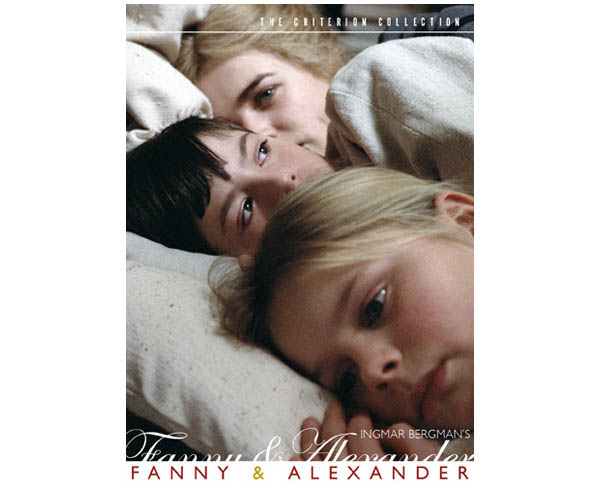
Fanny and Alexander

Fanny and Alexander (Ingmar Bergman, 1982)
When Bergman announced this film he also said to whoever wanted to hear that it was gonna be his final directing job. History told us that he made some movies after this 1982 picture. However, Fanny and Alexander seems like the perfect testament from one of the greatest, if not the greatest filmmaker of all time. The rich colours, the wonderful mise en scène and the panoramic framing of every scene is just perfect. Plus, it begins with a warm celebration of christmas in Sweden of the early 20th Century.

A family that looks like a lot like Bergman's description of his, an actor father that dies too young. His mother getting married with a strict pastor who hates children, and the use of every trick in the bag of Bergman. Well, this is Bergman's autobiographical picture where Alexander portrays the little Ingmar in his childhood when he discovered the theater and the first cinema-lanterns. One of the most famous stills from this film is the Alexander picture watching his little theater in the night of Christmas.

The plot is an amalgam of Bergman's childhood memories but also his influences in films with subtle references to Hamlet, which is the play his family rehearse and one time his mother calls him Hamlet when he can't stand his stepfather. The many spectral apparitions and the construction of the story reminds the great plays of Strindberg, one of Bergman's favourite playwriter. The film has this classic approach to drama and narrative while being a fresh Bergman film, original and unique.

However, the most interesting aspect of this film is the warmth of the images and the atmosphere of joy and reverence from the entire cast. When you look at the Making Of from the wonderful Criterion set, there is a sense of happiness, joy from the shooting of the film and Bergman seems relieved to shot this film and tie the bow with this magnificent opus. He looks content at what he has done and the final film seems to make him proud of what he did not only as a director but as an artist.

As a Bergman enthusiast and a true lover of Christmas and the Holidays I think that the whole sequence depicting the night of Christmas, the meal, the music, the dancing, and the family fun that it represents reminded me of the memories of what this celebration used to be in my childhood. Like the celebration of Christmas depicted in the Claude Jutra film Mon oncle Antoine that represents how we celebrate Noël in my part of the world. Fanny and Alexander has been since the first time I saw it one of my Holiday favorite. A must see and a masterpiece.

2011-12-21

The Seventh Seal

The Seventh Seal aka Det sjunde inseglet (Ingmar Bergman, 1957)


Of the many great films directed by Ingmar Bergman The Seventh Seal is one of the most outstanding and celebrated. For those who don’t know please believe me or treat yourselves with Persona, The Virgin Spring, Wild Strawberries, Shame, Fanny and Alexander, Saraband, Winter Light, Cries and Whispers, The Magician, The Silence, Scenes From A Marriage, well I’m not gonna list them all here but just stand far from The Touch which you can read about in the Simply the Worst event at Reverse Shot where they celebrate the worst film of many notable directors.
I remember the first time I read about this film; in medieval Sweden a knight comes back to Scandinavia after a Crusade and meets Death. He proposes to play a game of chess with Death to postpone his eventual journey in the after world. Meanwhile, the knight travels with a showman and his wife. If, like me at the time you haven't seen the film, the poster, any still, and do not know the actors it inspires to an interesting picture.

First, this plot always intrigued me so it was natural that I’d do anything to watch it. It was in October 2002 at the University on a VHS player on a 14 inches TV and crappy earphones. This context gave to the film a special glow of a rare gem to finally been watched and experienced. It was the first Ingmar Bergman film I’ve ever watched. Needless is to say that it was a revelation. A revelation of Scandinavian Cinema, a great master, a great actor Max Von Sydow, and a riveting filmography.

The importance of The Seventh Seal is more than preeminent in the medium, ranked in the Top 250 of IMDb by regular users (a rating system I definitely don’t understand) listed as the 53rd spot of They Shoot Pictures Don’t They?’s 1000 Greatest Films, #35 by critics of the Sight & Sound 2002 poll and #31 on the Directors side. It can go on and on but it was one of the first films to open the door to classic films and foreign films in my early stages of cinephilia.

About the film, in the 1950’s Bergman was directing at the Stockholm Theater during winter and with the same cast he was directing films. During the summer of 1957 Bergman not only directed The Seventh Seal but also his masterpiece Wild Strawberries. It was a great year for Bergman and Cinema too. Interesting fact, despite his widely known pretention, Bergman was somewhat modest about how he liked his films. But his film he likes the most is The Seventh Seal, he said that it is the one that works the best. However, this false modesty isn’t palpable when you watch carefully Bergman’s films, the characters of his contemporary films represent the bourgeoisie and their problems. In The Seventh Seal, the knight represents some kind of bourgeoisie that stands above the showman and the band that follows him. It is interesting to see that it is the responsibility of the knight to protect the lower classes that will however one day meet its end no matter from which class or cast he is from.

There is something about this period in the films of Bergman that transpire something raw or crude and it is in part because of the kind of cinematography made with clear crude lighting and few effects. It is almost as if Bergman liked to show bare human feelings without any useless artifices in natural context and environment. A simplicity in the complexity of his plots and understanding of the storytelling that Cinema requires. By today’s standards The Seventh Seal looks much like a classic almost academic film made by a theatre director. However, the themes and reconstitution of the time is perfect and I wouldn’t trade this film for any contemporary one. Please note: I will defend this statement hardly: The Seventh Seal is a Masterpiece.

2011-12-14

Cries and Whispers

Cries and Whispers aka Viskningar och rop (Ingmar Bergman, 1972)

When someone thinks about the great Ingmar Bergman many will list his work from the mid-fifties to the late sixties (1957-1966) as his masterpiece period. This person couldn't be more wrong, this director's great work goes until Saraband in 2003. However true Bergman fans like Woody Allen list Cries and Whispers as his favorite film from the Swedish master. Allen is passionate about the man and he even tried successfully twice to do a Bergman film (Interiors and September). For a film lover Cries and Whispers isn't an easy film but such a deep and moving one. It is quite challenging for its viewer to immerse himself in Anna's vision of a dying woman she's taking care of.

On the turn of the 20th Century, Agnes is dying and her sisters come to visit her before her long journey into the other world. This familial reunion brings up many dormant situations between the sisters that are accentuated by the degrading state of Agnes. Her only devoted maid, Anna takes care for her and understands the woman more than her own family. The quarrels of the siblings and the heaviness of the situations is perfectly balanced with the outstanding cinematography of long time collaborator Sven Nykvist. The natural lighting and the crude almost fleshy colours give a superb look to the film. It is so beautiful that it doesn't even looks like the film was made forty years ago. Instead of being staged at perfection like a Dreyer film, Bergman's Cries and Whispers looks natural and classical at the same time. This is the work of artists, the frames are blissed like classical paintings displaying light, life, and beauty. While at the same time we struggle through Agnes' pain in her fight against cancer. However the beauty if the images and the originality of cinematographer Nykvist could have been the ultimate bravura of Cries and Whispers. Well it is not, it is the talented performances and the ensemble cast that surrounds Bergman that strikes the most. Harriet Andersson, Liv Ullmann, Ingrid Thulin, Kari Sylwan, and Erland Josephson are the great performers but it is Kari Sylwan as the maid Anna that demonstrates depth more than any other in this amazing work.

Finally, Cries and Whispers is one of the many gems that were made in the 1970's. A time where American movies gain in quality and that gave back to the directors the central place in moviemaking in Hollywood. Foreign films that used to be made by directors and controlled by themselves were less regarded when American directors made better films than they used to. However, Bergman, Herzog, and many more made wonderful films in these years. Cries and Whispers might not be as known as Persona or The Seventh Seal in the Bergman catalog it holds to the test of time and should be celebrated more than it is actually. At least it deserved a superb transfer on DVD by Criterion Collection.

2011-12-13

Persona

Persona (Ingmar Bergman, 1966)

Considering my eternal admiration towards the great master that is Ingmar Bergman, I've decided to treat myself with this review of his most experimental film: Persona. Frankly, my "fanophilia" isn't the main reason why I decided to review this extraordinary masterpiece, it is reaction to the entry of the 1001 Movies You Must See Before You Die Blog Club on December 22nd: The Seventh Seal. Don't worry, I'm not doing Persona instead of The Seventh Seal, the review is already written it is just waiting to be released on the day of the assignment. By the way, if anyone wants to join the club you are all welcome to! Follow the link aforementionned and write to my great friend Squish and he will be more than happy to include you into our active reviewers!

Most of Bergman's films don't feel contemporary, they have this unaged and unaltered by time touch. The Bergman touch, well few filmmakers had the gift to make such rich and strong films. But Bergman is one of the perfect examples, the settings and simple mise en scène lets the story and the emotions take all the space and the viewers' attention. What is more important is that the stories and feelings portrayed and displayed are more often than not universal even if it is a Swedish film about the bourgeoisie or medieval characters. Persona takes a step away from these patterns in many ways but it is this exception that's makes it a film even more interesting than most of the rest of his films. Clearly set in contemporary times, the 1960's with the news footage of the beginning of the film, we are set up in a world where everything is in complete change, mutation, morphosis, even in revolution. Bibi Anderson and Liv Ullman, two of the most beautiful women of the 1960's by the way, are in a cabin where Ullman portrays an actress who stopped talking on the stage and never did since. Bibi, is the nurse who's taknig care of Ullman, she represents innocence and the fact that she always talks about all and anything shows how shallow she is. On the contrary, Ullman who is pratically playing the mute watches and listens to her with contempt and severity while seing clearly through Bibi.

The film brings many questions on the modern society and the many perceptions we have of our world. The title of the film Persona, resumes the central scene of the film that is doubled when the two main characters trade their personalities with a split screen imagined by Bergman himself. It looks like a reflection on the fact that when two people are almost isolated together that they kind of begin to look alike. There is also the effect of the character mix where each one gets more and more intertwined with the other one. It is kind of a reaction of their relationship that feels like the younger sister who's taking care of the oldest which should be the other way around. Whatever someone finds as the meaning of the film it is a psychological and philosophical charged film.

The major deception I have with this film it is its release on DVD, done by MGM in a Bergman Boxset that doesn't really live up to the quality of the films. I hope someday Criterion will acquire the rights to make a proper release of this amazing masterpiece.

2011-11-14

Eyes Withtout A Face

Les yeux sans visage aka Eyes Without A Face (Georges Franju, 1960)

Entering into Les yeux sans visage wasn't very hard because I heard so much good words about it that it was just a matter of time before I actually watched it. Released by Criterion Collectin it wears the seal of approval of many cinephiles including myself. Categorized as a Horror movie or some might say a foreign film, Georges Franju's most famous film is an amalgame of Frankenstein, moral dilemma, thriller, medical experiences, and beautiful imagery.

Way way ahead of its time Les yeux sans visage, takes you on terrains you wouldn't guessed for a film of the 1960's. A doctor who's daughter has lost her beautiful face because of his bad driving that caused an accident has swore to himself to get her a face so she'll be able to relive again and have a normal life. The doctor reprensents how science wants to control nature or the creatures of God. To find a new face for his daughter he must kidnap young women with his wife and take off the flesh of their face and put it on his daughter. The surgery and the special effects are well executed and the scene is actually very convincing. Even with her mask, Christiane, the daughter, has somekind of scary ghost like look of the same kind as the Phantom of the opera.

The moral issues and the treatment of the story gives goosebumps and the clean black and white give a Universal look to the film which helps a little to be a less frightened because if it was in colours I bet many scenes would have shocked people even more. Mixing classic elements of the genre and the ever evolving medical science, Les yeux sans visage is a must see. This is a great Horror movie, a classic and probably a masterpiece of execution and storytelling.

2011-10-21

To Have and Have Not

To Have and Have Not (Howard Hawks, 1944)


Of the many great directors, Howard Hawks is one of the most respected alongside John Ford and Alfred Hitchcock. His career has been punctuated of highs and lows. His highs are so great that his films are undying classics. Navigating between the genres, the Westerns (Red River, Rio Bravo, El Dorado, Rio Lobo), the screwball comedy (His Girl Friday, Bringing Up Baby), Film Noir (The Big Sleep, To Have and Have Not), Historical melodrama (The Land of the Pharaohs), Adventure (Hatari!) he always did what he wanted to do. Never a technical director, he is a storyteller and a great dialogue writer. His line, “You know how to whistle Steve? Just put your lips together and blow!” said by Lauren Bacall in To Have and to Have Not might be the sexiest line ever said on film. There’s also the presence of Bacall but we’ll get back on that later. Hawks is considered by many as the greatest director of all time; the French New Wave praised his films even Hatari!, that is underrated by lots of critics, François Truffaut saw the work of Hawks and compared the story of the film to the making of an actual movie. Nowadays, a guy named Quentin Tarantino is obsessed by Hawks and he gives a test to all his potential girlfriends: to watch Rio Bravo. If the girl doesn’t like the film she’s not girlfriend material! As of today’s standards it’s difficult to make a comparison of The Grey Fox with an actual director. First, Hawks was an artist and his films were made with big budgets, always over schedule. He was the highest paid director of his time because his films made good money. He had artistic freedom and he was also the producer of his films. It is almost impossible to think that something like this would be possible in a world where the few directors that are making interesting films in major studios have so much difficulties keeping their director’s cut. Well, just call me a nostalgic or a stubborn classic movie lover I will gladly wear those labels if it is to watch Howard Hawks pictures all day!

To Have and Have Not represents everything about Classic Cinema that we cherish; a beautiful leading actress, a great legend, subtext dialogues, laughs, and an intrigue. Or like another guy used to say; a girl and a gun, Jean-Luc Godard you’ve recognized him here.

The beautiful leading lady is Lauren Bacall, Marie or nicknamed Slim like Hawks’ wife at the time. An almost skinny lady with a deep voice and sexy facial expressions. At only nineteen years old, her screen test was the famous line aforementioned in this review. When Hawks saw her he decided to make her part bigger and use the love story between Bacall and Humphrey Bogart(they met on the set of To Have and Have Not) to add more scenes involving both of them. The chemistry of the two actors is passionate and makes the viewer almost like a voyeur that stares at one of the greatest love stories of Hollywood. The pairing of those two lovers has never been equalled and on screen it is reflected so blissfully that you feel jealous of Bogie.

In 1944, Bogart’s legend was made and his presence in The Maltese Falcon and Casablanca could have made him an unforgettable star. To Have and Have Not changed his life because he met Bacall the woman he’ll marry and stay with until his death. Also because he achieves a level of performance that I think is the greatest of his entire career. Way much better than The African Queen that got him his only Oscar. His scenes with Walter Brennan are pure Hawksian Cinema, the two professionals united together and working as a team to attain their goal, the constant jokes about each other, the tradition of the Hawksian camaraderie where the two characters think they protect the other, the trade of money, bottles, cigarettes, matches, etc. They are all symbols of friendship in Hawks’ universe. Someone might notice that Slim(Bacall) and Steve(Bogart) trade many bottles, matches, and cigarettes. This is because in Hawks’ world, the leading female should be one of the boys and not just the hero’s love interest. She jokes with them and she is involved in the story.
To Have and to Have Not is not just a director’s film, this is an ensemble film with great performances, a great script by William Faulkner based on Ernest Hemingway's novel, the whole directed by Howard Hawks. On Hemingway's story, the author bet to Hawks that he couldn't be able to adapt his novel on the silver screen. Hawks, took almost the entire story out to make his own adaptation of Hemingway into a script and luckily it makes one great film. This is the sign of a director in full control of his story and narratives.As a classic film enthusiast I am more than ecstatic towards To Have and Have Not, it is one of the greatest films of the 1940’s.  A must see.

2011-10-11

Johnny Guitar

Johnny Guitar (Nicholas Ray, 1954)


Defined as a cult classic, and often cited as one of the greatest films of one of the most recognized auteurs in the minds of the greats of the French New Wave, read here Jean-Luc Godard and François Truffaut, Nicholas Ray’s Johnny Guitar stands as a superb and innovative Western. The directors you can look for when you are listing the best Western genre filmmakers are of course John Ford, Howard Hawks, and Anthony Mann. Often forgotten, is Nicholas Ray with his Freudian approach to the genre and a redefining “mise en scène”. The “classic” Western used to be a very macho thing and the women’s roles often were characterized by their simplicity and their somewhat absence. However, here in Johnny Guitar the presence of Joan Crawford as Vienna is central and essential.


The context in which the film was created was McCarthyism in the United States and the subtext of Johnny Guitar is all about how the mass perceives the outsiders and how those outsiders are excluded. The script, written by Ben Maddow but credited to Philipp Yordan, was the work of a man (Maddow) blacklisted at the time because of leftist involvement. As the true auteur, Ray was also an outcast all his life, with auto-destructive manners and strong rumours of his bisexuality, Johnny Guitar reads like one of the most personal films ever made. It involves the struggle of everyone between good and evil and how the characters cannot be all black or all white. They are portrayed as humans and nobody’s a hero or a complete antagonist devoid of feelings. The inner struggles of its creators are reflected in a controlled yet magnificent creation that is Johnny Guitar.

Despite its flaws, and yes it has some, I would like to cite my colleague Kevyn Knox that himself quoted François Truffaut “we don’t like those films even with their flaws, we like them for those flaws”. I would like to add to this the fact that as critics we always like to praise perfect films with great directing, amazing acting, superb editing etc. But as a cinephile I tend to prefer the lesser or not the masterpiece films of a director. In example, my favourite Howard Hawks picture is Hatari!. I know that this is far from being his Rio Bravo, His Girl Friday, or Bringing Up Baby, but I will prefer a great film to a flawless picture. This is why Johnny Guitar is often categorized as overrated by its detractors for its many flaws and lesser contribution to the seventh Art. However, since it’s my review and my rating I will mete Johnny Guitar a 5 star rating.

2011-10-04

Madame de

Madame de (Max Ophüls, 1953)


Max Ophüls is the kind of director that could induce the greatest dose of romance without even being over the top. His film, Madame de sure demonstrates this in his remarkable mastery of perfect framing and camera movement. On every aspect Ophüls’ picture is the work of a genius, the story, the technical skills, the score, and the performances form a complete ensemble.

This is a magnificent demonstration of a well balanced masterpiece, everything has been concocted and shaped like a great work of art. The elliptic story, an Ophüls trademark, the multileveled dialogues and the subtle and graceful performances by Danielle Darrieux, Vittorio De Sica, and Charles Boyer complete the period drama that is Madame de. It is indeed appropriate to evoke the fact that this film is a piece of Art and not just another movie. The last two films of Max Ophüls; Madame de and Lola Montès are blissful demonstrations of perfection in the seventh Art. Medialfilm, a well respected institution that rates films since almost fifty years in the province of Québec placed it amongst the masterpieces of Cinema. Of the thousands of thousands films ever rated, only about 150 received this ultimate distinction.

Set in the late 19th Century, this drama tells the hypocrisy of the bourgeois milieu in French aristocracy. Even if many think that this period is not interesting, the film sure makes it enjoyable and amazing. Ophüls’ approach and his uncanny storytelling couldn’t be more well suited to illustrate the mystery around the countess Louise, aka Madame de, and her motivations. The story plays with the viewer so much that at some point we even get mixed up into the many lies that surrounds the lives of our three protagonists. Without being completely endearing the viewer is transposed in the story as if he were an omnipresent mute character that follows quietly the action. This involvement is represented by the sumptuous movements of the camera that captivates the audience into the plot.

Overall, Madame de is a strong cinematic achievement amongst the highly regarded career of Max Ophüls. The Switzerland born cineaste has made movies in America but offered the best of his oeuvre while in France during the 1950’s. It is hard to designate what is his greatest film but Madame de stands as easily in his Top 3. A masterpiece of good taste.

2011-09-22

Le charme discret de la bourgeoisie

Le charme discret de la bourgeoisie (Luis Buñuel, 1972)


This is by far one of my favourite film of all time. Buñuel has always been a one of a kind director contributing with Salvador Dali on the surrealism with his Un chien andalou and L’Âge d’or, two masterpieces of moviemaking and dreamlike sequences that every self-respected cinephile should have seen. The symbolism of these instinctive films as so many levels of understanding and such depth that a simple essay on them isn’t enough to crack their codes.

Let’s get back to Le charme discrèt de la bourgeoisie made almost fifty years after Buñuel’s first films! What strikes you the most is how the surrealism that characterized his first films is still omnipresent but even more mastered than ever. Le charme discret de la bourgeoisie is the culmination of Buñuel’s work : the perfect surrealism film. The uses of symbolism and camera techniques is really subtle and Buñuel doesn’t need to slice the eye of a woman or get a cow in the bed of two lovers. The many situations of Le charme... are already overly enough and the closer to realism it gets the better it is. The dreamlike sequences that always feel like if you were in reality but finally you weren’t at all embarks the viewer on a trip with the bourgeois that are trying to get diner together and enjoy a nice evening.

This series of events is packed with humorous dialogues and situations. Just like Woody Allen, another admirer of Buñuel’s work, I feel that this kind of hybrid film where humour and reflection means entertainment and Cinema. It is a smart film where subtlety uncovers the hypocrisy, the fears, and the vices of the bourgeois characters populating the film. The uniqueness unity of Le charme... brings you in common places and then just when the viewer thinks he knows how the situation will turn out Buñuel gets a bunny out of his hat. This master has many tricks in his bag. You have to see the film to fully understand the reach of the whole thing.

In 1972, there were many big successes: The Godfather, Cabaret, Deliverance, What’s Up Doc?, The Getaway, Everything You Always Wanted to Know About Sex (But Were to Afraid to Ask), but in my opinion Le charme discret de la bourgeoisie along with Aguirre: The Wrath of God was the greatest film of that year. Unfortunately other films mentioned earlier will always make shadows on Buñuel’s greatest achievement.

2011-08-04

A Clockwork Orange


A Clockwork Orange (Stanley Kubrick, 1971)

The films of Stanley Kubrick became the references of the modern day Cinema. He was the ultimate “auteur” within every genre he explored. Kubrick’s own particular vision and exploration of narratives characterizes his oeuvre. Subsequent viewings of all his films makes every experience richer and more meaningful to the spectator.

A Clockwork Orange may be the most famous film made by Stanley Kubrick, the ultra-violence depicted, the scandals, the banishments, and the aura around it makes it one of the most popular film of all-time. In this critics’ opinion, every Kubrick picture is a masterpiece. A Clockwork Orange is no less.

Alex (Malcolm McDowell) a young man lives by night getting high on “shakes”, violence, rape, and stealing. He dresses as a dandy by day and as some kind of punk with army boots and white clothes by night. As the leader of his droogs Alex fulfills their need in drugs, sex, and brawls. One day his lead of the gang needs to be reinforced, so he decides to give them a good lesson. Formed of three other droogs; his gang, evidently exasperated by Alex, plans a trick to be sure he will get in for good by a stronger authority than his mild mannered parents and the weird/pederast principal of his school to reform his behaviour. Later after ending up in prison, he’ll offer himself to get a treatment that cleans the brain from “bad” or “wrong” thoughts from his nature. He’ll then be able to get back into society with a normal/passive temperament. This treatment will dehumanize Alex and rehabilitate him to the society.

One part exposing Kubrick’s fear of America (he left New York for England because he was afraid of the violence and the nuclear menace in the USA) and one part the demonstration of the nature of humans that couldn’t be castrated or sedated. Humanity must have a choice of its actions and it should be moral. We can’t brainwash someone and erase his entire personality. Human nature is formed of good and evil and both must get into our minds to fully balance themselves. Sometimes in society we have to be clever and be better but other times we must fight and stand our guards. Be passive in some situations just makes us bland as sheep. The meanings of A Clockwork Orange are interesting and one must notice that this is a masterpiece as for its content so for its visuals.

Every frame of this film is composed of superb imagery and as a perfectionist as Kubrick was it shows how he took so much time working on a film refining a particular idea. The scene under the bridge where the droogs beat up a drunk bum is lit like a Film Noir with such a mastery that even if this is a cruel scene this is one of the most beautiful scenes of Cinema. Visually the colours, the frames and the movement of camera in A Clockwork Orange doesn’t have any flaws.

Adapted from Anthony Burgess’ novel by the same name, this feature is way much better than the original material and I think the same for Kubrick’s version of The Shining. The symbolism and the psychological/philosophical depth of Kubrick’s films can’t really be described, you have to see/live those films to fully appreciate every aspect of them all. The differences between Burgess and Kubrick are that the film success in bringing an entertaining story with the most unfriendly character ever presented. This is one of the most pessimistic films and one of the most ironic too. Nobody would want to live in this kind of world where everyone is ugly and inhuman. The dehumanization of Alex is done by vicious scientists and his rehabilitation is the action of political manipulations. Evil is everywhere and irony reigns. The roles switched in many cases, the writer who got beat up and got his wife raped by Alex and his gangs gets his revenge by torturing the mild dehumanized Alex without any remorse.

On a technical aspect, the use of classical music, especially Beethoven’s, Alex’s favourite compositor, sets the standard that Kubrick already did with 2001: A Space Odyssey. Those classical masterpieces were remixed and are characterized by the perfect use of music in films. When I hear Beethoven my mind automatically will remind me of the accelerated threesome scene, the record store just before, or the morning when Alex puts on music in his room. This is a celebration of the magnificence of Beethoven’s oeuvre. The first time we discover this film, the music of Beethoven makes a clash because this is such a beautiful, elegant, and passionate piece of art that Alex isn’t the type of individual who’ll connect with this kind of music. You would think that in this near future he would listen to some distorted guitar à la Black Sabbath or The Stooges, something dark and heavy, but still. Kubrick probably choose those masterpieces that transcended time and imagination, like his other pictures he needs something that doesn’t reflect a time period but that evokes and awakes many layers of emotions. A Clockwork Orange is an example of mastery in the use of a soundtrack and demonstrates how a score should fit with the imagery it presents.

Like any other masterpiece, A Clockwork Orange has its detractors. Some say it’s too violent, others say that it depicts a surreal world of nonsense and coldness. The violent aspect of the film is there and the weaker hearted may find some scenes unwatchable but still, this is a film that denounces this kind of gratuitous violence. On the other hand, sure this is a surreal world, this is a science-fiction movie that projected the world of tomorrow just like George Orwell’s 1984. The last argument of the detractors, the most justified in my opinion, is the cold approach of Kubrick towards the story and the characters. Kubrick is not a warm director and his characters are more pieces of chessboard than the players of a John Cassavetes movie. He uses them to tell the story. The objective of the camera always seems distant to the characters and they are shot with blissful movements of camera. It creates some sort of objectivity through the subjectivity of the story. Unlike Hitchcock, for example, we are not pulled into the story as the wrong man. We are the watchers of the story, Kubrick uses other tricks to interpel his public. His favourite director, Max Ophüls and his always moving camera influenced the work of Kubrick. The uncommon camera angles and unique framings destabilize the viewer in his experience.

As you may have guessed this is a film I love with passion. I have seen it a dozen times and each viewing has showed me a different aspect of the film. When I think about the perfect director I always put Stanley Kubrick in number one. Even if it’s not my favourite Kubrick or my favourite movie of all-time, A Clockwork Orange will always have a special place in my cinephile heart.


2011-06-22

The Tree of Life


The Tree of Life (Terrence Malick, 2011)

Malick's latest offering was the movie I was expecting the most for 2011. To me he has this Stanley Kubrick-like aura of a cult director with his final cut and a full freedom in his creations. Nevertheless, the difference between both directors is the fact that Kubrick was exploring amongst known genres. With his subtle and unique narratives Kubrick blended his style within the genres he choose to practically reinvent! On the other side Malick's an artist, he developed his own narratives and the way he writes and shoots his films couldn't be copied or remade. Well, you might see where I'm going here with this comparison but as many stated before: The Tree of Life has this weird unsettling resemblance with 2001: A Space Odyssey. But why is this parallel is made? Well, on three levels both films excel: the meaning of life or philosophy, cinematic outcome, and spirituality.


2011-05-27

Citizen Kane


 Citizen Kane (Orson Welles, 1941)

Since this is one of the films that has been analyzed and dissected the most in Cinema history, this review will try to be original, fresh, with a new look on this monument in filmmaking. Orson Welles’ first film, technically avant-gardist, with a structure in flash backs, telling the different aspects of the story of Charles Foster Kane and his different personas and the way the people around him perceived him. Well, Welles was not alone in this adventure, on the script he was working with Herman J. Mankiewicz who brought many of the ideas of the story. There was also cinematographer Gregg Toland who worked before with the great John Ford. Robert Wise soon to be the director of classics like West Side Story, The Day The Earth Stood Still, The Set-up and many more was the editor of Citizen Kane. Without forgiving the wonderful cast of Joseph Cotten, Dorothy Comingore, Agnes Moorehead, Ruth Warrick, Everett Sloane, and Orson Welles himself.
He was already a huge star in America with his legendary broadcast of War of the World. Also the director of many Theatre plays, Welles wasn’t a simple man put in the director’s chair.

The story opens with the death of Charles Foster Kane, head of a huge corporate media in the USA. The films opens with many shots of his vast domain, Xanadu, where decadence is just a simple word. On his dying bed his last word will be Rosebud. A journalist is charged to find what that word meant to discover the mystery of that intriguing man. The first meaning of the whole film is that we cannot resume someone’s life with a simple word. We have to take the many angles and how the man was perceived by his peers to be able to learn a little about him. Kane’s public life, from his adoption to his fall after his failed Presidential campaign was resumed by the News on the March following his death. This facet of the film is amazing when put back in context, because the news seem real and the paparazzi (this term was invented with Fellini’s La Dolce Vita in 1961) feeling of them is unsettling, the shots with the greats of the time are particularly effective. A parallel with the life of media tycoon William Randolph Hearst has always been made with the life of Kane. The story was widely inspired by the Art collector misanthrope especially when you compare Xanadu with Hearst castle in San Simeon in California, which I had the luck to visit in May 2010. The decadence and saturation of luxury of the place demonstrate how fortunate and disconnected to the “proletarian” Hearst was.
However, the story of Charles Foster Kane isn’t only about Hearst’s empire, it’s also about Orson Welles himself and how to create a myth about a public figure. Welles was a man of myths and a man who told anecdotes and stories about his life that some may be true and some aren’t. The way Citizen Kane is constructed is a lot like when someone has to live with his own lies and work around them, every character has his own vision of Kane and how he really was. The perception of everyone is unique and Kane shows that.
Moreover, Citizen Kane is a critic of the American Dream, in the early 1940’s being financially successful, popular, powerful, and beautiful was and still is the main occupation of capitalists in America. Charlie Kane was those things and he represented the rise of a man starting as someone who would be a poor worker before being adopted by a successful man and starting from a simple newspaper he made it to become a respected wealthy magnate trying to get to the White House. Juxtaposed, you have his fall and his descent, the attempted suicide of his wife, and his recluse final days. Like Howard Hugues who stayed in his Hotel room for years afraid of everything and everyone. Citizen Kane demonstrate that in some ways wealth and popularity are vile values that can turn a man into his misery.
The technical aspects of Citizen Kane, often praised for the invention of the deep focus and the presence of ceilings in the frames but cinematographer Gregg Toland was indeed invented by Toland on The Long Voyage Home directed by John Ford. This director is one of the major influences of Welles along with Jean Renoir. Welles told Peter Bogdanovich that every day during the preparation of Citizen Kane him and Toland were watching Ford’s Stagecoach and Welles was asking how to shoot this and that. They both dissected every frame and every scenes of the film because for Welles it was a strong film. Perhaps, even if Citizen Kane didn’t invented those technical effects, it shows a great mastery of them.

As stated in the first lines of this review, this is not an attempt to analyze and describe Citizen Kane in its whole but more something like my interpretations of its meanings and the understanding of the theories about it. It’s difficult to be negative about a classic that’s been sitting on the top of the world of filmmaking for so long, with few other films Citizen Kane is the kind of oeuvre that can’t be judged amongst men but amongst gods, if you permit the comparison...

2011-05-18

To Be or Not to Be (1941)

To Be or Not to Be (Ernst Lubitsch, 1941)
The more we discover about Ernst Lubitsch’s films the more we can understand the Hollywood Cinema of today. His films of the 1930’s and 1940’s are the cornerstone of filmmaking. His comedies of the pre and post Code are hilarious and intelligent. Just watch his very efficient Ninotchka, Design For Living, The Shop on the Corner, and Trouble in Paradise to discover his range of work. The quality of the scripts and the sober “mise en scène” of his films are particularly noticeable. François Truffaut, in his book Les films de ma vie, made a great homage to this master from Vienna.

To Be or Not to Be tells the story of a theatre troop in Warsaw who escapes from the Nazis by portraying Generals, Professors, and the Fuhrer of the Third Reich. This comedy plays on many levels, first there is the main couple of the troop. Him, , thinks that he is the greatest Warsaw Theatre actor and her, Carole Lombard in her final role before her tragic death, has a secret lover while her husband is on the stage doing his monologue. Slowly the story gets mixed up and every character is asked to perform in a way to distract the Nazis and escape from what could be a horrible denouement. Even if some elements of the script are unlikely the moments of laughter are memorable as for some performances and lines.

Plus, it clearly influenced Quentin Tarantino on the writing of his Inglourious Basterds script especially the setting of the story and how a little group of individuals could resist and trick the Nazis. But, don’t forget the other influences from Robert Aldrich’s The Dirty Dozen, Sergio Leone, the original Inglorious Bastards, and many other films.

What’s strongly important to remember about Lubitsch’s film is how his comedies are strongly structured and how they play on many levels of stories and humour. Like Chaplin’s Great Dictator, To Be or Not to Be is a comedy mocking Adolf Hitler and his party, but the two films take this persona and make it a subject of laughter and derision. They happen before the discovery of the Holocaust and the seriousness of the situation excluded any pretext to make comedies about it. Those films witness how Hitler was perceived outside of Germany, in To Be or Not to Be the menace it represented is easily passed by to help the course of the story. Even today films like these couldn’t be done because the subject is still sensible and comedies turned to lighter subject and aren’t as politicized as they were at the time of these two great masters.

It is refreshing to watch To Be or Not to Be because it brings a different light on the perception of Nazi Germany. As horrible as this era was, the fictional treatment of these events is intelligent and appealing. I highly recommend this dashing film.
Related Posts Plugin for WordPress, Blogger...