Showing posts with label 2008. Show all posts

2014-10-03

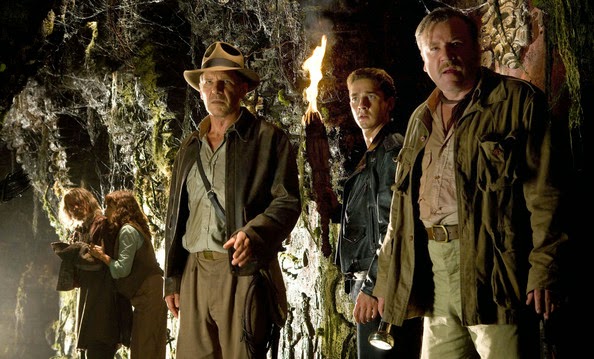
Indiana Jones and the Kingdom of the Crystal Skull


Indiana Jones and the Kingdom of the Crystal Skull (Steven Spielberg, 2008)

A fourth instalment of the franchise has been in the rumors for many years and even its director Spielberg himself thought he could produce and let the directing wheel to another younger filmmaker. He was thinking that he was in a whole other place as a director since the series began in 1981. Let’s say he couldn’t more right about it.
Once, Steven Spielberg was an inspired young director not taking himself too seriously and he actuallly let the fun, the humor, and the entertainment take more control of his films. It was all for good when you watch Duel, 1941, Raiders of the Lost Ark, E.T., Jaws, Close Encounters of the Third Kind, and Jurassic Park. The later was probably the last Steven Spielberg film. With Schindler’s List, Spielberg became Mr. Spielberg and he became this serious filmmaker taking under his wing the whole Second World War flicks genre with Saving Private Ryan and producing the overrated Bands of Brothers miniseries. Something was permanently shut in this director’s mind and serious subjects like Munich and Lincoln were his work. No more playground like the sets of Jaws. With some interesting glimpses here and there with Catch Me If You Can, Artificial Intelligence, and Tintin could not save the strained seriousness of this once amazing director.

With all that said, since it is in the air of the time to bring back 1980’s films and franchises with sequels or remakes, because more bankable than risky projects, the timing was right for Indy’s comeback. Set in the Cold War this time, this is arguably a nice blink of an eye to the fans of the series with obvious links with the precedent films and reprisal of entire scenes. Even cinematographer Janusz Kaminski was trying to imitate Douglas Slocombe’s aesthetics. Does it work? Indeed, the first sight of the classic fedora, the original score of John Williams still gets you into the mood.

But it felt a lot like they were trying to make an Indiana Jones movie more than they were making one. Fans of the series could have do the same without Spielberg, George Lucas, and company. Still, reviews and the public felt it was a poor fourth film and even Shia LaBeouf was not its greatest defender. Saying he lost respect in the director he once admired. One would say the young actor is not shy of provocative declarations but one have to give to Mr. LaBeouf the fact that he says what he thinks and thinks what he says.

It was nice to have Marion (Karen Allen) back but the whole plot with her and Mutt (LaBeouf) is very tacky and so predictable. Once again Spielberg felt into sentimentality and I don’t think it was for the right reasons.
The whole Crystal Skull element is also a recurrence in Speilberg’s obsession and even if it’s one of the many wacky theories of evolution it is still very far from the adventurous archeaologist’s interests. When in Raiders and Last Crusade Indy was chasing religious artifacts here he is looking for things that scientists would never take seriously. Get back into your history books and dig a little deeper into Humanity’s lost treasures. I’m sure Indiana Jones can chase many other lost bits of History. Just look at Robert Langdon and I’m sure you’ll think about something.
Even Cate Blanchett couldn't save this!

Finally, since my expectations were quite low, I was not that much negative about my encounter with the Crystal Skull. Sure it’s no Raiders but I don’t want the same film again and again. It is like Tintin, entertaining but the original is still the better. Sometimes when a classic is a classic it must rest untouched. A trilogy is always better in three films.
 

2012-08-31

The Man Who Souled the World


The Man Who Souled the World (Mike Hill, 2008)

THE MAN WHO SOULED THE WORLD tells the story of Steve Rocco, the irreverent genius who transformed the skateboard industry from corporate to skater owned with a do-it-yourself punk attitude.

For those who are regulars on this film oriented blog you know how I like to digress to my other interests. And boy, do I have lots of interest: Cinema & Films, History, Snowboarding, Skateboarding, Graphic Novels, Music, Drums, etc.  Well, this review combines three of my main interests this summer. Mostly Skateboarding, History, and films more specifically documentaries. This very fun documentary narrated by Jackass’ very own Jason Acuna aka Wee Man. Brought me back to my high school days when I was skipping classes to go skate, until dawn and destroy shoes, decks, wheels, etc. Not being a big fan of documentaries, except when they treat about subjects I have in heart might be a flaw for this review but I think it is interesting to still review The Man Who Souled the World.

Centering on Steve Rocco a pro skater who decided to found his own skateboard company and get the actual money into his pockets and the skater’s instead of letting the big guys behind their desks who owned the companies back then. He founded World Industries and it became one of the bestselling brands of skateboards in the 1990’s. However, in the process Rocco didn’t only made money and friends. He attacked the other companies directly in the publicities and always kept a “fuck it all” “do it yourself” attitude towards the business. Using the mottos of Punk Rockers he built an empire by crossing every rules of his enemies.
World Industries' Logo
 The format of the documentary is pretty standard letting the people involved at the time getting full expressions and punning each other in response. Besides Rocco’s interviews one of the most supernatural skaters Rodney Mullen has a lot of air time. We also see Steve Berra, Jason Lee, Mike Carroll, and many other skating legends.

Rocco crossed so many lines that he had to create his own magazine to run his publicities and it was the genesis to Jackass. He also gave film director Spike Jonze first directing job to shot a skate video.

At the end we feel that the community of skate has respect and hate towards Rocco. He publicized and made a whole bunch of money because of the sport but also pissed so many of his friends in the same time. This is a very good documentary on the coming of a sport that was considered as counter culture but that is now available in shopping malls and skate shops are as frequent as clothes shops. This is a character that can be as interesting as Mark Zuckerberg who revolutionized another aspect of our 21st century lives. Recommended.

2012-08-09

À l'ouest de Pluton

Note: this a new series of reviews I'm installing on Le Mot du Cinephiliaque. Since I was born and raised in the Province of Québec I've decided to present and review some of the films that populate my culture and that represents the Cinema of here. The feature will be called after our license plate motto: "Je me souviens" for "I remember".

À l'ouest de Pluton (Henry Bernadet & Myriam Verreault, 2008)


A mosaic look at a day in the lives of twelve Quebec high schoolers strikingly captures the unique nature of the teenage years.

This little known movie entirely shot in Quebec City, Loretville to be more precise, the suburb I grew up in, is a superb independent work of cinema. Far from being the regular coming of age story. We follow a group of teenagers doing what teenagers do in their evenings and interacting between themselves, their parents, and teachers. There is nothing very extraordinary going on in À l’ouest de Pluton. This is life at its simplest and raw form.

The story is almost nonexistent since we kind of follow the teens and that it has a natural and almost documentary feeling of the camera of the filmmakers. In an interview, they said that it was an important collaboration with the young non actors. They were always making adjustments on the situations, the action, the dialogues to make it feel more real and less staged.

The cast is almost entirely formed of non actors and they are pretty much all very natural in their roles. Well, they seem to be themselves and not play a part. It reminds the films of Abbas Kiarostami or some foreign filmmaker that pictures life and the little moments of banality that populates the most common moments of our existence more than the typical Hollywoodian clichés of High School movies. It can also be linked with one of the best films of the genre and one of the most unique films of the 1990’s Richard Linklater’s Dazed and Confused.


The documentary approach here can relate to the great masterpieces of fellow Quebecer filmmakers Denys Arcand, Pierre Perreault, and Michel Brault. The first films from Québec to really distinguish themselves were documentaries. We often forget about that and I suspect Verreault and Bernadet to have made a reference and being influenced by those greats.

This little gem of independent Quebecer Cinema gives hope for a better and greater Cinema than the simplest comedies released summer after summer in Québec that doesn’t even deserve some words posted on an humble blog. A film that makes me very proud of the Cinema of Québec. Highly recommended

2012-03-21

Hunger

Hunger (Steve McQueen, 2008)

The first film of director Steve McQueen, no not the actor who did action films in the 1970's, but the same director who made Shame in 2011, both films starring one of the most interesting actors of the moment, Michael Fassbender (Inglourious Basterds, A Dangerous Method), Hunger is the kind of film that stays with you for a long time. This is a lesser known film that depicts the fight of the Irish republicans inmates in a prison of Northern Ireland.

Based on the true story of Bobby Sands (Michael Fassbender) who went on a hunger strike to stop the War in 1981. Before going to Sands, McQueen introduces us to a warder, Raymond Lohan, (Stuart Graham) living on the edge of his seat because he mistreats the republicans in the prison. The few moments passed with Lohan, washing his bloody knuckles, smoking a cigarette alone, are silent and full of implied guilt and discomfort towards his actions. Like every war everyone has to take a side and stick to it because the consequences are unpleasant. Then, we are introduced to the prison itself with the confinement of Davey Gillen (Brian Milligan) who discovers the conditions of the prison, the walls covered with the inmates' excrement, being naked because refusing to conform to the code, and the many ways to protests against the oppressors. It is much later that we discover Sands amongst the many inmates and how he is some kind of "leader" into the walls of this prison. Another character that is briefly seen is the young Riot Prison Officer that breaks up and hides in the face of the violence done towards the prisoners that after all are humans. It is one of the many humanist symbolism used by McQueen to denounce the treatments and conditions of the inmates.

The central moment of the film, the key scene is a 16 minutes one take of Bobby Sands discussing with the Priest (Rory Mullen) that explains to the viewer Sands' point of view and motivations to begin his hunger strike. This dialog is superbly acted and the changes of emotions and directions are many and what could have been done with editing and action/reaction shots is done in only one take and one steady camera.

The last act of the film is probably the weakest because of the more contemplative work and the lack of dramatic turns. One could say that what is shown is dramatic enough and that the gaze of Sands becoming weaker and leaner is disturbing enough. With that said, the overall impact of Hunger isn't less alarming and eye opening to these events that happened less than thirty years before the film was made. The fact that it reflects recent history makes us consider how we as humans treat our peers and will do to fight for freedom and how Nationalism can be harmful to everyone involved.

2011-09-19

That's It That's All

That’s It That’s All (Curt Morgan, 2008)

With the release of the new feature by the BrainFarm films production, The Art of Flight, I wanted to get back and catch-up with their previous offer That’s It That’s All: this is a marvellous film to get pumped to. Well, this is the first of a series of Sports related media releases I will be reviewing on Le Mot du Cinephilaque. My major concern on this modest Blog is to talk about films. Snowboarding is a big part of my life since 15 years or so. The commercial vehicles that are the snowboarding movies took many looks during the latter years of this somewhat young sport. Directly related to its bigger brother Surfing, snowboarding followed some of the paths of the sport of The Beach Boys. Surfing was the first sport to actually shot videos of professional athletes and release them to promote their brands. Then skateboarding, another part of my life, followed and then snowboarding also did. The latter sport is an hybrid of surfing and skateboarding, the attitude of the sport and the fashion is way more influence by skaters than surfers but the three sports are interconnected and many athletes like Shaun White, Terje Haakonsen, Todd Richards, JP Walker, etc. Managed to master two or more of these sports. During the 1990’s snowboarding movies were handheld cameras by other riders who were filming each other and put it in segments with punk rock soundtracks. It gives an amateurish look to the whole package or as we call it in the milieu a Do It Yourself approach. A very counterculture underground vibe to it all. It came from skateboarding and punk rock. Slowly companies understood the strength of this almost free promotion.

In 1998, came something that helped commercialize and popularize the sport, for some people it represented the ultimate recognition for a sport for others it was the beginning of the end. The Winter Olympics, with the Halfpipe qualifications held by the FIS(ski federation) instead of the ISF(snowboarding federation). It represented to many times Halfpipe World champion Terje Haakonsen an insult to the sport, even if the Norwegian was the favourite to win the gold he boycotted the event in protest for that decision.

After the Olympics the sport never been the same, Shaun White two times Gold medal winner makes almost 10 million of dollars per year while guys like Peter Line, who practically wrote the book of freestyle snowboarding, had to sell Forum/Foursquare to Burton to survive.

Snowboarding has an incredible history and even if the sport is populated with major sponsors like Red Bull (the main sponsor of the BrainFarm films) it still is reserved to a small group of outcast in our society talking about jibs, pipes, boards, dudes, etc. This is a lifestyle and a passion.

The film, That’s It That’s All elevates how snowboarding films were made, almost entirely shot from helicopters from Red Bull, filled with National Geographic-like scenery of Backcountry Mountains, short commentaries by the featured riders this is more than just a juvenile DIY movie. The strength of it all is because it makes you want to go out and actually go snowboarding instead of the latter years where the video parts are filled with street rails and no actual Mountain riding. Street snowboarding is the combines the most spectacular aspect of skateboarding into snowboarding. But for most of the riders out there we don’t actually do rails all winter long. Most of the consumers of the sports are still going to resorts trying to kill it in the parks and last pipes. However, the greatest days of snowboarding I had in my life were the ones I went with some friends in a mountain with fresh snow and powder. We call it backcountry and this is the best you can get. That’s it that’s All concentrates the riding in those areas: New Zealand and Alaska.

Another interesting topic is the fact that they went to meet legends of the sport that retired from the big spots and continued to ride for themselves and the love of the sport. Bryan Iguchi, Terje Haakonsen, and Jeremy Jones are the legends in That’s It That’s All but the star of the film is Travis Rice the most versatile and complete athlete of this sport today. His style flows superbly and his bag of tricks is just unbelievable. The soundtrack is grandiose and fits the perfect images that populates the movie.

As I stated earlier this is the first of a series of reviews of Snowboarding films I will be watching to get me into the vibe for the beginning of the new season that is approaching. The Art of Flight the new feature from the makers of That’s It That’s All is the most awaited video since the brighter days of Mack Dawg Productions. I hope to see it soon since it is already available on iTunes.

Special Mention
*The greatest snowboarding film of all time*

2010-11-06

In Bruges (2008)

In Bruges (Martin McDonagh, 2008)


After a job that tragically ended, two hitmen, Ray (Colin Farrell) and Ken (Brandan Gleeson) must stay quiet in a little Belgian town called Bruges. Starting slowly and sometimes off-balance, the plot just get richer and richer as long as the story and the characters evolves. It was probably the first time I've seen Ralph Fiennes play a character I actually believed in. The many sub stories doesn't all bring something central to the film but they fill some wholes that the simple main story could have let. Peter Dinklage as something like himself, the love interest, the little ex-boyfriend prick and even the landlady make a very good supporting cast to the whole of the film.

The film mixes many genres and it is for good. The grey gangster flick that announces the first thirty minutes gets better with the mix of some comedy, romance, and even thriller. The mix doesn't seem forced or too saturate for the lenght of the film. It's a very enjoyable ride all along. The friendship between the two leads is near an odd couple relationship that has its great moments. On the other side, the climax slowly climbs and many situations have very good turns of events.

I would recommend this movie to anyone who wants a good evening. It's the first film from director Martin McDonagh, I'd like to see more from him because In Bruges shows good directing potential.

2010-07-04

The right one is in!

Lat den ratte komma in aka Let the Right One In (Tomas Alfredson, 2008)


With great expectations I bought Let The Right One In. Shortly after that I watch it with a little stress of liking it or hating it: when there's a big hype about a film I often avoid to see it, example I haven't seen Avatar yet nor Titanic... So the hype around LTROI was probably positive in the way that I love foreign films but I hate the term foreign film that determinates everything that is not American and/or English spoken. For now on, I will write about International films and you will never see the term foreign film here again.

Set somewhere in the 1980's, Oskar, a boy of about 12-13 years old is lonely and reads a lot. He gets picked on by other guys in his class. Their picking is very rude and Oskar feels miserable about it. One night he meets Eli who just moved next door to him. She is a girl of his age and she is very mysterious. They will become friends and Eli will help Oskar to get his pride back and have confidence. The fact that everyone knows: Eli is a vampire is not the turning point of the film, her life is not that simple and both will help the other to get on with their lives. Like many Horror films, Let The Right One In is about the teenage years of life and how our body and our minds changes. This is a film that is a lot more than just a vampire story.

Like I've read a lot when it came out I think every Twilight enthousiast should see Let the Right One In before watching another chapter of this "vampire" saga...


A review by Michaël Parent

2010-06-30

Not another Epic movie... John Woo's Redcliff

Redcliff (John Woo, 2008) Review


This two piece epic by one of the best director of the Asian continent is a wonderful visual achievement. The epic genre, if it can be considered as a genre, has been redefined many times and mostly because of the CGI effects and because of the popularity of the Lord of the Rings trilogy.

Well, epic movies are costly to the studios and they must bring many $$ to the box office and they must please their crowds. A grand majority of those films have good scripts, that could get positive reviews and broad stories with clear intentions to be appreciated by the regular moviegoer. For example, once again the Lord of the Rings...

Here on the topic of John Woo's Redcliff, the filmmaker hits the spot for a good and efficient epic film. The many characters demonstrate important values, courageous sacrifices, loyalty, etc. The qualities of Redcliff are indeniable. But, it may just the writer of this review here, epic films have become so widely that it kinda fell : not another epic film... And yes that was what your host thaught all along Redcliff!

Moreover, the wire-fu/samurai/asian epic film genre kinda bore me those days, the momentum has passed and even with all the great films it has given us it's like George A. Romero that can't quit doing zombie films. A genre must evolve or stop and pass to something else because except some diehard fans the other cinephiles will let the train pass and wait for the next emerging movie genre...

Redcliff is worth the look especially if the viewer likes grand entertainment and classic stories. It has its many qualities and John Woo still got it but I prefered his Hard Boiled and The Killer way better than this epic film.


A review by Michaël Parent

2010-04-27

Synecdoche, New York - Charlie Kaufman (2008)


From the writer of Adaptation, Being John Malkovich, Eternal Sunshine of the Spotless Mind Charlie Kaufman, comes a masterpiece directed with great mastery.

Philip Seymore Hoffman portrays Caden Cotard, a theater writer and director. He is awarded a grant to do a grandiose play that will take place in a huge warehouse. But it' the work of his life, literally. It tells his life before, his present life and even some scenes will take place in his future. This is a uncommon story from one of the most uncommon screenwriter of all-time.

The structure of the film is very deep in meaning. It is probably Kaufman's most personnal script to date too; its dense, intelligent, captivating, and intoxicating. Synecdoche, New York is sometimes the knid of film you have to read between the lines and other times the plot is evident the characters even tell themselves their motivations and anxieties. The passage through time is to the viewer to discover and instead of being annoying it just flows naturally.

Philip Seymore Hoffman is as always excellent in his role of Caden Cotard. He gives to the character his sense of desperation and inspiration. The supporting players are all inspired too and it seems that they feel privileged to be a part of the first film directed by one of the most estimated screenwriters of our time.

Besides its slow tempo Synecdoche, New York is a monument of moviemaking!


A Film Review by Michaël Parent

2009-12-11

Les meilleurs films de la dernière décennie - 2008

Pour vous faire languir encore plus avant le dévoilement de mon Top 100 des meilleurs films de la décennie qui se terminera en ce 31 décembre 2009 je vais vous présenter le Top 10 de chacune de ses années!

Voici mon Top 10 personnel des 10 meilleurs films de l'année 2008:


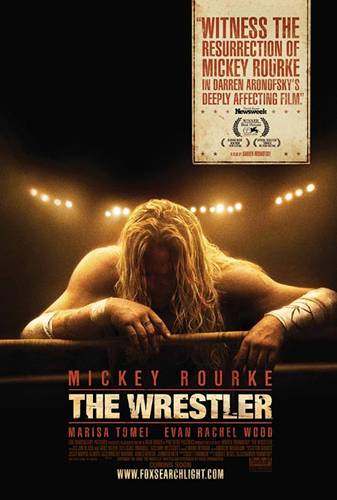
1. The Wrestler (Darren Aronofsky)

2. Gran Torino (Clint Eastwood)

3. Slumdog Millionnaire (Danny Boyle)

4. Revolutionary Road (Sam Mendes)

5. Funny Games (Michael Haneke)

6. The Dark Knight (Christopher Nolan)

7. Vicky Cristina Barcelona (Woody Allen)

8. My Blueberry Nights (Wong-Kar Wai)

9. Redbelt (David Mamet)

10. Milk (Gus Van Sant)
Related Posts Plugin for WordPress, Blogger...