Showing posts with label BestFilms. Show all posts

2016-03-01

The Marriage of Maria Braun

The Marriage of Maria Braun (Rainer Werner Fassbinder, 1979)

A World War II widow seeks to adjust to life in postwar Germany.

2016-02-03

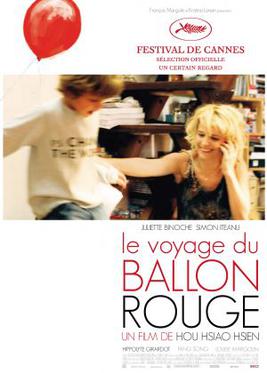
Flight of the Red Balloon


Flight of the Red Balloon aka Le voyage du ballon rouge (Hou Hsiao-hsien, 2007)

A little boy and his baby-sitter inhabit the same imaginary world: through their adventures they are followed by a strange red balloon.

2016-01-05

The Ballad of Narayama (1983)

The Ballad of Narayama (Shohei Imamura, 1983)

In a poor 19th century rural Japanese village, everyone who reaches the age of 70 has to climb a nearby mountain to die. An old woman is getting close to the cut-off age, and we follow her last days with her family.

2015-10-30

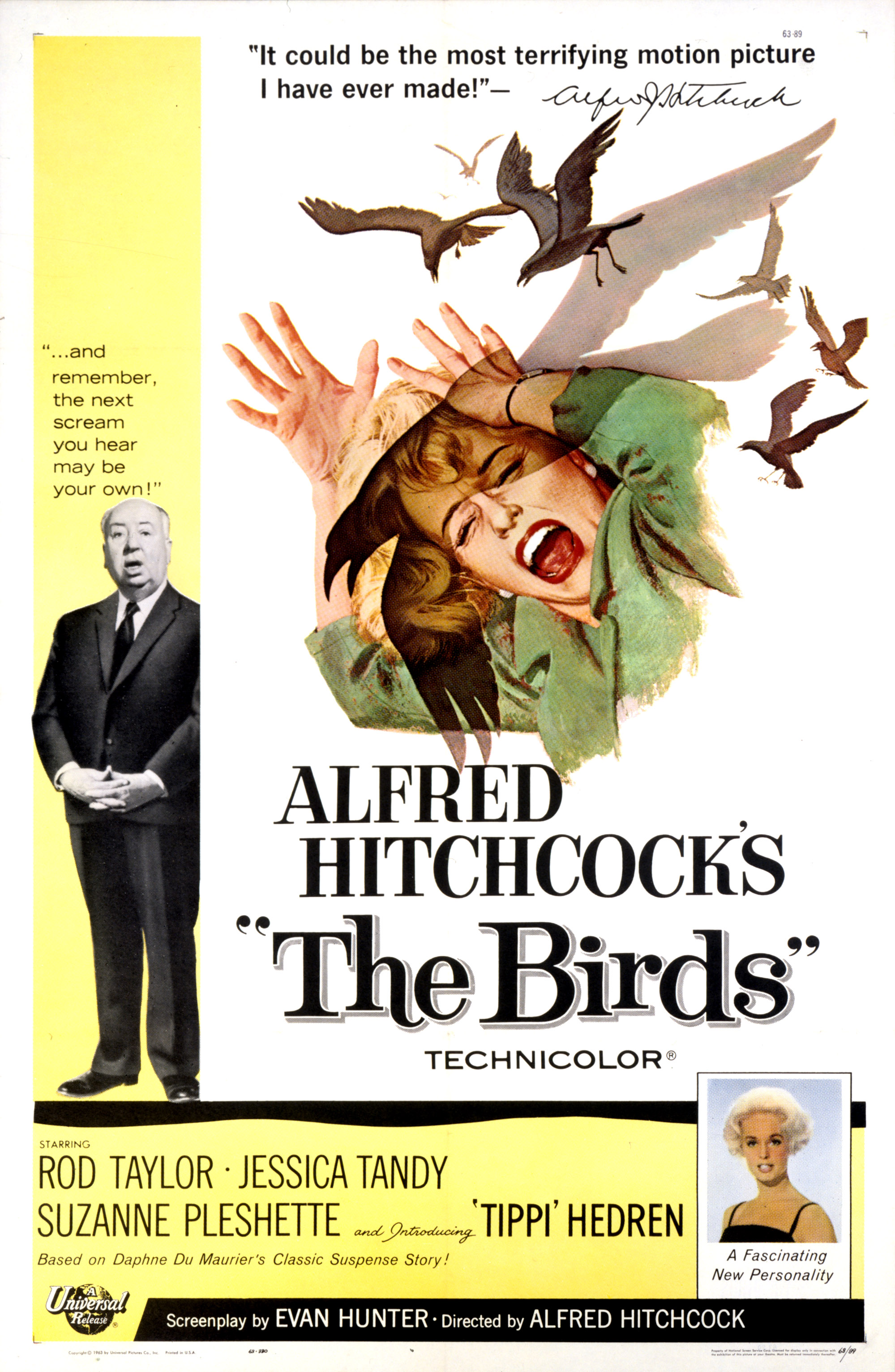
The Birds


Note : this review is a contribution to The Universal blogathon hosted by Silver Scenes.

The Birds (Alfred Hitchcock, 1963)

A wealthy San Francisco socialite pursues a potential boyfriend to a small Northern California town that slowly takes a turn for the bizarre when birds of all kinds suddenly begin to attack people there in increasing numbers and with increasing viciousness.

2015-10-26

The Cabinet of Dr. Caligari


Note : this review is a contribution to The Silent Cinema blogathon hosted by In the Good Old Days of Classic Hollywood and Lauren Champkin.

The Cabinet of Dr. Caligari (Robert Wiene, 1920)

Dr. Caligari's somnambulist, Cesare, and his deadly predictions.

2015-04-27

Come and See

Come and See aka Idi i smotri (Elem Klimov, 1985)

After finding an old rifle, a young boy joins the Soviet Army and experiences the horrors of World War II.

Often described as the most realistic War film ever made, Elem Klimov’s final film, Come and See is a tour de force of acting, cinematography, and human extremism exposition. This engaging film of beauty and ugliness of a teenage boy who lives through World War II in Belorussia and who is taken to fight along the Russians against the Nazi occupation and its extermination of those who are called the White Russians.

Midway into this nightmarish vision of one of the worst aspects of humanity in the 20th Century, War and the extermination of nations, I felt like if I was watching the ultimate horror movie. Knowing that this kind of story never ends well I tried not to get too attached to the characters but from the first moments I was hooked with the kids playing on the beach looking to play war during War. As young boys we imagined playing war was fun and wanted to shoot and live those action movie moments. However, Florian (A. Kravchenko) gets way more than he asked for. Not long after he finds an old rifle he is taken from his mother and two young sisters to fight with the Red Army. Just as he is we are the silent witness of the worst humans can do. What frightens the most with Come and See is how it is probably not exaggerated how the horrors and the cruelty is done.

Often, the main critic about War films is that it depicts an exciting vision of killing enemies and action movie of good and bad guys. By far, Come and See is the most efficient anti-War film ever made. I’ve read somewhere that compared to it Apocalypse Now is the ultimate date movie, well Apocalypse Now and Full Metal Jacket are rewatchable movies and have an entertainment value that can distance us from the horrible aspects and are mostly artistic visions of War from their directors. With Klimov’s film there’s a high cinematic value and he probably used some of the most manipulative and involving techniques to makes us feel the disgust of War but no one can stay passive with this film.

As much as the qualities of Come and See are obvious as it is depicting one of the worst nightmarish visions, we feel that the manipulation and the strings of sensationalism are a bit overwhelming. Some scenes are almost unwatchable and no one is spared. Just as the conclusion of the film evokes, History can’t be erased or reversed and sadly monsters like the Nazis have lived before and nothing can be done to correct that. It is a bit pedestrian or blockbuster label but Come and See fells into the mandatory film category and not for the faint of heart too. It reminds us of the U.N.’s statement after the Second World War of never again we must let this happen.


2015-04-10

The Exterminating Angel


The Exterminating Angel (Luis Buñuel, 1962)

The guests at an upper-class dinner party find themselves unable to leave.

Often described as the twin film to director Luis Buñuel’s own The Discreet Charm of the Bourgeoisie, The Exterminating Angel is a surrealist exercise of style and screenwriting. Again shot by long time collaborator to Buñuel, Gabriel Figueroa, The Exterminating Angel is the story of a group of high class bourgeois that are invited at a dinner party after the opera. Strangely as the guests arrive to the mansion almost all of the domestics leave the house just like rats in a lost ship. Then with twenty seven various repetitions in the story the guests are isolating themselves in the house and have to live together in this island. Much like a play on Lord of the Flies or an essay on Jean-Jacques Rousseau’s writings, Buñuel demonstrates how decorum and ethic codes are pompous and empty when humans are piled like a horde of dogs together.

While playing on the edge of comedy, social commentary, and experimental cinema, Buñuel was a one of a kind storyteller. Even more with The Exterminating Angel than with The Discreet Charm he had to convince us of believing such a story and not make us blink with the repetitions. The first two repetitions are quite obvious with the two arrivals of the guests and the two toasts but as the story goes the subtlety of those is almost unperceptible. Just like the characters of his story, Buñuel wants to debilitate us from seeing with our conventional and conformist eye.

In this social commentary by The Exterminating Angel, there’s a clear contempt of the upper-class and its ways. Presenting them as animals or even as wolves. It is clear that Buñuel couldn’t have made such movies some those themes under the Hays code in USA. By chance, Mexican backers believed in their director and left us a great heritage of unique films of great quality.
Related Posts Plugin for WordPress, Blogger...