Showing posts with label (1). Show all posts

2017-11-02

Psycho (1960)

Psycho (Alfred Hitchcock, 1960)
>Psycho (1960) on IMDb
   
A Phoenix secretary embezzles $40,000 from her employer's client, goes on the run, and checks into a remote motel run by a young man under the domination of his mother.

Psycho is probably the film that represents Alfred Hitchcock the most in popular culture. With the proto-slasher killer and the now legendary shower scene where Janet Leigh gets butchered naked. Psycho is now encrusted in the common minds as Hitchcock’s masterpiece and his trademark of Horror.  Well that is part right and part wrong. First, Hitchcock was not a dedicated horror filmmaker has much as a storyteller that mastered thrills and suspense. Is Psycho his masterpiece? We can count at least five films as his masterpieces; Rear Window, North By Northwest, Vertigo, Psycho, and The Birds. However, is Psycho his ultimate masterpiece? Some might say yes to that answer but recently, 2012, Vertigo was recognized as the greatest film of all time by the Sight and Sound poll held each decade since 1952. However, is you ask me, and I believe that if you are reading those lines you are asking me, Psycho might be the most personal masterpiece Hitchcock ever directed. With the floating sexuality from the beginning of the traveling in the hotel bedroom where Marion Crane (Janet Leigh) and Sam are having an affair to the shower scene, sex is present. Then you have the thrill, the build-up to the first murder, the fear of the policeman that suspects Marion of getting away in a hurry and follows her to the point where seh trades car, Hitchcock was affraid of cops since a childhood memory that his father asked the police to jail him for a moment so he would behave. There are themes of Hitchcock’s obsessions that are recurring but also completely succesful in their execution.

Let’s now discuss the thing that is almost synonymous with Psycho, the shower scene. In his discussions with François Truffaut, Hitchcock admitted that it was the only reason he wanted to do the film. I doubt that a bit since the film is so perfect in every one of its elements that, yes the scene is outstanding and his use of montage, jump cuts, traveling into Leigh’s eye to show us she looked at the money before life gets out of her, and the shot of the knife entering the flesh that was shot in reverse so that the knife never penetrates the wet skin, but still the build up leading to that scene is a lesson in cinema. That scene took many days to shot and the use of many angles makes it geometric and puts us into the shower side by side with Marion. As if we were taking the shower with her and witnessing the scene getting soaked. When the killer gets in and attacks then kill Marion, the story shifts from the point of view of Marion to Norman Bates (Anthony Perkins) that comes and washes meticulously the crime scene. This long afterwards of cleaning and getting rid of the body and the car is also as interesting as the assassination scene itself. When he gazes the car slowly sinking into the swamp, the montage from the car to his face has a comic mesure that makes us his acolytes.

Janet Leigh
Anthony Perkins
Birds
Horror
Cinematography

Saul Bass 

2016-09-14

How Green Was My Valley

Editor’s note : this review is a translation of one of the first reviews to ever appear on this blog back in 2009. Those were less than a 150 words long and were written immediately after the viewing of each film. This is as aforementioned a translation and a longer edit of this original film review.

How Green Was My Valley (John Ford, 1941)
At the turn of the century in a Welsh mining village, the Morgans, he stern, she gentle, raise coal-mining sons and hope their youngest will find a better life.

Oft maligned as the greatest steal of all time at the Academy Awards, wining Best Picture and Best Director over Orson WellesCitizen Kane, John Ford’s How Green Was My Valley, that was supposed to be William Wyler’s film, is part of one of the most prolific era of Ford’s career. Along Stagecoach, The Long Voyage Home, Young Mr. Lincoln, The Grapes of Wrath, Tobacco Road, and Drums Along the Mohawk were all made between the time span of 1939 and 1941. This is almost as many films as Stanley Kubrick did in his entire career. Joking aside, Ford’s How Green Was My Valley is quite unique and personal in his career.

2016-09-10

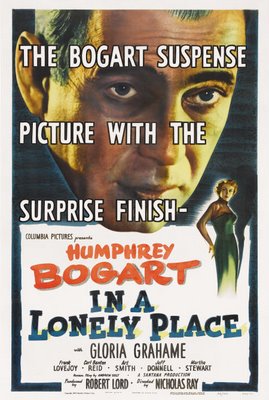
In a Lonely Place

Editor’s note : this review is a translation of one of the first reviews to ever appear on this blog back in 2009. Those were less than a 150 words long and were written immediately after the viewing of each film. This is as aforementioned a translation and a longer edit of this original film review.

In a Lonely Place (Nicholas Ray, 1950)

A potentially violent screenwriter is a murder suspect until his lovely neighbor clears him. But she begins to have doubts...

One of the many films of the 1950’s that is considered as part of the Film Noir genre with crisp black and white, legendary director Nicholas Ray, and Humphrey Bogart. Add to that Ray’s wife at the time, Gloria Grahame, and you have a great film on paper.

The opening scene is a piece of anthology by itself in Bogart’s filmography, his character Dixon Steele, a drunk screenwriter on a dry spell, is in a bar and gets to punch a man, insult another one, and gets into a fistfight. All of that at noon. He represents the wounded man that Bogie always succeeded to portray in films. The perception of this actor can be compared with this character as a man that is mysterious and a bit rude like a wild animal that struggles to be around his peers.

2016-04-25

La femme d’à côté


La femme d’à côté (François Truffaut, 1981)

Two ex-lovers wind up living next door to each other with their respective spouses. Forbidden passions ensue.

2016-03-14

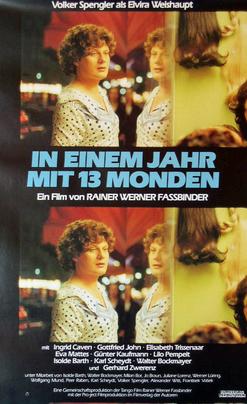
In a Year With 13 Moons


In a Year With 13 Moons (Rainer Werner Fassbinder, 1978)

This drama follows the last few days in the life of Elvira (formerly Erwin) Weisshaupt. Years before, Erwin told a co-worker, Anton, that he loved him. "Too bad, you aren't a woman," he replied. Erwin took Anton at his word. Trying to salvage something from the wreckage love has made of his life, he now hopes that Anton will not reject him again.

2016-03-01

The Marriage of Maria Braun

The Marriage of Maria Braun (Rainer Werner Fassbinder, 1979)

A World War II widow seeks to adjust to life in postwar Germany.

2015-10-30

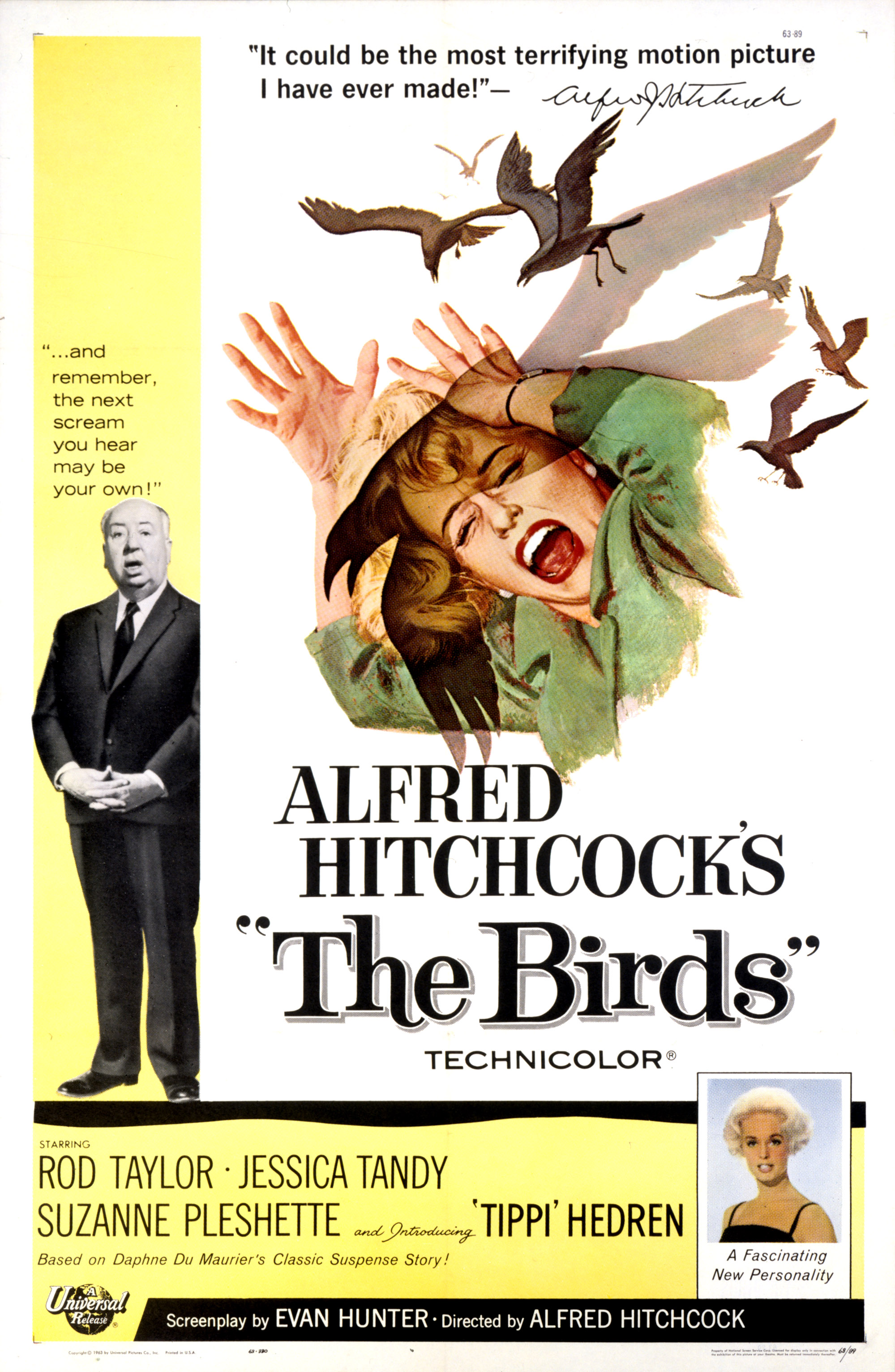
The Birds


Note : this review is a contribution to The Universal blogathon hosted by Silver Scenes.

The Birds (Alfred Hitchcock, 1963)

A wealthy San Francisco socialite pursues a potential boyfriend to a small Northern California town that slowly takes a turn for the bizarre when birds of all kinds suddenly begin to attack people there in increasing numbers and with increasing viciousness.

2015-10-26

The Cabinet of Dr. Caligari


Note : this review is a contribution to The Silent Cinema blogathon hosted by In the Good Old Days of Classic Hollywood and Lauren Champkin.

The Cabinet of Dr. Caligari (Robert Wiene, 1920)

Dr. Caligari's somnambulist, Cesare, and his deadly predictions.

2015-06-30

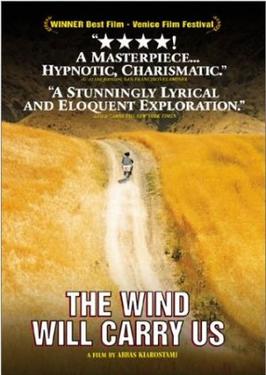
The Wind Will Carry Us

The Wind Will Carry Us (Abbas Kiarostami, 1999)

Irreverent city engineer Behzad comes to a rural village in Iran to keep vigil for a dying relative. In the meanwhile the film follows his efforts to fit in with the local community and how he changes his own attitudes as a result.

This poetic tale of contemplative scape is about a man returning to the source of humanity. In a rural village far away from Tehran, the man from the city has to learn to reconnect with the sufficient simple life of the people.

Director Abbas Kiarostami shots this film with long takes and camera movements so subtle that it takes its viewer as a part of the location. Kiarostami’s films have no real contexts and are told as if we were into the story. He doesn’t rely on much technique but he uses long scenes of genuine human interactions.

As we follow Behzad in his routine of taking calls with a cellphone that only works on a hill where is the cemetery of the village the many repetitions on The Wind Will Carry Us makes us wonder how life in small villages is not subjected to time and routine. Behzad learns to live into this particular mindset and felt under the charm of the life. Unlike his colleagues that are never shown, he gets to be a part of the ecosystem of the village and lives and breaths the location he is forced to stay.

His mission which is never clear, is to do a report on the dying of a old woman. Just like this is a clash for me as a North American, the culture of the village is a clash to Behzad and we are linked to his discovery.

This is a film that sticks with its viewer for a long time and it is meditative without being arid or overly long. In fact, this might be one of Abbas Kiarostami’s masterpieces along with Close-Up. It is memorable and quite beautiful with warm colors and wide screen vast hills. One particular scene, which explains the title of the film is the milking of a cow in a dark cavern with a young woman and Behzad reciting a poem as a way to trade the milk for some knowledge. The trade is not an open trade but we feel that money is useless when you can have human exchange.


The Wind Will Carry Us proves again that Abbas Kiarostami is one the most important storyteller of contemporary films.

2015-05-16

The Red Shoes

Note : this review is my contribution to the blogathon My Favorite Classic Movie hosted by Rick at Classic Film & TV Café.

The Red Shoes (Michael Powell and Emeric Pressburger, 1948)

A young ballet dancer is torn between the man she loves and her pursuit to become a prima ballerina.

As debatable as this affirmation can be, The Red Shoes is The Archers’ masterpiece. And I’m standing firmly on my position about this opinion. Even if they have a bunch of other outstanding films like Black Narcissus, A Matter of Life and Death, and The Life and Death of Colonel Blimp, the great dancing sequences and the superb composition of frames and the tremendous acting of Moira Shearer and Anton Walbrook, just to name those two, makes it one of the most re watchable movies of all time.

Previously, I wrote The Archers which is the name of the company of co-directors Michael Powell and Emeric Pressburger. Together they directed nineteen films and half of them are considered as classics and five of the whole lot are at some level masterpieces. We’ll however concentrate our attention on The Red Shoes and its qualities.


With its careful treatment by the Criterion Collection, cinephiles of today can watch it in a condition that is as good as at the time the film was released in 1948. On the question of his favorite film of all time, famous great director Martin Scorsese has often answered The Red Shoes and places it with Jean Renoir’s The River as the two best Technicolor films of all time. His admiration of the film is so strong that the sets and his signature in his film New York, New York are directly inspired by The Archers’ film.

Talking about The Red Shoes’ influence, you have Dario Argento’s masterpiece Suspiria that borrows the vivid colors and aesthetics of its dancing predecessor. Argento’s violent film also has a visual beauty in his Hitchcock horror. In the latest years, the Darren Aronofsky batshit crazy Black Swan film which the story is also about a female ballerina dancer has obviously been projected the crew to get some of the elements and feels. Especially the relationship between the dancer and the director is different but shows how strong this element can be in the life of a ballerina.

It is a sumptuous film that Powell and Pressburger did in The Red Shoes and the production and the final are proving me right when I state, once again, that it is their masterpiece. It’s been ten years since the first time I watched The Red Shoes and I can vividly recall every scene from this first watch. Since then, it became a favorite of mine and this is why choose to pick this movie as my favorite classic film for the first National Classic Movie Day.


2015-04-10

The Exterminating Angel


The Exterminating Angel (Luis Buñuel, 1962)

The guests at an upper-class dinner party find themselves unable to leave.

Often described as the twin film to director Luis Buñuel’s own The Discreet Charm of the Bourgeoisie, The Exterminating Angel is a surrealist exercise of style and screenwriting. Again shot by long time collaborator to Buñuel, Gabriel Figueroa, The Exterminating Angel is the story of a group of high class bourgeois that are invited at a dinner party after the opera. Strangely as the guests arrive to the mansion almost all of the domestics leave the house just like rats in a lost ship. Then with twenty seven various repetitions in the story the guests are isolating themselves in the house and have to live together in this island. Much like a play on Lord of the Flies or an essay on Jean-Jacques Rousseau’s writings, Buñuel demonstrates how decorum and ethic codes are pompous and empty when humans are piled like a horde of dogs together.

While playing on the edge of comedy, social commentary, and experimental cinema, Buñuel was a one of a kind storyteller. Even more with The Exterminating Angel than with The Discreet Charm he had to convince us of believing such a story and not make us blink with the repetitions. The first two repetitions are quite obvious with the two arrivals of the guests and the two toasts but as the story goes the subtlety of those is almost unperceptible. Just like the characters of his story, Buñuel wants to debilitate us from seeing with our conventional and conformist eye.

In this social commentary by The Exterminating Angel, there’s a clear contempt of the upper-class and its ways. Presenting them as animals or even as wolves. It is clear that Buñuel couldn’t have made such movies some those themes under the Hays code in USA. By chance, Mexican backers believed in their director and left us a great heritage of unique films of great quality.

2014-10-01

Tabu (1931)


Tabu (F.W. Murnau, 1931)

The final film of the German master F. W. Murnau, Tabu is a tale of love and dedication of two lovers. Co-written with Robert J. Flaherty, the film was supposed to be an entire collaboration between the two directors. However, after directing the opening sequence Flaherty was relegated to writing and later would be selling his part of Tabu to Murnau for 25 000$. It blends the documentary approach of Flaherty’s masterpieces and the plotted love stories of Murnau’s classic vision of storytelling. Added to all this, Murnau died of a car accident a few days before the premiere of the film.

Those are the gossips around the film but as a whole, Tabu is the last masterpiece of the director who offered such landmarks as Nosferatu, The Last Laugh, Faust, and Sunrise. Mastering again montage, storytelling, and the silent film medium, Murnau demonstrates a lesson of filmmaking. With almost no cards between scenes, and a few indications by the few letters, the plot is clearly told by the construction of images and the smart editing.

Murnau’s story is quite simple and very Germanic in its approach. This is a timeless plot of impossible romance and the rigidity of destiny decided by the Gods. This is the kind of tale that the Grimm brothers could have written and it is easy to relate to. Indeed timeless and also universal to have lovers facing the fate and having to transgress laws and rules to be together.

I can honestly state that I am a fan of Murnau’s films and I have seen Nosferatu at least a dozen times. His grammar, his themes, and his influence is vast and huge. It was a pleasure to watch all his films on the list. Of all his directing credits Tabu might be in the ones I esteem the most. Along the aforementioned Nosferatu, Faust, and Sunrise we are in the major leagues. No wonder, Andrew Sarris in his American Cinema, ranked Murnau as one of the Pantheon directors alongside John Ford, Robert J. Flaherty, D.W. Griffith, Jean Renoir, and many other pioneers of the Art that is Cinema.
Tabu being the final film from a director that left us too soon proves that he still had gas in the tank and lots of films. However, History has proven that great Silent film directors could have a hard time with their passage to talkies. Look at D.W. Griffith who struggled to get work once sound was introduced to motion pictures. Since, Murnau was more at his ease with silent film this could have tainted his recognition amongst the greats.

2014-09-01

L’Avventura


L’Avventura (Michelangelo Antonioni, 1960)

A woman disappears during a Mediterranean boating trip. But during the search, her lover and her best friend become attracted to each other.
Infamously known as one of the masterpieces of the seventh art to have been booed at its first showing at Cannes in 1960. Michelangelo Antonioni’s existential film about the isolation of souls, L’Avventura isn’t one of the most appreciated films of all time. Despite having some elements of mystery and adventure, the simple plot of a woman (Lea Massari) who disappears during a cruise of friends on an Island of Italy and he search of her best friend (Monica Vitti) and her boyfriend (Gabriele Ferzetti) who inevitably fall for each other in the way might even sound a little cliché.

Having myself written a screenplay based on this story, I cannot hide my admiration towards the contemplative elements of Antonioni’s visual storytelling. Of the few Antonioni pictures I have seen, L’Avventura and Blow Up are my favorites. Both films are about mysteries and their central characters are pursuing something that is almost never on the screen. It is the superb cinematography of Antonioni’s spleen story that will let an indelible mark into the cinephiles’ minds.
The simplicity of the story and the apparent simplicity of the mise en scène, that is in fact everything but simple, demonstrate how talented and visionary Antonioni’s contemplative masterpiece can be. In some point, as I was asked to participate to a weekly feature on the now defunct website The Cinematheque, I ranked L’Avventura as the greatest road movie along with Ingmar Bergman’s Wild Strawberries. The adventure that represents Antonioni’s film blends with the spirit of the road movie genre. An introspective journey not only on the road but into the characters’ selves. Few movies have demonstrated that the chase is better than the catch and with L’Avventura we are there and the payoff is not the final moments of the film. But I think that this ending is pure genius.
Or I should say that the journey is the road not the destination. It reveals something in the face of viewers and I believe that it is a film that stinks with you for a long time. You have to actually experience it to completely sense the depth and importance of this unique movie.


The Antonioni regular, Monica Vitti has this mysterious presence on film. Full of beauty and sexual magnetism it is no surprise that she was in a relationship with the director until the 1960’s. Antonioni shoots Vitti with the eye of a lover and knows how to unveil her strong sides as her frailty.
It is very high brow and not that accessible for the average movie goer but I don’t think you have to be a film critic to actually enjoy the cinematic grandeur that Michelangelo Antonioni has accomplished. As a final note, I would recommend watching Blow Up before getting to L’Avventura but only just to get the kind of vibe that the Italian director carries.


2014-07-23

The Magnificent Ambersons

The Magnificent Ambersons (Orson Welles, 1942)

The spoiled young heir to the decaying Amberson fortune comes between his widowed mother and the man she has always loved.

The Magnificent Ambersons plays like a nice classical music from a classic composer, it is a story about pride, richness, family, and the turn of the 20th Century. Welles put more that expected in this story and he even made it even subtler that his previous Citizen Kane. Orson Welles was a man of his time, but his heritage was from a father who took him to travel around the world. His education was from this 19th Century heritage that clashed with the new Century.

This Orson Welles film should have been the director's masterpiece and become even greater than his own Citizen Kane made only one year earlier. However, the studios were not happy with his final editing and asked editor Robert Wise to cut down and retell the story that was inspired by Booth Tarkington's novel, a friend of the Welles family. During the re-editing process, Welles was shooting in South America and he was preparing another film. However, the cataclysm that was Citizen Kane the year before had already cursed Welles for the rest of his career.

Even with his detachment from the final cut and the story that maligned The Magnificent Ambersons, it is still a cinephile's dream to discover one day Welles' vision restored. The bits and parts that came to us still demonstrate the mastery of Welles, cinematographer Gregg Toland's masterful compositions, and the huge legacy that the actors directed by Welles for their iconic roles have left to us. On many many lists, this period drama is ranked as a masterpiece. Put aside the drama of the making and the steal from the studios, this is still a remarkable film that Welles enthusiasts can't throw away without considering.

I however believe that it is always good for the legend and the fans that the greats of films have such stories. It reminds us how important and unique each film is. How it is important to take the time to actually enjoy every offering a director has created and how it takes so many elements to control to actually release to masterpieces in a row in so few time. If Welles hasn't been stopped at the time he actually could have directed many more films. But let's just say that he almost never made a film that was not a masterpiece or a near-masterpiece.


2014-03-10

The Music Room


The Music Room aka Jalsaghar (Satiyajit Ray, 1958)
Jalsaghar depicts the end days of a decadant zamindar or landlord (Chhabi Biswas) in Bengal, and his efforts to uphold his family prestige even when faced with economic adversity.

2014-02-07

The Big Heat


The Big Heat (Fritz Lang, 1953)

Homicide detective Sergeant Dave Bannion (Glenn Ford) is an honest cop who investigates the death of fellow officer Tom Duncan. It would seem to be an open-and-shut case, suicide brought on by ill health. Bannion, however, is contacted by the late cop's mistress, Lucy Chapman (Dorothy Green), who claims it could not have been suicide. From her, Bannion learns that the Duncans had a second home which would not have been possible on his salary.

2014-01-17

Hoop Dreams


Hoop Dreams (Steve James, 1994)

Following the High School path of two young African-American Basketball prospects from the surroundings of Chicago we discover more than just their dedication to their sport.

2013-12-21

The Shop Around the Corner


The Shop Around the Corner (Ernst Lubitsch, 1940)

Two employees of a Budapest shop can’t stand each other but they are secretly falling in love as anonymous correspondents.

2013-12-11

A Charlie Brown Christmas


A Charlie Brown Christmas (Bill Melendez, 1965)

This short film has always been a favorite of mine while preparing for Christmas since my childhood. Not having cable TV until I was 25 years old forced me to watch shows on standard television. The Charlie Brown specials were some of my favorites. Fond memories of those little shorts of minimalism filled with Charles M. Schulz’s great characters will follow me all my life. 

2013-12-04

The Nightmare Before Christmas


The Nightmare Before Christmas (Henry Selick, 1993)
 After they throw another great Halloween, the people of Halloween town are convinced by Jack Skellington to take the task of doing Christmas this year. After he visits the world of Christmas and discovers many elements of the classic holiday. But you can’t ask monsters and ghouls to celebrate Christmas without being frightening and scary. On top of that, Jack falls in love with Sally the creation of the mad scientist of the village.
Related Posts Plugin for WordPress, Blogger...