Showing posts with label western. Show all posts

2016-02-01

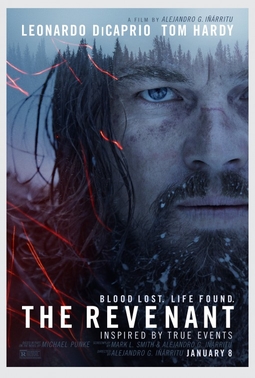
The Revenant

The Revenant (Alejandro G. Inarittu, 2016)

A frontiersman on a fur trading expedition in the 1820s fights for survival after being mauled by a bear and left for dead by members of his own hunting team.

2015-02-06

The Naked Spur


The Naked Spur (Anthony Mann, 1953)

A bounty hunter trying to bring a murderer to justice is forced to accept the help of two less-than-trustworthy strangers.

Famously being the third movie that united star actor James Stewart to director Anthony Mann, The Naked Spur holds a sweet spot for the Western lovers. Also with Janet Leigh and Robert Ryan other A-List actors, this film is in the vein of great classic American Westerns that populated the 1950’s. While John Ford was making them one after the other, Anthony Mann was also mastering the genre with an obvious admiration for Ford’s style, themes, and actors.

The concept of community of survival à la Ford and the idea of a group of professionals taking care of a serious business is a theme that was dear to Howard Hawks and his popular Westerns like Red River. Bankable actor James Stewart with his average Joe presence is making a clear difference in this story. Much of the silences in this film bring the violent tension with the murderer as for the sexual tension with Janet Leigh. Anthony Mann captures a lot of the male psychology in this blend of male with the aging prospector (Mitchell Millard) as the father figure for the adults and their disputes. Just as kids who play cowboys and fight for the right to be with the lady.

This is a deep film that demonstrates all of Mann’s talent in storytelling and analyzing human nature. The cinematography by William C. Mellor is splendid just as in any Anthony Mann picture with lots of exteriors and action sequences that elevated the art of the time.

Now more than sixty years since its release The Naked Spur has been a classic Western that steps up for its originality, its themes in a conventional matter, and its deep cinematic language. As being in the shadow of John Ford and his plethora of great films, Anthony Mann never shined as much as the most celebrated American movie director but in made films in a way that influenced many of his followers including the long respect and tribute of Martin Scorsese towards many of his lesser known films.

2013-12-27

River of No Return (1954)


River of No Return (Otto Preminger, 1954)

After doing time in jail for murdering a man in defence of another one, Matt Carkner (Robert Mitchum) takes his son Mark (Tommy Rettig) and wants to live with him in the country of hunting, fishing , and cultivating. The woman, Kay Weston (Marilyn Monroe), who was taking care of Mark is a singer/dancer that just married with Harry (Rory Calhoun), a one of a kind man embarks her on a trip that will unfortunately involve Matt and Mark.

2013-11-27

Two Rode Together


Two Rode Together (John Ford, 1961)

Marshal McCabe (James Stewart) and First Lt. Jim Gary (Richard Widmark) are hired to bring back siblings and parents that have been kidnapped by the Comanches many years ago. They will meet Chief Quanach Parker (Henry Brandon) and make a trade for a young boy and the Squaw (Linda Cristal) of Stone Calf (Woody Strode). 

2013-11-22

Lone Star (1996)


Lone Star (John Sayles, 1996)

After the discovery of a skeleton in an ancient shooting range in a little town in Texas. The sheriff Sam Deeds (Chris Cooper) embarks on an investigation that will make him revive the past of his father (Matthew McConaughey), also a sheriff of the town and his predecessor (Kris Kristofferson). Also intertwined are Otis (Ron Canada) as the owner of the African-American bar of the town, the colonel of the almost closed military base (Joe Morton) and Sam’s old flame Pilar (Elisabeth Pena) and her mother Mercedes (Miriam Colon).

2013-01-23

McCabe & Mrs. Miller

McCabe & Mrs. Miller (Robert Altman, 1971)


One year after the huge success of the War satire of M*A*S*H, director Robert Altman revisits another classic Hollywood movie genre with great results. More than forty years after its release, McCabe & Mrs. Miller still stands as one of the most interesting Westerns to ever get on American big screens. With bigger than life star Warren Beatty, still hot from his performance in Arthur Penn’s Bonnie & Clyde, Beatty seems to fully embrace the spirit of the 1970’s generation of young directors. While being the pretty face protagonist, he also knows how to make himself vulnerable and fit into the casting of the complex emotional story of Altman’s film. An excellent anti-hero of his era. On the other side of the bill, you have the beauty of Julie Christie who plays the classy whore that comes from the town and lives the difficult life of being in the wilderness and in the birth of a mining little town. Eventually, McCabe (Beatty) will fall for Mrs. Miller (Christie) and as the textbook of Westerns says; you should never fall in love with a whore, nothing good will come out of it.


2012-12-10

The Outlaw Josey Wales

The Outlaw Josey Wales (Clint Eastwood, 1976)

A Missouri farmer joins a Confederate guerrilla unit and winds up on the run from the Union soldiers who murdered his family.

When one starts to gaze Westerns he’ll be headed towards the Sergio Leone Man With No name trilogy. They defined Clint Eastwood has an actor with his few words, his squinting eyes, and his face almost always in the shadow of his hat. Leone’s films also forged Eastwood as a director and even if it is at a more personal level, and one could states to a lesser one too, the Eastwood Westerns have a lot to do with Leone’s.

2012-07-25

High Noon


High Noon (Fred Zinnemann, 1952)

A marshall, personally compelled to face a returning deadly enemy, finds that his own town refuses to help him.

Marshall Will Kane (Gary Cooper) is on his way to retire from his duties and get married to the love of his life Amy Fowler (Grace Kelly), but he learns that his worst enemy is returning on the noon train. The soon to be married couple has to wait to leave and Kane must stay and face his enemy Frank Miller (Ian MacDonald). The Marshall goes out and asks for help from his fellow citizens but got no help at all. He must go against Miller and his gang alone.

Fred Zinnemann’s film is a beautiful black and white Western that launched the revisionist Westerns with a more social oriented approach than the traditional paternal Westerns of John Wayne. High Noon also fuelled a debate about how a man of courage, a marshall in this case, should take care of his duties like a professional and not ask help from non-professionals. The nay-sayers of High Noon were John Wayne and Howard Hawks who hated the film and even remade it with their own interpretation of the story with great success with Rio Bravo.

Despite the controversy from the right-wing of Hollywood of the 1950’s, the pace and the action of High Noon are well handled and there is no low moment in the film. The storytelling is pretty classic and the technique of Zinnemann has never been so good. It is no surprise that it got seven Oscar nominations and won four most notably for Gary Cooper as the Best Actor in a Leading Performance.

As a matter of fact, High Noon written by Carl Foreman (screenplay) is a metaphor on the current blacklist and “witch hunt” of Senator McCarthy. Foreman was a blacklisted screenwriter and the tale of the marshall of asks for assistance to the people is how the American people were ready to give away any mark men in the 1950’s just to not get involved with people completely innocent. This also might be one of the main reasons why Wayne and Hawks were strongly disapproving the films’ themes.

However, this is one of the Westerns that proved to pass the test of time with great brio. The pacing, the cinematography, and the presence of Gary Cooper justifies my rating of five stars. Every Western enthusiast should discover this wonderful masterpiece.

2010-10-30

The Far Country (1954)

TSPDT Greatest Films #907 The Far Country (Anthony Mann, 1954)


"James Stewart and Walter Brennan are Jeff Webster and Ben Tatum, a loner and his sidekick, who figure to get rich quick by selling a herd of cattle at a fancy price in this tale set in the wild gold rush days of Dawson."

The coloured Westerns of Anthony Mann are sublime achievements of wilderness moviemaking and true heart Americans. James Stewart as Jeff Webster portrays a man who will learn to think outside of himself and his best friend. His greed of wanting to make easy money will play against him and make him change to become a better human being. He will learn how to help, love and care for other people.

Only for the shots of the landscapes The Far Country is worth the looking for . The themes are classic to Westerns, but the vast offer of this genre makes it a Highly recommended picture. Mann treats of themes like loyalty and openess on the world, themes that the great John Ford exploited in his Westerns too. However, Mann reinterpreted those themes and gave to them his own taste. He gives to the landscape all the rude wintery looks that the Jasper National Park could give him. I would categorize Anthony Mann as a director of locations, maybe one of the best from his generation. He his one of the few American directors of his time to let the environment and the context of creation become a whole character in the movie. Far from using improvisations Mann got probably inspired from the grey rocks and the white glaciers.


While watching The Far Country you have the feeling that you are with the characters bringing the goods to the miners at Dawson. You actually care for them and want them to succeed at their task.

I have read lots of praised about Anthony Mann's underapreciated career not only in the Western genre with the wonderful Winchester 73', Bend of the River, Man of the West, The Man From Laramie, The Naked Spur but also for his excellent Noirs. He will be one of the many directors you probably will read more about in the future here on Le Mot du Cinephiliaque.

2010-08-11

Winchester '73

Winchester '73 (Anthony Mann, 1950)
In the vein of Great Wersterns Winchester '73 is often overlooked. It's obvious that the Western spaghetti genre revolutionned or revisionnized the way Western were made. But before this revolution, the genre always been one of the most popular in American Cinema. Many directors made Westerns but they are quit a few that could handle it like John Ford or Howard Hawks. Sometimes, you can add Fritz Lang to this list but Anthony Mann is often forgotten. Bend of the River, Man From Laramie, Man of the West, The Far Country just to name a few and Winchester '73 will be observed here are Mann's most popular Westerns.

The title of the film refers to one of the best gun a man "cowboy" could own. We follow its path through different hands. From the man (James Stewart) who won it in a shooting contest to the worst bandit of its region. With Shelley Winters as the woman (romantic relief of the story), a young Tony Curtis as a soldier and Rock Hudson as the Indians wild chief.

As always James Stewart is the perfect American hero, he is the good son, the gentleman with the ladies, the cold blood competitor and the good "conscience" of the story. One quality he has more than any other cinematic icon of its time: he is human and has this fragile kind of personnality. He could be anyone, your friend, your neighbor, or even you. He was the son of America, in a good way. He reprensents justice, rightousness, truth, love, friendship, etc. His charcater wouldn't be the same without its presence.

With Anthony Mann he made many westerns and the combinaison seems to fit very well. Mann's camera waits patiently and captures the essence of the story, the scenery, the faces, and gives a great projection of what was the West. It was made of small heroes like Stewart that yes conquered the bad guys but also they don't become Presidents of the U.S.A. at the end of the story. Mann's approach has just the right sensitivity while staying dusty while the Indians attacks and capturing the dirty faces of the bad guys.

The imposing number of Westerns offered can maybe justify why Winchester '73 is often, too often overlooked in its genre but I'd like to take this opportunity to write out loud (if it's possible) how this film is a beautiful black white Western that deserves so much more praise and words from the cinephiles.


A review by Michaël Parent

2010-08-09

Destry Rides Again

Destry Rides Again (George Marshall, 1939)

A young James Stewart plays the new deputy (Destry) in the little town of Bottleneck. The city has no real order and the criminals seem to runs the place (ain't talking about politicians here.. well). The Last Chance Saloon where Frenchie (Marlene Dietrich) is running a burlesque show and running the whole town.

The story of the film is set to let enough space to let the comedic elements of the film be exploited at their maximum. Well, far from being a great comedy like a Chaplin, Keaton or even Lubitsch Destry Rides Again is more like a farce into the Western genre. Well, some moments are sure laughs but relying only on that and on the thin story the film would not be worth it if you let Dietrich and Stewart apart of the whole film.

Some scenes are build up to take pretty images of Marlene Dietrich in sexy costumes. Good for the viewer, but it doesn't really help the story to go further. She was a beautiful woman but is it just me but I think she has "funny" eyes?

On the other side, James Stewart is in the first moments of his brilliant Western career and gives an regular good performance in this comedy.

Destry Rides Again is worth the look but not as good as many other Westerns I will be reviewing here in the future. Come back again this week I will be reviewing Anthony Mann's great Winchester '73.

A review by Michaël Parent
Related Posts Plugin for WordPress, Blogger...