2011-10-26

Cannibal Holocaust - Redux

One, if not, the most controversial movie of all-time depicting some of the most disturbing scenes ever filmed in a fictional film, Ruggero Deodato's Cannibal Holocaust will be discussed here. I should mention that it was a challenge for me to enter in this infamous movie, because of the violence and the reputation of the film itself. I am not too inclined about exploitation films and I entirely disagree when a filmmaker uses animals and hurts them voluntarily (turtle scene, the pig scene). They are gratuitous and they don't bring anything interesting to the story or the “propos” of the whole thing.


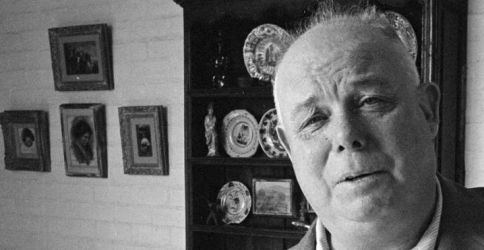
Deodato's challenge was to make a fictional movie about a documentary that feels like the real making-of of a documentary. He succeeds in this aspect; the movie feels like if it was shot by two different teams. One in New York and the other one in Amazonian forest. Instead of presenting the shocking images all in one continuous chronological order, Deodato slowly brings us with the journey of the Professor Monroe to find the tapes of the documentary. The professor Monroe is one of the most important character in the movie, he represents science and also morale. He is the only character the viewer can actually identifies himself with. He has a lot of common sense but he also wants to understand the native tribes he encounters in his trip; a representation of our curiosity and interest in viewing the film. Prof. Monroe will oppose himself with force against the broadcasting of the disturbing images of the final journey of the journalist team. This is a great dilemma between what is presentable and politically correct and what the world should know. It is also a strong critique on the mass media presenting more and more shocking and disturbing images to attract the morbid interest of the viewers.

This team of reporters thirsty for celebrity and money will do anything to get the images they want to show to the public of the civilized world. It represents this buzz of journalists that will kill themselves or others just to get the scoop or the most blood of some news or documentary. Cannibal Holocaust is a metaphor on journalists and on how they feed themselves on human misery and sensationalism.

The final image of the film when the camera moves from Professor Monroe to some buildings in the city represents one of the many metaphors of the movie: who is more civilized? the cannibals living in the "stone age" or the "civilized" living in stone buildings in "societies"? Well, the answer of the film states that in every "world" there are evil and good. The buildings and technical advances do not mean that we are better humans than the one still living in the jungle or the "stone age". The technology and the suits of the modern man doesn’t get him so distant from the jungle and the brutality of the human nature. Interesting films provoke the viewer to think and elaborate theories and ways to understand the story, the imagery, and the symbolism of a film. In Deodato’s film one can find all those things, besides being gory and gruesome Cannibal Holocaust has many qualities but sadly it is remembered as a minus opus because of the blood, guts, and flesh displayed.

Even with all the thinking that Cannibal Holocaust initiated for me, it was not a film I particularly loved, but its message is clear and maybe the methods are extreme, it still denounces abuses within it. I also believed that this is not a film for the faint of heart but in some way it's like a mandatory film to watch and to aware how the “civilized” society is hypocrite and how the mass medias are willing to do anything to attract wider audiences.

2011-10-25

Announcement: Seven days of Nouvelle Vague

Starting on December 1st until the 7th, I will be presenting nine of the most important figures of the French New Wave. Alongside you'll have tops of their films and a review of a famous film or a more obscure offering. The schedule goes like that:

1. Agnès Varda & Jacques DemySince this is a Seven days event I wanted to catch up with the most important figures of the wave. That's why, like in their time, I united Varda with Demy, only to have a big start for this event and also because I don't like to split lovers apart. 
Let's make it clear: Agnès Varda is Agnès Varda and Jacques Demy is Jacques Demy


2. Eric Rohmer
One of the most subtle, interesting, and romantic of the the Nouvelle Vague, Rohmer stands as one of the most accomplished "auteurs" amongst his peers. A director I have seen more than the half of all his films and that I like more and more with the passage of time.


3. Jean-Luc Godard

Does the man needs an introduction? You'll see when you'll read about him and his films in my presentation. An intriguying character and one of the most frustrating to follow.


4. François Truffaut
Truffaut died too young and he was the first director of the French New Wave I really connected with. His bittersweer approach, Antoine Doinel, and his life will be discussed in my presentation of him.


5. Claude ChabrolA director whom I' ve never seen any film ever. It will be very interesting to discover my first with this event.

6. Alain Resnais & Robert Bresson "The Outsiders"

Even if both of them never been a part of the Nouvelle Vague, their influence and their movies made prior and during the time of the French New Wave made them "the outsiders" of it. As the many figures that gravitated around the Nouvelle Vague I must not forgot to list Louis Malle, Jean-Pierre Melville, Henri-Georges Clouzot, and many others.

7. Jacques Rivette

Idem to Chabrol, I am ashamed to say that I haven't seen one film of the great Jacques Rivette. A great opportunity for me to discover this legendary master.

---
I will accept links to reviews or articles about the Nouvelle Vague and also about each and every "auteur". Feel free to contribute! I'm not displaying which film I will be reviewing for every director on the list to keep the surprise and also because I want you to send any reviews you want and not just about the films I will or won't review!

Send your contributions at michael dot parent at hotmail dot com

I hope to read your submissions and your comments!

2011-10-22

Top films of Howard Hawks by LMdC


1. Hatari! (1962)
2. Rio Bravo (1959)
3. To Have and Have Not (1944)
4. Bringing Up Baby (1938)
5. Scarface (1932)
6. His Girl Friday (1940)
7. The Big Sleep (1946)
8. Only Angels Have Wings (1939)
9. Monkey Business (1952)
10. El Dorado (1967)
11. Land of the Pharaohs (1955)
12. Red River (1948)
13. Man’s Favorite Sport? (1964)

I still need to see: Fig Leaves (1926) Fazil (1928) A Girl In Every Port (1928) The Dawn Patrol (1930) The Criminal Code (1931) The Crowd Roars (1932) Tiger Shark (1932) Today We Live (1933) Twentieth Century (1934) Barbary Coast (1935) Ceiling Zero (1935) Come and Get It (1936) The Road to Glory (1936) Sergeant York (1941) Ball of Fire (1941) Air Force (1943) A Song Is Born (1948) I Was A Male War Bride (1949) The Thing From Another World (1951) The Big Sky (1952) O. Henry’s Full House (1952) Gentlemen Prefer Blondes (1953) Red Line 7000 (1965) Rio Lobo (1970)

2011-10-21

To Have and Have Not

To Have and Have Not (Howard Hawks, 1944)


Of the many great directors, Howard Hawks is one of the most respected alongside John Ford and Alfred Hitchcock. His career has been punctuated of highs and lows. His highs are so great that his films are undying classics. Navigating between the genres, the Westerns (Red River, Rio Bravo, El Dorado, Rio Lobo), the screwball comedy (His Girl Friday, Bringing Up Baby), Film Noir (The Big Sleep, To Have and Have Not), Historical melodrama (The Land of the Pharaohs), Adventure (Hatari!) he always did what he wanted to do. Never a technical director, he is a storyteller and a great dialogue writer. His line, “You know how to whistle Steve? Just put your lips together and blow!” said by Lauren Bacall in To Have and to Have Not might be the sexiest line ever said on film. There’s also the presence of Bacall but we’ll get back on that later. Hawks is considered by many as the greatest director of all time; the French New Wave praised his films even Hatari!, that is underrated by lots of critics, François Truffaut saw the work of Hawks and compared the story of the film to the making of an actual movie. Nowadays, a guy named Quentin Tarantino is obsessed by Hawks and he gives a test to all his potential girlfriends: to watch Rio Bravo. If the girl doesn’t like the film she’s not girlfriend material! As of today’s standards it’s difficult to make a comparison of The Grey Fox with an actual director. First, Hawks was an artist and his films were made with big budgets, always over schedule. He was the highest paid director of his time because his films made good money. He had artistic freedom and he was also the producer of his films. It is almost impossible to think that something like this would be possible in a world where the few directors that are making interesting films in major studios have so much difficulties keeping their director’s cut. Well, just call me a nostalgic or a stubborn classic movie lover I will gladly wear those labels if it is to watch Howard Hawks pictures all day!

To Have and Have Not represents everything about Classic Cinema that we cherish; a beautiful leading actress, a great legend, subtext dialogues, laughs, and an intrigue. Or like another guy used to say; a girl and a gun, Jean-Luc Godard you’ve recognized him here.

The beautiful leading lady is Lauren Bacall, Marie or nicknamed Slim like Hawks’ wife at the time. An almost skinny lady with a deep voice and sexy facial expressions. At only nineteen years old, her screen test was the famous line aforementioned in this review. When Hawks saw her he decided to make her part bigger and use the love story between Bacall and Humphrey Bogart(they met on the set of To Have and Have Not) to add more scenes involving both of them. The chemistry of the two actors is passionate and makes the viewer almost like a voyeur that stares at one of the greatest love stories of Hollywood. The pairing of those two lovers has never been equalled and on screen it is reflected so blissfully that you feel jealous of Bogie.

In 1944, Bogart’s legend was made and his presence in The Maltese Falcon and Casablanca could have made him an unforgettable star. To Have and Have Not changed his life because he met Bacall the woman he’ll marry and stay with until his death. Also because he achieves a level of performance that I think is the greatest of his entire career. Way much better than The African Queen that got him his only Oscar. His scenes with Walter Brennan are pure Hawksian Cinema, the two professionals united together and working as a team to attain their goal, the constant jokes about each other, the tradition of the Hawksian camaraderie where the two characters think they protect the other, the trade of money, bottles, cigarettes, matches, etc. They are all symbols of friendship in Hawks’ universe. Someone might notice that Slim(Bacall) and Steve(Bogart) trade many bottles, matches, and cigarettes. This is because in Hawks’ world, the leading female should be one of the boys and not just the hero’s love interest. She jokes with them and she is involved in the story.
To Have and to Have Not is not just a director’s film, this is an ensemble film with great performances, a great script by William Faulkner based on Ernest Hemingway's novel, the whole directed by Howard Hawks. On Hemingway's story, the author bet to Hawks that he couldn't be able to adapt his novel on the silver screen. Hawks, took almost the entire story out to make his own adaptation of Hemingway into a script and luckily it makes one great film. This is the sign of a director in full control of his story and narratives.As a classic film enthusiast I am more than ecstatic towards To Have and Have Not, it is one of the greatest films of the 1940’s.  A must see.

2011-10-20

The Battle of Algiers

The Battle of Algiers (Gillo Pontecorvo, 1966)
Frankly, my dear readers I don’t give a damn about politics and I don’t naturally go to the films that matter about this subject. It was more a mandatory exercise than an actual act of lovemaking towards this renowned film. Even if it was crafted during the great years of the French New Wave and that it influenced Steven Soderbergh on his Che, I had to try three times to actually watch the entire thing. Enough about me and let's discuss the film now.

The chronicle that is the reconstitution of the events that leaded to the independence of Algeria is a solid example of a scientifically and historically documented work of fiction. Almost shot like a documentary and loaning the narratives of the genre, The Battle of Algiers witnesses the revolution of a country that had enough for over 130 years of French wardship. The objective point of view of the narration delivers a strong untainted message that this was a war, or should I say a guerrilla, that marked the world of the 1960’s in its politics and Cinema. The movements of protests of May 68 in France and in many places in the world were influenced by the techniques shown in The Battle of Algiers. A nation that has been occupied for more than a century that could get his freedom was more than inspiring to the young revolutionaries. Many cinephiles of the time recall that these people used to bring paper and pen to the presentations of The Battle of Algiers taking notes on how to start a revolution. The realism of the actions displayed and the natural acting of those non professional actors was a big factor that made this film so unique and powerful.

On a historical value, Pontecorvo directed a very rich depiction of events that occurred less than a decade before the film was shot. It has two historical ways to analyze this complexity. First, the subject is still hot and the memory of the witness and participants of these events is still fresh and uncompromised by the time and the nostalgia or the retreat. It is almost as if Pontecorvo got in the street and shot images while the events actually occurred. A lot like Oliver Stone’s World Trade Center made shortly after the sad events of September 9/11. In the case of The Battle of Algiers, it was clear that the side of the revolutionaries was the side of the heroes and that the Independence of Algeria was the ultimate ending to the film.

Nevertheless, this case of documenting a fresh event like this doesn’t let the test of time and the step back we normally would take to analyze and fully understand the effects of the events displayed. In both cases of The Battle of Algiers and World Trade Center, what counts is the demonstration of how the events occurred in a certain gaze. A great case of Historical study and step back would be the dual films of Clint Eastwood; Flags of Our Fathers and Letters From Iwo Jima displaying the two opponents, the two sides, and how they were involved in History.
Meanwhile, The Battle of Algiers has a strong historical value even if it’s a fictional film displaying events in an Algerian “partisanery”. Take the time to discover the wonderful Blu-Ray treatment of the film by Criterion Collection, it is worth the look.

2011-10-19

Top films of Jean Renoir by LMdC

1. La règle du jeu (1939)
2. La grande illusion (1937)
3. The River (1951)
4. Le crime de Monsieur Lange (1936)
5. Une partie de campagne (1936)
6. Boudu sauvé des eaux (1932)
7. French Cancan (1955)
8. Toni (1935)

I still need to see : Whirlpool of Fate (1925) Nana (1926) Charleston parade (1927) The Little Match Girl (1928) La chienne (1931) La nuit du Carrefour (1932) Madame Bovary (1934) Les bas fonds (1936) La bête humaine (1938) La Marseillaise (1938) Swamp Water (1941) This Land Is Mine (1943) Diary of A Chambermaid (1945) The Southerner (1945) The Woman on the Beach (1947) The Golden Coach (1952) Paris Does Strange Things (1956) Picnic on the Grass (1959) The Testament of Dr. Cordelier (1959) The Elusive Corporal (1962) The Little Theatre of Jean Renoir (1969)

2011-10-18

Une partie de campagne

Une partie de campagne (Jean Renoir, 1936)

Like Orson Welles and Peter Bogdanovich, Jean Renoir’s Cinema always hold a special place in my cinephile heart. His artistic vision from his father’s heritage is one thing. But Renoir’s storytelling is the greatest facet of his talent. Combining those elements and you have the favourite director of Welles and Bogdanovich. Even if you have just seen La règle du jeu or La grand illusion, you still have discovered two of the greatest masterpieces of all time. One of my personal favourite from Renoir is The River, shot in India and depicting an English family living in this “foreign’ country where tradition and exotism reigns. I always tend to admire a great director’s less famous work than his undisputed masterpieces. A great director can be observed when his lesser known work is still valuable and of high quality.

Jean Renoir’s Une partie de campagne is an unachieved masterpiece to be. With amazing imagery of romantic sensibility and many comedy elements this forty minute film feels like a fresh romantic comedy with a classic French tone. Adapted from Guy de Maupassant’s novel, Une partie de campagne depicts the innocence of young lovers, the essence of mature women, the egotism of men and their favourite sport, and the clash between urban and country life. The naive beginnings of the story slowly fells into the social study of Parisians coming to the country for a day and enjoying the simple pleasures of the rural people. While the men of the country enjoy the sophistication of the ladies of the city. The treatment of the story feels a lot like a tale about a secret love of two people distant from each other. The idyllic scenery and the amazing photography helps the viewer to appreciate the wonderful Sunday afternoon portrayed by Renoir. The brightness of the visual approach and the dramatic metaphor that the rain brought is more than a simple beautiful effect. This is the work of an artist and a storyteller in full mastery of the media.

We are lucky as cinephiles that Jean Renoir could have directed many films during his life. His career is dotted of wonderful films of cinematic bliss. Every self-respected film lover should discover Renoir’s oeuvre. It’s like a melomane who haven’t heard of The Beatles or if an Art lover doesn’t know Van Gogh, it is a shame! Renoir’s are a film reference that will never go out of style.

2011-10-17

Coming soon! Laurel & Hardy: The Essential Collection

 I'm not used to present DVD releases on Le Mot du Cinephiliaque. However, since the wonderful folks at RHI Entertainment approached me for the first release of the Laurel & Hardy boxset in North America all packed in a collector's package with plenty of amazing exclusive interviews and discussions on the impact of these legendary duet.

Stan Laurel got into show business with Fred Karno’s vaudeville company as Charlie Chaplin’s understudy. He used to do imitations of Chaplin. On the other side, Oliver Hardy began singing at eight years old and his early career brought him into comedy. Laurel & Hardy met when they were working for comedy producer Hal Roach in the 1920’s. The famous duo was united for the first time on the silver screen in 1926 for the movie 45 minutes from Hollywood. Then, it only took them five years to get their first feature length starring roles in the success Pardon Us. From this point they starred in many successful production until the 1940’s. The Second World War was difficult for many silent films comedians that got into talkies and even being renowned and with a new contract with the 20th Century Fox, they had to struggle to get the full freedom of creation in these harder times.


Sadly, they retired from filmmaking in 1950. Behind them are numerous shorts and feature lengths worthy of thousands of laughs. Their contribution to Cinema was recognized by the Academy Awards in 1960 when Stan Laurel (Oliver Hardy died in 1957) received a special Oscar “for his creative pioneering in the field of Cinema comedy”. While working for Roach’s company, and like many other comedians of their time (Charlie Chaplin and Buster Keaton to name a few), they were writing and directing almost all of the films they made together embodying the geniuses they represented.

The films of Laurel & Hardy needed to receive this crowning treatment to recognize their contribution to the comedy genre.
I can't say how thrilled I am about this release and I hope your are all too. This is the chance to discover the films of the funniest comedians ever, since Chaplin and Keaton.


Press release: 

TIMELESS SOUND-ERA FILMS FROM THE LEGENDARY HAL ROACH LIBRARY DEBUT IN ONE EXTRAORDINARY DVD SET
FOR THE FIRST TIME IN THE U.S.

LAUREL & HARDY:
THE ESSENTIAL COLLECTION


Digitally Remastered And Digitally Restored, Loaded With Over Two Hours Of Special Features, The Spectacular 10-Disc Set Arrives October 25
From RHI Entertainment And Vivendi Entertainment

UNIVERSAL CITY, CA – Celebrating the genius of the most beloved comedy team of all time, LAUREL & HARDY: THE ESSENTIAL COLLECTION debuts in a stunning 10-disc set on October 25, 2011 from RHI Entertainment and Vivendi Entertainment.  With a comedic style that defined an era and created a legacy that is still celebrated today, 58 of Stan Laurel an Oliver Hardy’s talking shorts and feature films, produced under legendary movie mogul, Hal Roach, from 1929 through 1940, are now available for the first time in the U.S. all together in one magnificent collection.


 Transferred in high definition for the first time and digitally enhanced for home viewing in the finest quality available to date, the set contains favorites that have been enjoyed for generations including Helpmates, Hog Wild, Another Fine Mess, Sons of the Desert, Way Out West, and the Academy Award® winning* film The Music Box.


LAUREL & HARDY: THE ESSENTIAL COLLECTION comes housed in collectible, book-style packaging with an extensive, detailed film guide.  The set also boasts over two hours of special features including exclusive, never-before-seen interviews with comedy legends Dick Van Dyke, Jerry Lewis, Tim Conway and more, who discuss the enduring impact and influence of Laurel and Hardy. 


Additional features include commentaries by Laurel and Hardy aficionados, along with a virtual location map that allows viewers to take an interactive tour of the iconic places in and around Los Angeles where Laurel and Hardy filmed.  Available for the suggested retail price of $99.98, LAUREL & HARDY: THE ESSENTIAL COLLECTION showcases some of the most cherished and hilarious films in cinema history and is a must-have for comedy fans and collectors everywhere.


BASICS

Price:                           $99.98

Street Date:                 October 25, 2011

Order Date:                 September 20, 2011

Catalog Number:         RH3021

Language:                   English

Running time:              1941 minutes 

Rating:                         NR

2011-10-14

Top films of Paul Thomas Anderson by LMdC


Of the many young directors that made films in the last 15 years, Anderson is one of the few that has the talent and the mastery to make entertaining masterpieces. He is the perfect blend of the heritage of Martin Scorsese and Robert Altman as long as Erich von Stroheim and Orson Welles. There Will Be Blood stands as one of the greatest films of all time as it is now in my Top 10. His use of camera movement reminds of the greatest films of Jean Renoir and Max Ophüls. His next film, The Master will be in theatres in 2013, until then let’s take a look at his already rich filmography.

2011-10-13

New releases or Classics?

As I was drifting through the films I watched this year, definitely a lot less than the year before, I was surprised to notice that I’ve only seen four films released in 2011! Of these four films one is more than worth noticing. Terrence Malick’s The Tree of Life. The fact that I haven’t seen a lot of new releases is not that astonishing, the total number of films I’ll have seen in 2011 is probably a hundred less than in 2010. My ever growing appetite for Classic films is always significant year after year. Plus, my journey through They Shoot Pictures Don’t They’s 1000 Greatest Films is getting intoxicating. This list is dotted of classic and obscure films that are a delight for the cinephile that I am.


On another cinephile topic, there are those cult films that every time you discover one you unearth ten others! It’s the same thing when you become interested in a more obscure filmmaker like Ken Russell or Masaki Kobayashi!

Those are some reasons, or one might say excuses, that I use to justify my lack of 2011 releases viewings.

On the other hand, I’m in a place in my life where I want to save money to buy some nice little home with my wife. It may also explain why I didn’t spend that much money on film tickets this year. Take note that I was invited as a “critic” to the premiere of The Tree of Life... If you want me to review more new releases please feel free to give me complimentary entrances and Premiere tickets!

Anyhow, I think it reflects my true passion for Cinema and a part of my formation as a Historian, Classic films and History. This is probably why I prefer “older” films and in spite of more recent pictures.

It was supposed to be some kind of post about the greatest films of 2011 so far. Since, I’ve seen only four, yes four! I will try to catch at least some of the most well received.

Drive
Moneyball
Super 8
Cowboys vs. Aliens.
Melancholia
Uncle Boomee
Certified Copy
Rango
Meek’s Cutoff
A Dangerous Method
The Thing
Hugo
The Ides of March
The Girl With the Dragon Tattoo
Rubber
Troll Hunter
Horrible Bosses
Crazy Stupid Love
Midnight In Paris
Source Code

I might be too positive and unable to attain this objective but at least I hope I’ll be able to catch half of these before the end of the year and produce a decent Top 10 of 2011...
Also, feel free to recommend any films of this year I forgot to mention in this concise list!
Related Posts Plugin for WordPress, Blogger...