Showing posts with label 1968. Show all posts

2015-06-26

The Year 1968 in France’s Cinema


Note : this review is my contribution to the Classic Movie History Project blogathon hosted by Movies Silently & Silver Screenings & Once Upon a Screen.

Surfing on the recent successes of the now widely recognized French New Wave, La nouvelle vague, France was a burgeoning location for directors and auteurs. However, an event in May 1968 will change the face of its Cinema and break the greatest friendship of the New Wave. This essay will try to put some light on one of the defining element of the films to follow.

Of the most important films released in France in 1968 we can list François Truffaut’s The Bride Wore Black, Les Biches by Claude Chabrol, Jean-Luc Godard’s Sympathy for the Devil featuring The Rolling Stones, Je t’aime, je t’aime directed by Alain Resnais, Maurice Pialat’s debut film L’enfance nue, also from Chabrol The Unfaithful Wife, Truffaut’s second take in the Antoine Doinel cycle Stolen Kisses, and the porte-manteau film Spirits of the Dead co-directed by Federico Fellini, Louis Malle and Roger Vadim.

As of 1968, two directors were the stars of the New Wave and France’s film industry : Jean-Luc Godard and François Truffaut. Friends from the time they were critics in Les Cahiers du Cinéma they each aligned a series of highly successful films.
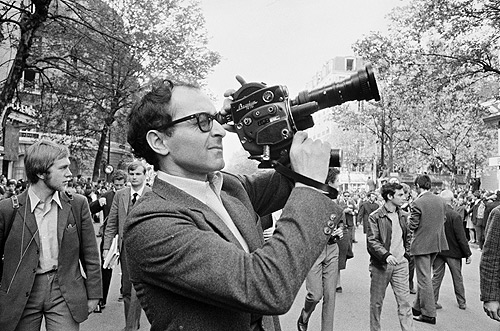
Jean-Luc Godard

For Godard, 1968 was a turning point in his career that was already on the edge of a political  metamorphosis. His films were filled with more and more revolutionary content. Just look at two of the films he released in 1967, Week End with obvious revolutionary slogans and La chinoise which was his allegiance  to Maoism. Then in 1968 his film Le Gai savoir, banned by the French government, was about a couple listening to the radio and discussing politics. He also released One Plus One aka Sympathy for the Devil, a film of the creating process of The Rolling Stones while writing and recording the song Sympathy for the Devil interposed with Black Panthers speeches and images. 

Godard was more and more concerned by politics, Marxism, sociology, philosophy, and classic literature than ever. His constant struggle with stardom and the emptiness of the fame that accompany his success made him more concerned about how we should change the world and stop Americanization, Capitalism, consumerism, and reconsider everything and how everything was done. As he said of that era he was washed up from the common form of cinema.
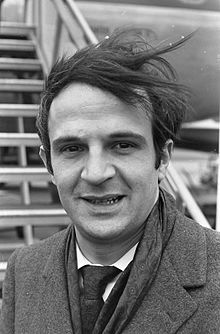
François Truffaut

On the other end of this friendship, François Truffaut has become a classic filmmaker with a more and more conventional approach to filmmaking and acquaintance to the studio system. With Stolen Kisses, the second chapter of the Antoine Doinel series, the Jean-Pierre Léaud character that revealed Truffaut to the world with The 400 Blows in 1959, we have a Truffaut slowly falling into sentimental venues. His other release of 1968, The Bride Wore Black, is a story of revenge that was often compared to a proto precursor of Quentin Tarantino’s Kill Bill.

Then came the events that provoked May 68 in France and the Langlois affair. The Langlois affair is about the way the French government decided to cut short the financing of the Cinémathèque and fire its director Henri Langlois. In support many international directors signed a letter for Langlois’ restitution to the French institution. Even if in late April, Langlois was reintegrated into his functions, the actions of the administration of President François Mitterand will lead to May 68 and bring the French people in the streets. Issues are about a huge social movement that won’t be summarized here. However, their effects will be reflected in the French cinema and the Godard-Truffaut friendship.

For those who are not sure about the nature of this relationship, it would be easier to compare it to the Lennon-McCartney friendship. Once it was broken up, both parties started saying harsh things about the other.

Godard accused Truffaut of not being enough concerned by the revolts and being too close to the power to make sure to have financing. While Truffaut was more concerned about storytelling and technique Godard abandoned both to make documentary films and political contents.

In a way, those events marked the end of the French New Wave. Well, any new wave must have a definite time table, this one even marked a long time and a superb evolution in French cinema. It’s influence will be palpable on many other New Waves but also in the New Hollywood. All in all, the year 1968 in France’s cinema might not be the most interesting in the quality of films released but marked an important shift from an emerging bunch of young and talented storytellers and those who will make a serious career out of it. Those who continued making films after this year have left a permanent mark in films.


2014-08-01

if....


Note: this review is a contribution to the The British Invaders Blogathon hosted by the great folks over at A Shroud of Thoughts. 

if.... (Lindsay Anderson, 1968)


In this allegorical story, a revolution led by pupil Mick Travis (Malcolm McDowell) takes place at an old established private school in England.


With his film if...., director Lindsay Anderson responded to François Truffaut's saying that nothing good, in films, has come out of England. Even if this statement is totally wrong, let's take the time to mention the Michael Powell and Emeric Pressburger collaborations for instance, Anderson was a strong defender of the films of his country while admiring pantheon directors like John Ford with his brilliant writings about this master of American Cinema. 


The subversive film that is if.... is quite something that no one should read on the first level. First, because it might make no sense for a simple minded viewer but also because every scene starts out as being a normal scene of a private English school and turns out in the last thinking way possible for it to become. It is interesting to observe how ironic each character is and how laughable they can become. Every character and every aspect of the English life and society is kicked in the nuts. 


One thing I must honestly admit is the transfer from color to black and white film that I can't quite understand the logic behind it. In mind there's none and it might just be an artistic value that wants to demonstrate change and transition in the emerging new society of 1968. Let's remember the events of May 68 in France. Even in an orderly world like England where they still have a Queen and the Parliament people don't really protest or riot. Well, until the coming of Punk rock movements initiated by The Clash, Sex Pistols, The Damned, and their followers.


Speaking of the visuals of this film, the photography is superb and it was a Czech New Wave cinematographer named Miroslav Ondricek. It is more than worth mentioning and the whole film feels fresh and it has this vibe of revolt that many films of the Czech New Wave carried.


There are those kind of films that you watch one time and then you can relegate as I've seen it and I might never rewatch it and I'm good with it. But, the second kind of films, the ones you can watch again and again and find something new and interesting about it. if.... fells into this category.


2013-10-17

Rosemary’s Baby

Rosemary’s Baby (Roman Polanski, 1968)

A young couple move into a new apartment, only to be surrounded by peculiar neighbors and occurrences. When the wife becomes mysteriously pregnant, paranoia over the safety of her unborn child begins controlling her life.

2013-10-07

Hour of the Wolf

Hour of the Wolf (Ingmar Bergman, 1968)
When one gets into art house cinema masters, it is mandatory to step into Ingmar Bergman’s territory. With such landmarks as The Seventh Seal, Wild Strawberries, The Virgin Spring, Cries and Whispers, Persona, and Fanny and Alexander just to name a few. But once a cinephile has seen all the major films from Bergman there’s another level of films into his vast filmography. Into those titles you find interesting pictures that explore a concept, a sentiment, or a state of mind more clumsily than his aforementioned work, but still, very strong films. Lesser Bergman is still better than most of the mainstream film out there.

2013-05-17

L’enfance nue

L’enfance nue (Maurice Pialat, 1968)
François is a ten years old boy who lives in a foster family. He doesn’t get along with his sister, he steals, he hurts her cat, and he misbehave in every way possible. Later he goes to a new family, the Thierrys. His new brother, Raoul loves them as if they were his real parents and he treats François as his own brother. His foster family loves him and takes care of him. François seems to get better but he has a penchant to get back to his old habits of bad child.

2012-07-23

My new feature for Anomalous Material

The superb folks at Anomalous Material gave me a white card and a mic. It wouldn't be long that I would use this speaker to spread the love for movies, films, pictures, talkies. Well, call them anyway you want but I now have a new place to write and it's been pretty inspiring my dear friends.

Here have a look at my Top 10 films of 1968 list.

2012-04-26

Shame (1968)

Shame aka Skammen (Ingmar Bergman, 1968)

Through the 1950’s and 1960’s, Ingmar Bergman kept a pace of a film per year almost like a Woody Allen of its time. Nowadays, Allen is more of a hit or miss case with his more recent films. In the case of Bergman, it was more of a hit than a miss. The year of 1968 had a universal resonance in the cultural and social spheres. In France, it marked the events of May 68 with the firing of Henri Langlois co-creator of the institution of the Cinémathèque Française. Many socialist/communist/Maoist protestations blew everywhere and the world was at the edge of change and hope. It was also a great burst into conservatism and the fall of the established order of the world. Moreover, one must not forget that it was the year that the Vietnam War was at its worst. Bergman, used in his 1966 masterpiece Persona, the image of the protesting burning monk stating that war was horrible no matter what you are on. Well, with Shame it is quite clear that he wanted to develop this idea furthermore.

Ingmar Bergman’s film, Shame, depicts the life of a couple, the Rosenbergs, (Max Von Sydow and Liv Ullmann) during an unknown civil war in a place called Gotland. The couple of artists, musicians, are apolitical and they retreat to their rural island farm but when the rebels are countered they are captured as collaborators and the army bullies them. Later they get released and the rebel came back and it leads to its denouement.

This dividing film, some love it and some take it as a lesser Bergman, must be seized as a study on many levels and an even more complex analysis than the Vietnam critic many observers judged it to be.
First, it’s the tests that a loving couple must endure to face the civil war going on and how a couple gets to survive in its common obstacles. The woman who wants to have children and the man who doesn’t want to. The insecurities, the sacrifice one must do to get its liberty and stay alive. It is a work that a contemporary couple can relate with the more common concerns and the war-involving concerns tend to shake us from our distant peaceful world.
On another level, Shame works as a representation of the balance of power involved with war, authorities, civilians, man vs. woman, prisoner vs. warden, etc. In every situation humanity must face those balance of power and no matter the time, location, language, country, or race the sad pattern of war is relevant.

The war vehicle that Bergman conducts in Shame is how humanity must be humiliated and that every civilian must “feel” and understand in its comfortable home and movie theatre how horrible those conflicts are inflicting thousands, if not, millions of shameful acts and even more importantly individual upon itself.


2010-10-26

Planet of the Apes (1968)

Planet of the Apes (Franklin J. Schaffner, 1968)

A Sci-Fi classic, remade in 2001 by one of the most cherished American directors, Tim Burton. However, the original Planet of the Apes, proves once again my theory that remakes are useless even from directors I respect; as for Tim Burton and Gus van Sant (Psycho) for example...

The story, a crew of astronauts land on an Earth-like planet where Apes are the masters and humans are the animals. The astronaut Taylor (Charlton Heston) wnats to get back to his spaceship and go back to Planet Earth. But he must befriend with progressive Ape scientists to escape the experiments of the stubborn keepers of the Old Law. The humans are kept in cages because they can't talk and behave correctly. To the Apes, the Humans are a lesser race than theirs. The many references to the world that is changing in America at this moment, the acceptance of black people and the fall of the racist rules and ideologies are the subtext of the film. The message is clear and without a doubt it asks to stop looking at a person for what's outside but for what's inside, his character and personnality.

The film has another moralistic side to its story, how humanity in the time of the Vietnam War and the Cold War must think about the future and be careful because if there is a menace for humanity it is only itself that can arm and destroy the Earth as we know it. Besides being a good lesson for its viewers, Planet of Apes presents a top-of-the-art entertainment that has influenced many movie enthusiast's imagination. This is with no surprise that there has been many chapters to this saga.

2010-04-11

2001: A Space Odyssey

2001: A Space Odyssey (Stanley Kubrick, 1968)

2001: A Space Odyssey is to me the quintessence of Cinema and visual art! So much has been written about the fourth best film of all time. (#1 Citizen Kane #2 Vertigo #3 La Règle du Jeu on the 1000 greatest films list of all time by They Shoot Pictures Don't They?). Easily the best Science-fiction film of all time, for many critics and maybe to me too it's considered as the best film of all time! However, to me Kubrick only made memorable films. And 2001... is one of the rare films that qualifies as perfect films. The story transcends Science-fiction and Cinema itself. Every second, every frame, every image of the film is unforgettable and untouchable. It won't be easy to rate this film...


The story told here is about humanity, its past, its near-present and its future. Having read the book by Arthur C. Clarke and having seen 2001... 5 times, I can say that everytime I rewatch it, I rediscover it and everytime it impresses me more than the last time. The rythm is so slow that it feels like the film was shot in slow-motion or like if the time stands still. Even if in the story there are millions of years of gap between some scenes. I agree that the story can annoy some viewers and the unnarrated parts are uncommon to some viewers that need to get explanations on what is going on the screen. I would recommend to these picky viewers to read the book to fully understand some of the subtil elements of the plot.

The classical tunes used in the soundtrack give so much depth to the images that it feels like a religious experience to watch an ear. Richard Strauss' Also Sprach Zarathustra is now considered has a classic and could not be used without being a direct reference to 2001.... And the Blue Danube ballet has never been used in a better situation than in this film.

2001... has often been compared to its Soviet follower Andreï Tarkovsky's Solaris and I think that both are equally perfect films. Tarkovsky has always said he thought Kubrick's film was too cold and unhuman. This is an interesting argument, because in 2001... Kubrick opposes man against the machine, an old confrontation that always bothered creators of all time (Wegener's Der Golem, Shelley's Frankenstein, etc.). Human's creation becoming envious of its creator and trying to destroy its fatherhood. "The slave becomes the master"... I think the cold aspect of 2001... comes from the fact that it is so near the religious experience that it fells more than human. It's the story of humanity and its evolution and how it should become god-like.


Starting on the basis that Man created God to fill his spiritual emptiness. In the 20th Century, Nietszche exposed the idea that god is dead and that it is to humanity to take his place and role. His whole theory of Man accessing the "Superman" state. The grand finale of the film represents the "Superman" born to protect the planet earth. Kubrick's vision included the protection from a potential Nuclear war that already obsessed him as a theme he exploited in his earlier film Dr. Strangelove: Or How I Learned To Stop Worrying and Love The Bomb.


Well, the odyssey of 2001: A Space Odyssey is a journey that takes its viewer in places that only the mind can go and that only 2001... can bring the mind in these places.


Related Posts Plugin for WordPress, Blogger...