Showing posts with label sweden. Show all posts

2014-08-25

Sawdust and Tinsel


Sawdust and Tinsel (Ingmar Bergman, 1953)

An aging circus ringmaster visits his estranged wife to see his young sons. Meanwhile, his jealous young lover has an affair with an actor.

Ingmar Bergman has left a tremendous amount of film to his fans behind him and his later career was more internationally followed by fans and media. But his pre The Seventh Seal films, prior to 1957 if you prefer, are lesser known except for the hilarious Smiles of a Summer Night and the sexy Summer With Monica. Back then, only initiated cinephiles watched and enjoyed early Bergman films.

Staring Harriet Andersson, Sawdust and Tinsel is seen as one of the most rewarding gems that Bergman directed. Involving the lives of the members of a moving circus, we follow the constant humiliation of his characters and how they are outcasts of the conformist society. Bergman observes the lives of artists he sure could relate to. His career of film and theater director led him to pass into many difficult process that can be compared to what is seen in Sawdust and Tinsel.

Apart from the fact that much of the story and the character involvement are recurrent themes in Bergman’s films, the photography by Sven Nykvist easily links to the wonderful shots of The Seventh Seal and the presence of travelling performers like in his The Magician and the aforementioned masterpiece.
On the other hand, the story is quite heavy and feels very academic in its treatment of structure and its approach to drama. I believe that Bergman was still in his shell with his storytelling abilities and he later had his own voice with Wild Strawberries or Cries and Whispers for instance.

Since many of the characters are despicable and are difficult to relate to it is a film that may leave its audience cold and loose points when compared to the best offerings that Bergman has done in his career. Still, lesser Bergman is still better than most director’s best films. For Bergman fans it is an essential viewing, for completists it is worth the look, and for the average movie-goer I’d suggest you get by The Seventh Seal and Wild Strawberries before getting to Sawdust and Tinsel. It is far from being an average movie but this is the kind of feature that could but that was essential to its director to get to better works. Finally, it is an Ingmar Bergman film that delivers a genuine Ingmar Bergman film.


2014-08-21

Smiles of a Summer Night


Smiles of a Summer Night (Ingmar Bergman, 1955)

The lives of bourgeois lovers in Sweden during a summer of the first half of the 20th Century are inspired to let themselves live their passion. Based on a Shakespeare play, Smiles of a Summer Night was later an inspiration for Woody Allen’s A Midsummer’s Night Sex Comedy.
Interestingly enough is the fact that it is one of the few comedies that Ingmar Bergman ever directed. In interviews he often said that he was not in his element while working with this genre. However, Smiles of a Summer Night might be his more accessible work and one of the most enjoyable.

With a cast of Bergman regulars of the sexy Harriet Andersson, the ever great Gunnar Bjornstrand, and a very small bit by the beautiful Bibi Andersson. The lightness of the story and the whole tone of its debonair approach to love is refreshing and brings a sexy angle to the costume piece and the beautiful actresses in Ulla Jacobsson, Margit Carlqvist, and Ella Dahlbeck.
Speaking of actors in a Bergman film, one must say that they are directed by the hand of a master. When the chameleonic Bjornstrand is the central character in a picture we are in for a treat. It is one of the most underrated actors that worked with him and he could do anything. Simply put a beard on the man and he is the elder lawyer Egerman that married a virgin but still having a passion for the hot tempered actress he frequented as a mistress years ago.

Smiles of a Summer Night might seem like an UFO in Bergman’s filmography but his treatment of bourgeoisie and their love affairs was already a subject that he was acquainted to. There’s the thin line between keeping the face and humiliation that the men suffer all along the film and we discover again strong women in Bergman’s film that have the control over the heart of their lovers. This kind of comedy can be compared to an Ernst Lubitsch classic that could have been shot in Sweden but still carrying the same sophistication and je ne sais quoi.

As the final film I had to watch from Ingmar Bergman to complete my quest of watching all of the 1000 Greatest films of all time by www.theyshootpictures.com, I must admit having had a lot of fun and I could easily recommend this entry in Bergman’s filmography and in any list. It is a great relief when someone compare this with his other austere and heavy dramas.


2013-10-07

Hour of the Wolf

Hour of the Wolf (Ingmar Bergman, 1968)
When one gets into art house cinema masters, it is mandatory to step into Ingmar Bergman’s territory. With such landmarks as The Seventh Seal, Wild Strawberries, The Virgin Spring, Cries and Whispers, Persona, and Fanny and Alexander just to name a few. But once a cinephile has seen all the major films from Bergman there’s another level of films into his vast filmography. Into those titles you find interesting pictures that explore a concept, a sentiment, or a state of mind more clumsily than his aforementioned work, but still, very strong films. Lesser Bergman is still better than most of the mainstream film out there.

2013-10-04

The Sacrifice (Offret)

The Sacrifice (Offret) (Andreï Tarkovsky, 1986)
The final film of Andreï Tarkovsky, Offret is his most obvious attempt at making a film like his idol : Ingmar Bergman. The comparison with the Swedish master will be aborded later in this review, but that fact diluate the value of the work of Tarkovsky in this film. His signature, of superb cinematography and philosophical plots of spirituality are present but so bergmanian in their execution that it fades his personality as a creator.

2013-03-07

The Phantom Carriage

The Phantom Carriage aka Körkarlen (Victor Sjöström, 1921)
This article is part of a series of self- imposed movie reviews set in the participation of this film critic to the 1001 Movies You Must See Before You Die Club. It is an attempt at catching up the reviews that I’ve missed in my recent period of inactivity in the blogosphere.
This landmark in Swedish Cinema, recently released in Blu-Ray as part of the Criterion Collection, is one of the primary works of Horror films, Fantasy, and psychological studies. The whole ghost story and Death taking the souls of the deceased is a theme that is directly linked to Ingmar Bergman’s masterpiece The Seventh Seal. Also, the director of The Phantom Carriage starred in Bergman’s Wild Strawberries, has been revealed has been a great influence on Bergman and many others that followed. It is also a very Swedish theme of the visiting ghost that can be easily connected with August Strindberg’s writings that often involved ghosts. 

2012-04-26

Shame (1968)

Shame aka Skammen (Ingmar Bergman, 1968)

Through the 1950’s and 1960’s, Ingmar Bergman kept a pace of a film per year almost like a Woody Allen of its time. Nowadays, Allen is more of a hit or miss case with his more recent films. In the case of Bergman, it was more of a hit than a miss. The year of 1968 had a universal resonance in the cultural and social spheres. In France, it marked the events of May 68 with the firing of Henri Langlois co-creator of the institution of the Cinémathèque Française. Many socialist/communist/Maoist protestations blew everywhere and the world was at the edge of change and hope. It was also a great burst into conservatism and the fall of the established order of the world. Moreover, one must not forget that it was the year that the Vietnam War was at its worst. Bergman, used in his 1966 masterpiece Persona, the image of the protesting burning monk stating that war was horrible no matter what you are on. Well, with Shame it is quite clear that he wanted to develop this idea furthermore.

Ingmar Bergman’s film, Shame, depicts the life of a couple, the Rosenbergs, (Max Von Sydow and Liv Ullmann) during an unknown civil war in a place called Gotland. The couple of artists, musicians, are apolitical and they retreat to their rural island farm but when the rebels are countered they are captured as collaborators and the army bullies them. Later they get released and the rebel came back and it leads to its denouement.

This dividing film, some love it and some take it as a lesser Bergman, must be seized as a study on many levels and an even more complex analysis than the Vietnam critic many observers judged it to be.
First, it’s the tests that a loving couple must endure to face the civil war going on and how a couple gets to survive in its common obstacles. The woman who wants to have children and the man who doesn’t want to. The insecurities, the sacrifice one must do to get its liberty and stay alive. It is a work that a contemporary couple can relate with the more common concerns and the war-involving concerns tend to shake us from our distant peaceful world.
On another level, Shame works as a representation of the balance of power involved with war, authorities, civilians, man vs. woman, prisoner vs. warden, etc. In every situation humanity must face those balance of power and no matter the time, location, language, country, or race the sad pattern of war is relevant.

The war vehicle that Bergman conducts in Shame is how humanity must be humiliated and that every civilian must “feel” and understand in its comfortable home and movie theatre how horrible those conflicts are inflicting thousands, if not, millions of shameful acts and even more importantly individual upon itself.


2011-12-24

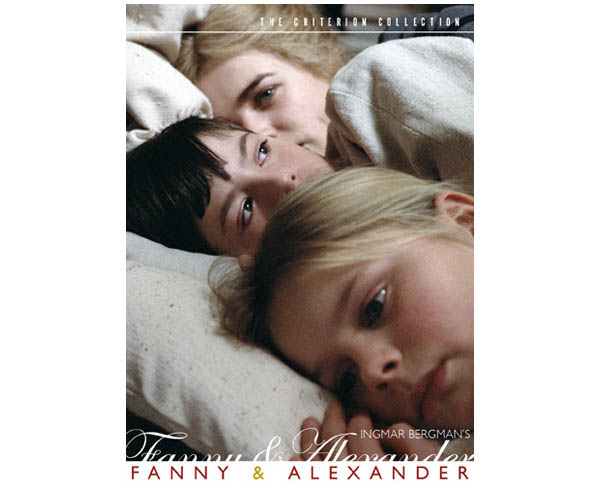
Fanny and Alexander

Fanny and Alexander (Ingmar Bergman, 1982)
When Bergman announced this film he also said to whoever wanted to hear that it was gonna be his final directing job. History told us that he made some movies after this 1982 picture. However, Fanny and Alexander seems like the perfect testament from one of the greatest, if not the greatest filmmaker of all time. The rich colours, the wonderful mise en scène and the panoramic framing of every scene is just perfect. Plus, it begins with a warm celebration of christmas in Sweden of the early 20th Century.

A family that looks like a lot like Bergman's description of his, an actor father that dies too young. His mother getting married with a strict pastor who hates children, and the use of every trick in the bag of Bergman. Well, this is Bergman's autobiographical picture where Alexander portrays the little Ingmar in his childhood when he discovered the theater and the first cinema-lanterns. One of the most famous stills from this film is the Alexander picture watching his little theater in the night of Christmas.

The plot is an amalgam of Bergman's childhood memories but also his influences in films with subtle references to Hamlet, which is the play his family rehearse and one time his mother calls him Hamlet when he can't stand his stepfather. The many spectral apparitions and the construction of the story reminds the great plays of Strindberg, one of Bergman's favourite playwriter. The film has this classic approach to drama and narrative while being a fresh Bergman film, original and unique.

However, the most interesting aspect of this film is the warmth of the images and the atmosphere of joy and reverence from the entire cast. When you look at the Making Of from the wonderful Criterion set, there is a sense of happiness, joy from the shooting of the film and Bergman seems relieved to shot this film and tie the bow with this magnificent opus. He looks content at what he has done and the final film seems to make him proud of what he did not only as a director but as an artist.

As a Bergman enthusiast and a true lover of Christmas and the Holidays I think that the whole sequence depicting the night of Christmas, the meal, the music, the dancing, and the family fun that it represents reminded me of the memories of what this celebration used to be in my childhood. Like the celebration of Christmas depicted in the Claude Jutra film Mon oncle Antoine that represents how we celebrate Noël in my part of the world. Fanny and Alexander has been since the first time I saw it one of my Holiday favorite. A must see and a masterpiece.

2011-12-21

The Seventh Seal

The Seventh Seal aka Det sjunde inseglet (Ingmar Bergman, 1957)


Of the many great films directed by Ingmar Bergman The Seventh Seal is one of the most outstanding and celebrated. For those who don’t know please believe me or treat yourselves with Persona, The Virgin Spring, Wild Strawberries, Shame, Fanny and Alexander, Saraband, Winter Light, Cries and Whispers, The Magician, The Silence, Scenes From A Marriage, well I’m not gonna list them all here but just stand far from The Touch which you can read about in the Simply the Worst event at Reverse Shot where they celebrate the worst film of many notable directors.
I remember the first time I read about this film; in medieval Sweden a knight comes back to Scandinavia after a Crusade and meets Death. He proposes to play a game of chess with Death to postpone his eventual journey in the after world. Meanwhile, the knight travels with a showman and his wife. If, like me at the time you haven't seen the film, the poster, any still, and do not know the actors it inspires to an interesting picture.

First, this plot always intrigued me so it was natural that I’d do anything to watch it. It was in October 2002 at the University on a VHS player on a 14 inches TV and crappy earphones. This context gave to the film a special glow of a rare gem to finally been watched and experienced. It was the first Ingmar Bergman film I’ve ever watched. Needless is to say that it was a revelation. A revelation of Scandinavian Cinema, a great master, a great actor Max Von Sydow, and a riveting filmography.

The importance of The Seventh Seal is more than preeminent in the medium, ranked in the Top 250 of IMDb by regular users (a rating system I definitely don’t understand) listed as the 53rd spot of They Shoot Pictures Don’t They?’s 1000 Greatest Films, #35 by critics of the Sight & Sound 2002 poll and #31 on the Directors side. It can go on and on but it was one of the first films to open the door to classic films and foreign films in my early stages of cinephilia.

About the film, in the 1950’s Bergman was directing at the Stockholm Theater during winter and with the same cast he was directing films. During the summer of 1957 Bergman not only directed The Seventh Seal but also his masterpiece Wild Strawberries. It was a great year for Bergman and Cinema too. Interesting fact, despite his widely known pretention, Bergman was somewhat modest about how he liked his films. But his film he likes the most is The Seventh Seal, he said that it is the one that works the best. However, this false modesty isn’t palpable when you watch carefully Bergman’s films, the characters of his contemporary films represent the bourgeoisie and their problems. In The Seventh Seal, the knight represents some kind of bourgeoisie that stands above the showman and the band that follows him. It is interesting to see that it is the responsibility of the knight to protect the lower classes that will however one day meet its end no matter from which class or cast he is from.

There is something about this period in the films of Bergman that transpire something raw or crude and it is in part because of the kind of cinematography made with clear crude lighting and few effects. It is almost as if Bergman liked to show bare human feelings without any useless artifices in natural context and environment. A simplicity in the complexity of his plots and understanding of the storytelling that Cinema requires. By today’s standards The Seventh Seal looks much like a classic almost academic film made by a theatre director. However, the themes and reconstitution of the time is perfect and I wouldn’t trade this film for any contemporary one. Please note: I will defend this statement hardly: The Seventh Seal is a Masterpiece.

2011-12-15

Scenes from a Marriage

Scenes from a Marriage aka Scener ur ett äktenskap (Ingmar Bergman, 1973)

In my quest of seing the 1000 Greatest Films of the website They Shoot Pictures Don't They? I had the oppportunity to watch many films listed on this reference list. While in the process, that isn't done yet I'm only at number 509, I forgot or omit to write my impression of these films. Like many Bergman movies, Scenes from a Marriage was released Theatrically and also as a Mini-series. It is something often done in Sweden they did the same thing with Fanny and Alexander and the Millenium trilogy. As I am a man of Cinema I often only watch the Theatrical release. However, with Bergman's work I like to watch both. And it worth the rewatch sometimes because it explains some elements that were cut shorter in the Theatrical release. Note: I don't own the Criterion DVD of this release so if someone has an extra 60$ for whatever reason he/she can be my secret Santa...

Liv Ullman and Erland Josephson, two Bergman regulars portray a couple married for ten years. They are cited as a example of succesful marriage and they are sharing their experiences of their married life. The many ups and downs and everything that a couple can encounter during its life together. We follow the next ten years of their marriage.

Scenes from a Marriage is an autobiographical portrayal of Bergman's five marriages and many relationships. He had many extra-marital affairs and his couples had some struggles. Well, the artist that he is reflects a lot the patterns that celebs tend to live in their love relationships. The strenght of Scenes from a Marriage is how close we feel we are with the two lead characters. This is an intimate approach in the life of a couple. Into this film we have a feeling of being like a voyeur into their lives but also like being a part of their lives. We feel for these characters and as relationships are universal and timeless everyone feels like he or she understands or have lived some parts or many of what it is exposed. This is a meticulous and precise detail work on how men and women interact and live their marriage. Even if this is a situation different than yours it still interacts with our lives. A great film. Bergman shot a sequel thirty years later titled Saraband that has been widely acclaimed at the time of its release in 2003.

2011-12-14

Cries and Whispers

Cries and Whispers aka Viskningar och rop (Ingmar Bergman, 1972)

When someone thinks about the great Ingmar Bergman many will list his work from the mid-fifties to the late sixties (1957-1966) as his masterpiece period. This person couldn't be more wrong, this director's great work goes until Saraband in 2003. However true Bergman fans like Woody Allen list Cries and Whispers as his favorite film from the Swedish master. Allen is passionate about the man and he even tried successfully twice to do a Bergman film (Interiors and September). For a film lover Cries and Whispers isn't an easy film but such a deep and moving one. It is quite challenging for its viewer to immerse himself in Anna's vision of a dying woman she's taking care of.

On the turn of the 20th Century, Agnes is dying and her sisters come to visit her before her long journey into the other world. This familial reunion brings up many dormant situations between the sisters that are accentuated by the degrading state of Agnes. Her only devoted maid, Anna takes care for her and understands the woman more than her own family. The quarrels of the siblings and the heaviness of the situations is perfectly balanced with the outstanding cinematography of long time collaborator Sven Nykvist. The natural lighting and the crude almost fleshy colours give a superb look to the film. It is so beautiful that it doesn't even looks like the film was made forty years ago. Instead of being staged at perfection like a Dreyer film, Bergman's Cries and Whispers looks natural and classical at the same time. This is the work of artists, the frames are blissed like classical paintings displaying light, life, and beauty. While at the same time we struggle through Agnes' pain in her fight against cancer. However the beauty if the images and the originality of cinematographer Nykvist could have been the ultimate bravura of Cries and Whispers. Well it is not, it is the talented performances and the ensemble cast that surrounds Bergman that strikes the most. Harriet Andersson, Liv Ullmann, Ingrid Thulin, Kari Sylwan, and Erland Josephson are the great performers but it is Kari Sylwan as the maid Anna that demonstrates depth more than any other in this amazing work.

Finally, Cries and Whispers is one of the many gems that were made in the 1970's. A time where American movies gain in quality and that gave back to the directors the central place in moviemaking in Hollywood. Foreign films that used to be made by directors and controlled by themselves were less regarded when American directors made better films than they used to. However, Bergman, Herzog, and many more made wonderful films in these years. Cries and Whispers might not be as known as Persona or The Seventh Seal in the Bergman catalog it holds to the test of time and should be celebrated more than it is actually. At least it deserved a superb transfer on DVD by Criterion Collection.

2011-12-13

Persona

Persona (Ingmar Bergman, 1966)

Considering my eternal admiration towards the great master that is Ingmar Bergman, I've decided to treat myself with this review of his most experimental film: Persona. Frankly, my "fanophilia" isn't the main reason why I decided to review this extraordinary masterpiece, it is reaction to the entry of the 1001 Movies You Must See Before You Die Blog Club on December 22nd: The Seventh Seal. Don't worry, I'm not doing Persona instead of The Seventh Seal, the review is already written it is just waiting to be released on the day of the assignment. By the way, if anyone wants to join the club you are all welcome to! Follow the link aforementionned and write to my great friend Squish and he will be more than happy to include you into our active reviewers!

Most of Bergman's films don't feel contemporary, they have this unaged and unaltered by time touch. The Bergman touch, well few filmmakers had the gift to make such rich and strong films. But Bergman is one of the perfect examples, the settings and simple mise en scène lets the story and the emotions take all the space and the viewers' attention. What is more important is that the stories and feelings portrayed and displayed are more often than not universal even if it is a Swedish film about the bourgeoisie or medieval characters. Persona takes a step away from these patterns in many ways but it is this exception that's makes it a film even more interesting than most of the rest of his films. Clearly set in contemporary times, the 1960's with the news footage of the beginning of the film, we are set up in a world where everything is in complete change, mutation, morphosis, even in revolution. Bibi Anderson and Liv Ullman, two of the most beautiful women of the 1960's by the way, are in a cabin where Ullman portrays an actress who stopped talking on the stage and never did since. Bibi, is the nurse who's taknig care of Ullman, she represents innocence and the fact that she always talks about all and anything shows how shallow she is. On the contrary, Ullman who is pratically playing the mute watches and listens to her with contempt and severity while seing clearly through Bibi.

The film brings many questions on the modern society and the many perceptions we have of our world. The title of the film Persona, resumes the central scene of the film that is doubled when the two main characters trade their personalities with a split screen imagined by Bergman himself. It looks like a reflection on the fact that when two people are almost isolated together that they kind of begin to look alike. There is also the effect of the character mix where each one gets more and more intertwined with the other one. It is kind of a reaction of their relationship that feels like the younger sister who's taking care of the oldest which should be the other way around. Whatever someone finds as the meaning of the film it is a psychological and philosophical charged film.

The major deception I have with this film it is its release on DVD, done by MGM in a Bergman Boxset that doesn't really live up to the quality of the films. I hope someday Criterion will acquire the rights to make a proper release of this amazing masterpiece.

Related Posts Plugin for WordPress, Blogger...