Showing posts with label 1972. Show all posts

2016-09-21

Snoopy, Come Home


Editor’s note : a big thank you to Paramount Home Media Distribution for the promotional copy of this Blu-Ray release of this animated feature classic.

Snoopy, Come Home (Bill Melendez, 1972)

Snoopy travels to see his sick former owner and then feels obliged to return to her permanently.

From the Peanuts’ creator and writer, Charles M. Schulz, Snoopy, Come Home is another great rendition of Schulz’s unique amazing observations of life. One of the only setbacks is the fact that Vince Guaraldi was not the composer of the musical score for Snoopy, Come Home.

2014-02-14

The Bitter Tears of Petra von Kant


The Bitter Tears of Petra von Kant (Rainer Werner Fassbinder, 1972)

This film has an all-female cast and is set in the home of the protagonist, Petra von Kant (Margit Carstensen). It follows the changing dynamics in her relationships with the other women.

2013-08-21

What's Up, Doc?

What’s Up, Doc? (Peter Bogdanovich, 1972)
Following his biggest hit The Last Picture Show that played as an homage to the old Hollywood of John Ford and Orson Welles, director Peter Bogdanovich teamed up with Barbra Streisand and Ryan O’Neal to pay a tribute to Howard Hawks’ quintessential classic slapstick comedies Bringin’up Baby and His Girl Friday. Doing a genre film is always tricky for a director that has his own voice and such encyclopedic knowledge of Film History. However, the movie was the third highest grossing title at the box-office in 1972.

2011-12-14

Cries and Whispers

Cries and Whispers aka Viskningar och rop (Ingmar Bergman, 1972)

When someone thinks about the great Ingmar Bergman many will list his work from the mid-fifties to the late sixties (1957-1966) as his masterpiece period. This person couldn't be more wrong, this director's great work goes until Saraband in 2003. However true Bergman fans like Woody Allen list Cries and Whispers as his favorite film from the Swedish master. Allen is passionate about the man and he even tried successfully twice to do a Bergman film (Interiors and September). For a film lover Cries and Whispers isn't an easy film but such a deep and moving one. It is quite challenging for its viewer to immerse himself in Anna's vision of a dying woman she's taking care of.

On the turn of the 20th Century, Agnes is dying and her sisters come to visit her before her long journey into the other world. This familial reunion brings up many dormant situations between the sisters that are accentuated by the degrading state of Agnes. Her only devoted maid, Anna takes care for her and understands the woman more than her own family. The quarrels of the siblings and the heaviness of the situations is perfectly balanced with the outstanding cinematography of long time collaborator Sven Nykvist. The natural lighting and the crude almost fleshy colours give a superb look to the film. It is so beautiful that it doesn't even looks like the film was made forty years ago. Instead of being staged at perfection like a Dreyer film, Bergman's Cries and Whispers looks natural and classical at the same time. This is the work of artists, the frames are blissed like classical paintings displaying light, life, and beauty. While at the same time we struggle through Agnes' pain in her fight against cancer. However the beauty if the images and the originality of cinematographer Nykvist could have been the ultimate bravura of Cries and Whispers. Well it is not, it is the talented performances and the ensemble cast that surrounds Bergman that strikes the most. Harriet Andersson, Liv Ullmann, Ingrid Thulin, Kari Sylwan, and Erland Josephson are the great performers but it is Kari Sylwan as the maid Anna that demonstrates depth more than any other in this amazing work.

Finally, Cries and Whispers is one of the many gems that were made in the 1970's. A time where American movies gain in quality and that gave back to the directors the central place in moviemaking in Hollywood. Foreign films that used to be made by directors and controlled by themselves were less regarded when American directors made better films than they used to. However, Bergman, Herzog, and many more made wonderful films in these years. Cries and Whispers might not be as known as Persona or The Seventh Seal in the Bergman catalog it holds to the test of time and should be celebrated more than it is actually. At least it deserved a superb transfer on DVD by Criterion Collection.

2011-09-22

Le charme discret de la bourgeoisie

Le charme discret de la bourgeoisie (Luis Buñuel, 1972)


This is by far one of my favourite film of all time. Buñuel has always been a one of a kind director contributing with Salvador Dali on the surrealism with his Un chien andalou and L’Âge d’or, two masterpieces of moviemaking and dreamlike sequences that every self-respected cinephile should have seen. The symbolism of these instinctive films as so many levels of understanding and such depth that a simple essay on them isn’t enough to crack their codes.

Let’s get back to Le charme discrèt de la bourgeoisie made almost fifty years after Buñuel’s first films! What strikes you the most is how the surrealism that characterized his first films is still omnipresent but even more mastered than ever. Le charme discret de la bourgeoisie is the culmination of Buñuel’s work : the perfect surrealism film. The uses of symbolism and camera techniques is really subtle and Buñuel doesn’t need to slice the eye of a woman or get a cow in the bed of two lovers. The many situations of Le charme... are already overly enough and the closer to realism it gets the better it is. The dreamlike sequences that always feel like if you were in reality but finally you weren’t at all embarks the viewer on a trip with the bourgeois that are trying to get diner together and enjoy a nice evening.

This series of events is packed with humorous dialogues and situations. Just like Woody Allen, another admirer of Buñuel’s work, I feel that this kind of hybrid film where humour and reflection means entertainment and Cinema. It is a smart film where subtlety uncovers the hypocrisy, the fears, and the vices of the bourgeois characters populating the film. The uniqueness unity of Le charme... brings you in common places and then just when the viewer thinks he knows how the situation will turn out Buñuel gets a bunny out of his hat. This master has many tricks in his bag. You have to see the film to fully understand the reach of the whole thing.

In 1972, there were many big successes: The Godfather, Cabaret, Deliverance, What’s Up Doc?, The Getaway, Everything You Always Wanted to Know About Sex (But Were to Afraid to Ask), but in my opinion Le charme discret de la bourgeoisie along with Aguirre: The Wrath of God was the greatest film of that year. Unfortunately other films mentioned earlier will always make shadows on Buñuel’s greatest achievement.

2011-06-17

Boxcar Bertha


Boxcar Bertha (Martin Scorsese, 1972)

This is my contribution for the Roger Corman blogathon hosted by Nathanael Hood at the Forgotten Classics of Yesteryear blog from June 17 to 19.

2010-11-24

L'amour, l'après-midi (1972)

TSPDT Greatest Films #972 L'amour, l'après-midi (Eric Rohmer, 1972)


The final chapter of Eric Rohmer's Six Moral tales, L'amour l'après-midi, depicts a happily married man with children that gradually lower his guard in front of the many advances of an old friend. Chloe, the reappearing friend begins by simply filling Frederic's "ennui" in the afternoon. Besides, completely refusing the presence of Chloe he takes really care of her but their relationship take some predictable turns. Until the last moment Frederic feels the attraction for Chloe (a passion that will not last) but his love for his wife is so much stronger (love that can stay for his lifetime). Like the other moral tales, L'amour, l'après-midi works more on the suggestive side of things and only evokes the "cliché" always until the last moment. The dream sequence includes the three actress from the preceding moral tale, Le genou de Claire. It's a little redap of and a funny link between both films.
 
The images, from Nestor Almendros, are sublime and the many outside shots in the streets of Paris are simply beautiful. The Moral tales were made at the end of the 1960's and the beginning of the 1970's but the images don't reflect their time, they seem timeless. I wonder if Woody Allen watched those films before making Annie Hall and Manhattan, and all his other films, because we really feel that Rohmer's wrinting may probably have influenced Allen's dialogues in some way.

The Six Moral tales are a landmark not only for the French Cinema but for the History of filmmaking. In screenwriting class, every student must have seen at least one of the Six Moral tales.

2010-09-23

Tout va bien (1972)

Tout va bien (Jean-Luc Godard & Jean-Pierre Gorin, 1972)


May 68 has been a real clash in France. The left has rise and took so much power that the biggest enterprises were affraid of dealing with the unions of workers. The "revolution" it brought has had many levels of effects and the dust hasn't been down until many years after. Godard & Gorin wanted to show how it changed little things but everything has been the same after all with Tout va bien. More like a cinéma-vérité experiment Tout va bien is openly on the workers' side. For more than the first half of the film we follow with a journalist (Jane Fonda) and an ex-film director (Yves Montand) the strike of some industrial meat producer factory.

The "propos" is very satyrical and long shots are used to let the characters explain their engaged opinions on the subject matter. One of the longest scene in Tout va bien is the long unedited sequence at the supermarket that demonstrates how even capitalists and politicians used the left current to make profit with it and get more attention. The film is all about politics and the effects of May 68 in France. My favorite scene of it is where the camera keeps moving on the side of the cut of the meat factory offices. It surely influenced Wes Anderson's similar scenes in The Life Aquatic with Steve Zissou. 


Tout va bien is an interesting piece of film but its themes are outdated and the "propos" of the film is not objective enough to make it a masterpiece or whatsoever. The cinematography is simple but very eye-popping. This is the kind of film one should approach with caution or like me as a Godard enthusiast.


2010-03-25

Cabaret un film de Bob Fosse - Retrospective

TSPDT Greatest Films #281 Cabaret (Bob Fosse, 1972)
Set between the two World Wars and during the rise of the Nazis in Germany. Cabaret tells the story of a young man who went for a while in Berlin to teach English in a little rent where the star of a cabaret Sally Bowles stays too. Adapted from the Broadway musical show Cabaret as a traditionnal romance with musical numbers set between scenes. Some musicals numbers seem forced to fit in the story, because Bob Fosse did not used the numbers to tell the story à la Parapluies de Cherbourg but to illustre it with Cabaret numbers only. Liza Minnelli as Sally Bowles gives an excellent performance and she overshadows the good performance of Michael York.

I generally like musicals but this one didn't charmed me. The numbers are confined to the cabaret and they have a lack of inventivity in the way they were chot and presented to the screen. I was waiting for much more than that. Some musical moments aren't necessary for the story and it's ok that they are not that long either.

The directing is traditionnal and unpersonnal for a film of the 1970's it felt very conservative...

Cabaret is uneven and, in my opinion, a deception. For fans of Liza Minnelli especially.

A Film Retrospective by Michaël Parent

2010-02-10

Aguirre: The Wrath of God

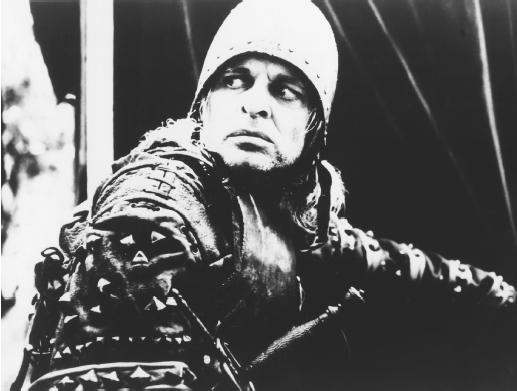
Aguirre, des Zorn Gottes (Werner Herzog, 1972)
Probably one of the most intense film of all time, Aguirre The Wrath of God is the first and the best of the five collaborations between Klaus Kinski and Werner Herzog. In general I find Herzog's films very heavy and hard to approach but also deep spiritual and intense experiences. He is one of the best filmmakers of the 70's if not the best, to have been a non-Holllywood director is like being a B-Movie filmmaker, but that's another topic...


Related Posts Plugin for WordPress, Blogger...