2013-05-31
Announcement : Summer 2013 Director Retrospective
2013-05-24
Poll : Director Retrospective
2010-03-25
Cabaret un film de Bob Fosse - Retrospective
Set between the two World Wars and during the rise of the Nazis in Germany. Cabaret tells the story of a young man who went for a while in Berlin to teach English in a little rent where the star of a cabaret Sally Bowles stays too. Adapted from the Broadway musical show Cabaret as a traditionnal romance with musical numbers set between scenes. Some musicals numbers seem forced to fit in the story, because Bob Fosse did not used the numbers to tell the story à la Parapluies de Cherbourg but to illustre it with Cabaret numbers only. Liza Minnelli as Sally Bowles gives an excellent performance and she overshadows the good performance of Michael York.I generally like musicals but this one didn't charmed me. The numbers are confined to the cabaret and they have a lack of inventivity in the way they were chot and presented to the screen. I was waiting for much more than that. Some musical moments aren't necessary for the story and it's ok that they are not that long either.
The directing is traditionnal and unpersonnal for a film of the 1970's it felt very conservative...
Cabaret is uneven and, in my opinion, a deception. For fans of Liza Minnelli especially.
A Film Retrospective by Michaël Parent
2010-03-14
The Only Son un film de Yasujiro Ozu - Retrospective

Made in 1936, The Only Son by Yasujiro Ozu reveals many themes he will aboard later in his career, conflicts between generations, misundertandings, poverty, pride, and family issues.
Since Ozu's style has already been discussed I would like to only mention that his naive use of technical "errors" with weird camera angles feels perfectly right here in the telling of The Only Son.
It's the story of a mother and her son gone to high school and ends up working as a night teacher. The mother goes to Tokyo to visit her son who is ashamed of what he has done with his life. He thinks his mother won't be proud of him and regret to have send him to high school.
Slow paced and sometimes a little loose The Only Son announces the main preoccupations of Ozu. Many said that his better period is the post-war era until his death; it is the era where he made his stronger and richest films in ratio. But, The Only Son should have reconsiderations as an early strong film. It is not as moving as Late Spring or Tokyo Story but it's still very interesting and universal in his themes.
It has the Ozu touch and Ozu feel in it. Once again it is a story that involves deep interactions between humans and their values and the main concept of family that populated Yasujiro Ozu's better work.
A Film Retrospective by Michaël Parent
2010-03-12
Mothlight un film de Stan Brakhage - Retrospective

A new addition on the 1000 Greatest films this year, Stan Brakhage's Mothlight of 1963. Available on YouTube this 4 minutes film is a real piece of art. It feels really analog with these brown natural colors, herbs, insects, earth, dirt, flowers, etc.
It's a rough film and it should be watched has a piece of modern art, as Visual Art. Stan Brakhage has made more than a hundred films and he uses uncommon methods to express his art on the film. He sometimes worked on the film with tools and manipulate it frame by frame. This is why this film is so short. He managed to work on every frame by himself making a second of film per day of work. It gives a very textured and natural feeling to the images. Multiple viewings are recommanded to appreciate all the work and passion in this short film.
A very interesting film for technicians and filmmakers. It is more a visual experience than a common short film.
A Film Retrospective by Michaël Parent
2010-03-09
Seven Brides for Seven Brothers un film de Stanley Donen - Retrospective

Set around 1850, somewhere in the USA, Seven Brides for Seven Brothers is a romanced musical (is there a musical without romance?) tainted with a little bit of drama. From the co-director of On The Town (reviewed here) and Singin' in the Rain and the director of Funny Face, Stanley Donen. Whose other films were made with big stars and big names like Fred Astaire, Gene Kelly, Frank Sinatra, and Audrey Hepburn.
In SBfSB Donen used the dancers of the New York City ballet. The story is quite simple, seven brothers live on the mountain and they want women to live with them. The older brother gets married and the six others want to meet each a bride... Well, the rest is pretty simple, naive, and very conservative (well it's an american musical of the 50's set in 1850 what do you expect???).
The musical performances are classic and under the quality of Donen's previous films he co-directed with Gene Kelly. Funny Face that followed SBfSB three years after is far better for its story and its style. On some level I think Stanley Donen needed a big star like Gene Kelly or Fred Astaire to juice up a bit his musical numbers and inject more personality in his films. But it's more than just the cast or the director in this case, the story is so thin and simple that it felt like anyone could have directed this script. Some musical numbers, like the part when then go to a dance in the village to build a barn is very entertaining and the choregraphy is very well executed. However, the story doesn't seem to keep the momentum and the rythm the dances bring to the film.
Even with all the criticism I bragged about SBfSB I had a good time watching it and it's far from a complete failure. I just think that when I can compare the previous work of a director to SBfSB it should be at least as good as he did if not better. For fans of Donen and/or fans of american classic musicals.
A Film Retrospective by Michaël Parent
2010-03-08
Il gattopardo un film de Luchino Visconti - Retrospective

Il gattopardo is an extraordinary epic film on a family in Sicilia made on a scale of unequaled beauty. This story is set in the period of the Revolution of Garibaldi just before Vittorio-Emanuel took power in Italy.
Il gattopardo depicts the many changes between the order of the world before and after the revolution. It is illustrated with the many conflicts between generations of the old and the new Italy. The main thought of Visconti is about how great changes like revolutions only changed the oppressors of the people or the structure and didn't changed the life of people. These events are big only if humanity wants to consider them. Like the general who constantly praised himself and Garibaldi by telling his story bigger and better everytime.
The images are perfect and Visconti has the hand of a great master with all his confidence. Every frame is wonderful. The long takes immerse the viewer into the majesty of the film.
But with all his perfection and beauty, Il gattopardo is a little too perfect and sometimes it's just too overwhelming and a little slow for the modern day film goers. On the other hand, this is a piece of history and should regarded as one of Luchino Visconti's masterpieces.
A Film Retrospective by Michaël Parent
2010-03-07
Network un film de Sidney Lumet - Retrospective

Going on with his analysis of the effects of television on the world, Sidney Lumey after what I consider a near masterpiece; Dog Day Afternoon, offers this time with Network the other side of the subject; the television's side of the subject. Without any technical extravaganza like many of hs colleagues of the 70's Lumet shot his films like documentaries. They feel true.
This is the story of Howard Beal (Peter Finch) considered like a "has-been" of television, his show is in complete downfall in the numbers as his popularity. One day the announces he's gonna kill himself on air. The day after he's not doing it but he claims that he has enough and he wants changes. At this point his shiow began the bet thing on television because he's true to the viewers and he's like the "prophet" of telelvision. He speaks for the middle class american that has enough of the hypocrites that lead the world.
With a solid cast of Faye Dunaway (who won an Oscar for her performance), Peter Finch (he won an Oscar too), William Holden and Robert Duval.
The film is based on religious grounds because Lumet translated religion to television in his film. They just needed the right lead to carry their speach. Many dialogues referenced religius concerns. Made in 1976, Network is still carrying a message that should be listened. Television is the tool to endoctrinate people and sell any stupid product like the "Slap Chop". Everybody is glued every evenings on their chairs in front of their television sets like believers. All the stores always offers bigger screens, better, thinner etc. for the living room so that all the furniture will be pointed at the new idol...
Well, I'm one of them and you probably are too because you watch films/sports/series on your tv set. Television is the new religion, so Sidney Lumet said. This is a strong cinematic effort from this excellent filmmaker.
A Film Retrospective by Michaël Parent
2010-02-22
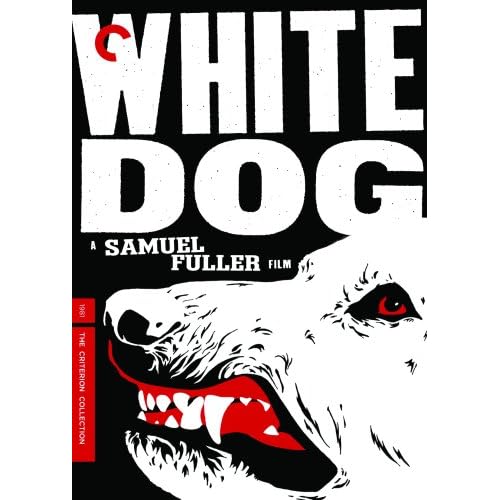
White Dog un film de Samuel Fuller - Retrospective

One of the most underrated movies of all-time; Samuel Fuller's White Dog.
This is the story of a young Hollywood actress who hits a dog on the road a rescue him from his injuries. One day she discovers he is an attack dog and instead of taking all the advices she got she decides to take the dog to rehabilitate him from attacking people. They discover that the dog is not only trained to attack human beings but mainly to attack black people.
Many themes treated in White Dog are interesting because Fuller didn't wanted to censure himself on all the racist elements the plot contains. I must say that this film does not vehicule or encourage racism. This is one of the greatest affronts to racism. The main message to me is that even when a dog is brainwashed to death with racism you can throw the racist out of him! This is a great lesson from a great american filmmaker.
I must say this review is pretty concise but I refer you to Joseph Campanella with his Toerific Febuary at CINEMA FIST with a great essay on Samuel Fuller's White Dog.
A Film Retrospective by Michaël Parent
2010-02-21
The Virgin Spring

Bergman's films are pieces of pure Cinema. For some contemporary viewers his style may tend to be too theatrical and dramatic. The acting is, in fact, too much and that's a thing I really had troubles to get into his films. The Virgin Spring is the tenth film from Ingmar Bergman I've seen and one of the good ones. In my opinion, Wild Strawberries, The Seventh Seal, Persona, Cries and Whispers and even Fanny and Alexander are far better works.
Bergman's filmography is far too dense to name my favorite (maybe Fanny and Alexander... tomorrow it would be another one...). I didn't even seen half of the films he has done.
The Virgin Spring is the story of a farmer's family in Medieval time. His daughter is his pride and he loves her very much. But on her way to a distant church she is raped and killed by goat herders. Those goat herders ask for a roof and food for the night to the peasant parents of their victim.
The themes of The Virgin Spring are universal; virginity, rape, murder, revenge, good vs. bad. The story is set in Medieval time but could happen in any time period. It reminded me the film currently in theaters by Daniel Grou a.k.a. Podz Les 7 jours du talion.
I liked The Virgin Spring as a piece of the history of Cinema but I would go back to The Seventh Seal or Wild Strawberries way before watching again The Virgin Spring if I want to go back to rewatch Bergman's films...
A Film Retrospective by Michaël Parent
2010-02-20
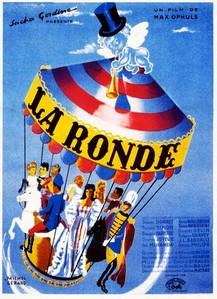
La Ronde un film de Max Ophüls - Retrospective
Max Ophüls is considered by many as one of the best directors of all time, I am ashamed to say I have only seen Letter From an Unknown Woman and Lola Montès. Both are exquisite masterpieces, especially Lola Montès, his last film, praised as maybe the best film of all time.La Ronde is a story told by Anton Walbrook who plays a debut XXth century "cupid"/ "metteur en scène" of love or as he says a lover of the art of love. He is the element that makes La Ronde go round. Told in ten sketches Walbrook's character joins the sketches together. At some point there's an allusion to a well known french expression; to live of love and fresh water: many characters ask for a glass of water only. And they are always more thirsty than hungry. As many of Ophüls films he likes to finish his films at the place they started. He is an amazing storyteller and all his films took us on unforgettable journeys.
The photography is sublime and the black and white is somtimes over lighted or low lighted which makes pretty contrasts to the images. One of the most Ophülsians aspects is the movement of camera that are fluids and sincere all over the film. It's a very haunting film very well scored by Oscar Strauss that transports us into 1900's Vienna.
A beautiful masterpiece that I wish I could have seen in a theater instead of my computer screen (damn you Region 6 DVDs). I will put more films from Max Ophüls on my Most Wanted film list because he was an important filmmaker.
2010-02-17
Fantasia un film de Ben Sharpsteen - Retrospective

Considered by many as the greatest animated film of all time Walt Disney's Fantasia is more than a regular cartoon picture. First of all, I think it's not an animated film especially for children not because of inappropriate material but because a child needs more of a story to hold up to and maybe more action to it. The many parts with juxtaposition of music and animated images is sublime and I must say as a Disney aficianado; I really liked it! Especially, for all the work behind the film of the many many artists shadowed by the prestance of Walt Disney. The film did not do good at its release and it's long time after it got the recognition it deserved.
With the exception of the narration of Deems Taylor there ain't no links between the musical parts. I easily understand why the public didn't rushed into the theaters when it was released. Disney wanted to show to the moviegoers an other side of classic music. But, the classic music fan base wasn't the same crown that got to the Cinema. Without interest in the music the images may be as beautiful as they are they could not hold the audience as he did with Snow White.
Many songs used in Fantasia are common classic songs we often hear in Cinema. Having a different vision of them is refereshing and also sometimes it's not the image we have in mind that is on the screen so it changes the meaning of the song. I compare the entertainment value of Fantasia to a great fireworks show. The music fits the image and they compement each other. But, would you sit through two hours of a fireworks show? I would answer yes! If you ask yourself to watch it or not you can ask yourself this question. I can say to you that this fireworks show is pretty damn good!
2010-02-06
Record of a Tenement Gentleman un film de Yasujiro Ozu - Retrospective

As Ozu's films this one is a domestic drama/comedy. The story begins when a little child (Kohei) is brought to a widow, Tane, that didn't had children. The kid was lost and his father loose him on his way to Tokyo. The lady don't want the child and does a long trip to find his father. They don't find him and she agrees to keep him at her home. She is angry of the events and she is mean and bitter against the little boy. She thinks a child is a nuisance to her life. Until the day he got away and she looses him, he misses her so much that when he comes back she changes completely her beings with him. Tane even wants to adopt the little Kohei... But events won't let her.
This is another amazingly deep and poignant film from Yasujiro Ozu. Without huge technical manoeuvres and a very sober directing style that caracterizes his most known films Ozu can tell a moving story in his own purged technique. Every Ozu film I've seen has something particular even if they have similar visual signature. They feel light and tender on the outside but they treat of heavy domestic issues. In this case it's a woman's discovery of her maternal instinct and need.
A Film Retrospective by Michaël Parent
2010-01-30
On the Town un film de Stanley Donen & Gene Kelly - Retrospective
A predecessor to their 1952 masterpiece Singin' In The Rain, this one is entertainning as well and very well choregraphed too. But it doesn't have the depths we can find in the story of Singin'In The Rain. Some scenes are written to present the wonderful dances by Kelly and the numerous girls of the film. The funny side is more present here too. The dance in the Natural Museum is hilarious and has a cartoonish look.
I think the thing that bothered me the most was the precipitated ending and that some gags don't hold up enough for the quality of the feature. For an musical comedy fans this is a Highly Recommended film and I personnally would recommend it to anyone who appreciate a classic entertainment of the 40's.
A Film retrospective by Michaël Parent
2010-01-28
Flavor of Green Tea Over Rice un film de Yasujiro Ozu - Retrospective
Ozu's films are often categorized in periods or chapters of his filmography (Early or Silent films Late Ozu or Materpiece period). The Flavor of Green Tea over Rice of 1952 can be categorized as one of his later masterpieces. Just before his main film Tokyo Story (1953) and after Early Summer (1951). Being the fourth film I've seen from him this is made the one I appreciated the most. Why? I think it may not be that far better than Tokyo Story, Late Spring, or Early Summer but I think this is a director which the most films you see of him the more you appreciate his style, his vision, his storytelling, and his directing qualities.The more japanese of japanese directors always been frown upon and snobbed for his two main contemporaries Akira Kurosawa and Kenji Mizoguchi. They were always the representants of Japan in Cannes and in the international festivals. Like many artists sadly, it's after his death he becma to be habilited into world Cinema and regarded as one of the main figures of his art. The stories depicted in his films are common and regular issues of normal japanese people, with contemporary stories, without swordsmen/samurais, without spectacular scenes or events, and during the little moments of our lives.
His style, with a low camera and few movements of it is very contemplative. He is, of the three main japanese directors of his period the closest to documentary style and natural life emotions.
In The Flavor of Green Tea over Rice one of his recurring theme is used to illustrate the main story of his film; food. When the husband illustrate to his wife how he sees life and happiness through simple food and he compares them together to green tea penetrating the rice to make a dish that he finds really good it makes the best scene of the film. Without being spectacular or too emotive it's a magical moment made by Ozu here. It's a simple story about simple people not too dramatic or comical but just the right touch to it to make it a comedy of manners signed Ozu. Visually it's a stunning film with few movements of camera that accentuate the scenes and the nice rythm of the film.
It's weird but also I think it's there, it has a touch of a feel good movie where at the end every piece falls into it's right place.
A filme review by Michaël Parent
2010-01-17
Ma Nuit chez Maud de Eric Rohmer - Retrospective

To pay a tribute to one of the most important figures of the French New Wave and of the French film history, Eric Rohmer who just past away this week I choose to discover and analyze one of his better works; Ma Nuit chez Maud (1969). Being the third chapter of his six moral tales, Maude's is for many his best film. I'm ashamed to say that before saturday January 16 2010 I haven't seen one of his films. This short essay will try to pay tribute and erase my lack knowledge about Rohmer's films.
Ma Nuit chez Maude starts with the main character, Jean-Louis, played by Jean-Louis Trintignant as a 34 years old engineer converted to catholicism who believes in true love. He will confront his ideas with one of his best friends Vidal and the newly encountered Maude (who are by the way atheists) about their visions on life, love, friendship, Pascal, and marriage. In the beginning, Jean-Louis says he's gonna marry Françoise but slowly falls in love with Maude and her straightforward attitude.
The narrative of the film stands close to Antonioni's style, who is a big influence on Rohmer's films, with clean and shaky black and white images, long takes; especially with the openning sequence which is silent for nearly five minutes. The scenes are long and the characters slowly enter and exit the image. This is clearly a French New Wave film but many aspects of it are taken from the Italian Neorealism especially. Rohmer tried to minimize the narrative effects on his story to take his Film as near as possible to reality. That's something, the Italian Neorealists wanted to do, especially Antonioni and Rossellini. On the other hand, Rohmer was openly a supporter of the work of Hitchcock and Hawks as the other directors of the French New Wave. Some narrative elements of Ma Nuit chez Maude are directly taken from those two masters who never hesitated to insert long silent sequences into their films. The esthetic and the camera angles are clearly influenced by the films of Alfred Hitchcock. The story of the film may seem a little flaw with its slow rythm but when it all comes into place it fits perfectly. I think it may have influenced Sofia Coppola on her Lost in Translation.
I didn't really got into Ma Nuit chez Maud in the first place. But after a little refexion and some time I think it's a very deep film that enters your mind and works on it. In this case, I think it's a great movie especially when afterward it continues to grow within you. I'm proud of letting myself immerge into Eric Rohmer's filmography.
Reposez en paix Monsieur Rohmer!
A film Retrospective by Michaël Parent
2009-11-10
À venir sur Le Mot du Cinephiliaque

Pour la fin de l'année 2009, je prévois aller voir les films qui seront des potentiels candidats aux Oscars. De plus, samedi le 14 novembre 2009 pour une représentation seulement, Gone With The Wind de Victor Fleming sera présenté en salles pour la sortie de l'édition 70e anniversaire remasterisée du film.

Durant le mois de décembre je vais participer à la rétrospective des films de Sam Peckinpah qui se déroulera au Blogue The Agitation of the mind dans le cadre des 25 ans de la disparition de ce grand cinéaste. Je suis présentement à l'écriture d'une critique approfondie de The Wild Bunch de Peckinpah. Ce Western révisionniste constitue selon moi le meilleur Western de tous les temps et le chef d'oeuvre de sa carrière.


En plus, le mois décembre ne peut se départir de l'étiquette des "Holidays movies". Je ferai plusieurs rétrospectives de films que je considère comme étant des films de Noël. Les incontournables comme It's a Wonderful Life, Christmas Vacation, Fanny and Alexander, Die Hard et même Eyes Wide Shut seront analysés ici.
2009-11-01
Bourne Trilogy - Pas vraiment une Retrospective

Plusieurs diront qu'il était temps que je vois ces films mais ma maladie de ne m'attarder que sur les "vieux" films me rattrape assez souvent. Alors je découvre souvent avec bien du retard les films de notre époque... Honte à moi! Bref, par ce billet je veux me rattraper et faire ce que je fais pour les classiques que je présente dans mes rétrospectives; payer un hommage à ces films. Tirée des romans de Robert Ludlum, qui eux sont largement inspirés de la Bande dessinée 13, la trilogie Bourne met en vedette le personnage principal Jason Bourne. Je ne tenterai pas de vous faire un résumé de ces films pour ne pas gâcher de "punchs" à ceux qui n'ont pas encore vus ces films. Je vous dirai cependant que ce sont des films d'action si vous ne le saviez pas encore...
La force de ces films est leur mise en situation instantanée et immensément efficace. On nous plonge directement dans l'action et au coeur même du récit. Dans chacun des trois films le spectateur est sollicité car il s'identifie automatiquement à Jason Bourne et l'accompagne dans sa quête. Notre protagoniste apprend en même temps que nous chacune des informations qui le font avancer dans son cheminement. Chacun des trois films peut se regarder indépendamment des autres. Même si toute l'histoire y est reliée, moi-même j'ai été mal informé et j'ai écouté le troisième volet avant le second. Le bon ordre d'écoute est recommandé mais pas obligatoire. C'est la force d'un film bien écrit, ils ont tous un début, un milieu et une fin. Comme Jean-Luc Godard l'a dit; il n'est pas nécessaire d'être dans le bon ordre.
Une chose dont j'ai bien apprécié est de placer l'histoire partout dans le monde et de ne pas se confiner aux États-Unis pays par excellence du film d'action. Même si c'est John Woo le maître de ce genre... De plus, Matt Damon livre une performance efficace et bourrée de testostérone sans toutefois tomber dans le stéréotype du genre. Mon volet préféré est le dernier et j'ai moins apprécié le second qui est, à mon avis, beaucoup trop bourré de séquences d'action et de combats. Pour ce qui est de la réalisation, Doug Liman nous offre le premier volet et c'est Paul Greengrass (United 93, Bloody Sunday) qui signe les deux derniers. Il y a trop peu de différences entre les deux réalisateurs pour l'ensemble de la trilogie. La réalisation est nerveuse et beaucoup de plans très courts et souvent filmés à l'épaule avec de rapides mouvements de la caméra sont utilisés pour les nombreuses séquences.
Finalement, ce sont des films agréables à écouter et qui vont probablement devenir des classiques au même titre que l'efficace série des Diehard.
The English version of this review is coming soon...
2009-10-10
Greed de Erich von Stroheim – Retrospective
TSPDT Greatest Films #67 Greed (Erich von Stroheim, 1924)
Tel que cité dans l’une de mes dernières interventions, Greed fait partie des films perdus et / ou détruits par les studios hollywoodiens (voir Les Archives cinématographiques et Merci YouTube).
Tourné en 1924 et restauré plusieurs décennies plus tard dans l’objectif de respecter la vision du cinéaste, ce film de von Stroheim, fait partie de la crème du 7e Art. Il se retrouve dans les 140 chef-d’œuvres répertoriés par Mediafilm, soit les films cotés (1) et il est dans le Top 150 de la liste annuelle des 1000 plus grands films du site Web They Shoot Pictures Don’t They ?
C’est l’histoire d’un dentiste qui est heureux dans sa vie professionnelle et qui n’a pas vraiment de soucis dans la vie. Jusqu’au jour ou il fait connaissance de la cousine de son meilleur ami, Marcus, et qu’il en tombe amoureux. Elle, Trina, vient d’une famille d’un rang plus élevé et tarde à se laisser tomber amoureuse de McTeague, le dentiste. Cependant, Marcus s’était promis de marier Trina mais lorsqu’il apprend l’idylle il décide de se retirer et de laisser le champ libre à son ami. Toutefois, lors avant la première rencontre de McTeague et Trina, elle acheta un billet de loterie dont elle gagna 5000$ quelques jours avant leur union. La jalousie s’empara alors de Marcus qui voyant se faire subtiliser « son amour » et « son argent » commence à tenter de désunir les amoureux. Peu de temps après il quitte la ville et McTeague perd sa licence pour pratiquer sa profession. C’est à ce moment que le récit tourne au vinaigre et que la force de la réalisation de von Stroheim prend la place.
Bien que certains peuvent dire que le format du film, muet en noir et blanc, a très mal vieillis moi je leur réponds que son propos ne peut être plus actuel. La jalousie de Marcus qui envi l’argent remporté et qui trahi une amitié et en vient à souhaiter le malheur de ses meilleurs amis. Ensuite, le personnage de Trina représente l’avidité et la rapacité qui va jusqu’à cacher son argent pour en empiler sans jamais y toucher et en profiter. L’une des images fortes du film est lorsque qu’elle met ses pièces d’or dans son lit et s’y couche comme si elle allait y rejoindre un amant. Elle rendra McTeague complètement fou en lui cachant leur argent et en le faisant tomber dans la pire des misères pour ne pas avoir à débourser quelques sous.
Pour ma part, je crois que le tour de force de von Stroheim est la scène finale où Marcus et McTeague se retrouvent dans le désert et qu’ils se battent pour l’argent malgré le fait qu’ils sont à des jours de marche du premier point d’eau. Leur argent ne vaut rien dans un endroit où il est impossible de se procurer de quoi survivre et lorsque leur réserve d’eau est à sec. Cependant, leur folie et leur aveuglement de l’appât de l’argent les force à se battre comme deux frères ennemis jusqu’à la mort.
2009-10-04
How Green Was My Valley de John Ford Retrospective
Continuant mon projet de critique amateur de classiques du Cinéma ou comme certains peuvent dire "vieux films". J'ai décidé cette semaine de présenter un film que je viens tout juste de découvrir; How Green Was My Valley de John Ford réalisé en 1941 et gagnant de l'Oscar du meilleur film la même année, rien de moins!
John Ford est probablement le réalisateur le plus prolifique du Cinéma, tant du côté de la quantité de films qu'il réalisés, pas moins que 144 films oui vous avez bien lu, que du nombre d'Oscars gagnés pour meilleur réalisateur, 4 dont 6 nominations! De ses plus grands films il ne faut pas oublier The Searchers, Stagecoach, The Grapes of Wrath, The Quiet Man, Young Mr. Lincoln, The Informer, Drums Along The Mohawk, The Long Voyage Home, The Man Who Shot Liberty Valance, My Darling Clementine, They Were Expendable, She Wore A Yellow Ribbon, Rio Grande, The Wings of Eagles et bien plus!
Reconnu en majeure partie pour sa narrative du Western et du Film de Guerre, Ford est cependant un réalisateur qui traite autant du drame historique que du drame familial. Ses collaborations avec John Wayne et Henry Fonda sont très notables et font partie intégrante du folklore cinématographique.
Par contre, le film How Green Was My Valley qui lui valu l'Oscar du meilleur réalisateur se démarque de ses autres films. Dans un premier lieu, il se passe en Irlande pays des ancêtres de Ford et aurait été tourné dans un village non loin d'où ces derniers étaient établis avant de se diriger vers l'Amérique.
La touche macho de Ford se ressent très fortement et le fait que les enfants de la famille Morgan, soit 6 garçons contre 1 fille est pour quelque chose. Il traite souvent de la fraternité entre hommes et des relations de rapprochement et ici de déchirement au sein d'une famille traditionnelle.
Ford est un des cinéastes qui se contredit le plus souvent tant par sa sensibilité que par sa brusquerie par moments. Dans son How Green Was My Valley il traite des syndicats qui tenteront de sauver le peu de fierté qu'un village de mineurs de charbon peuvent conserver. Étant un fervent Républicain dans ses dires il se rapproche souvent d'idées socialistes dans ses œuvres sans pour autant y militer pour ou contre. Il fait preuve d'un humaniste et d'une compréhension des problèmes de l'homme de la classe moyenne sans avoir à passer par des chemins prévisibles.
Sur le plan de la forme, ce film est photographié magistralement et doit absolument faire partie du parcours de tout cinéphile qui se respecte. Son récit est livré de manière classique sans autant être dépourvu d'intérêt pour le spectateur.
La grande force de John Ford est de livrer des œuvres denses peuplées de personnages forts et attachants et de leur donner une interaction propre à chacun.