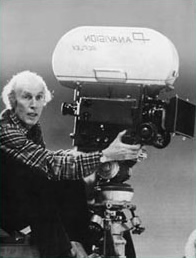
Showing posts with label eric rohmer. Show all posts

2011-12-02

Pauline à la plage

Pauline à la plage (Eric Rohmer, 1983)


Pauline, 15 years old, is going with her cousin Marion at Granville to spend the rest of her summer vacation at the Beach. This coming of age story is one of Rohmer’s most famous film. The fact that it depicts the summer vacation of two young women and especially the nakedness of the steamy body of Marion may have a certain attraction to the audience. However, Rohmer’s approach to adult relationships, their love affairs and sexual intercourses represents many of his favourite elements to work with in his most successful plots.

In the case of Pauline à la plage, Pauline is the witness of the many intercourses and visions of the adults about love and how they want it, perceive it, and deal with it. On one side you have the recently divorced Marion who cannot love her husband because she knows him too well and she needs to be burning of love. On the other side you have Pierre who’s deeply in love with Marion and who is her masculine reflection. He prefers to fall in love a person he knows and he can trust, a person who is familiar and reliable. Opposed to him Henri, Marion’s other pretendant and the one she will fall for is the representation of the libertine always ready to charm a new woman and be free of obligations and fidelity. Pauline will also have an adventure be she will learn more from the many intercourse between the adults around her. Rohmer represented the adults in their relationships like people who don’t know how to act and react to the confrontations and how they can hurt others and especially themselves. It seems like if everyone isn’t with the right person and how when on a vacation a person you don’t have anything in common can attract you just because it is something new or different. Well, we people go in vacation they want to be disoriented not only by the scenery or from their normal lives but also by the people that surrounds them. It is really clear that Marion is still looking for what she is and what she wants. At the same time, Pauline knows exactly what she wants.

I kind of liked the breezy feeling of the film and even if some scenes sound false the rhythm feels right. As Rohmer always did there are not a sparse scene or a useless technique used. Minimalist and simple are his films and it makes them efficient and easy to catch at the first glimpse.

Top films of Eric Rohmer by LMdC


1. Ma nuit chez Maud (1969)
2. Die Marquise von O (1976)
3. L’amour l’après-midi (1972)
4. Le genou de Claire (1970)
5. La collectionneuse (1967)
6. La boulangère de Monceau (1963)
7. La carrière de Suzanne (1963)
8. La femme de l’aviateur (1981)
9. L’ami de mon amie (1987)
10. Conte d’automne (1998)
11. Le rayon vert (1986)
12. Le signe du lion (1962)
13. Conte d’hiver (1992)
14. Conte de printemps (1990)
15. Conte d’été (1996)

I still need to see : Perceval (1978) Le beau mariage (1982) Pauline à la plage (1983) Full Moon in Paris (1984) L’arbre, le maire et la médiathèque (1993) Rendez-vous de Paris (1995) The Lady and the Duke (2001) Triple Agent (2003) La romance d’Astrée et Céladon (2006)

2011-04-05

L'ami de mon amie

L'ami de mon amie (Eric Rohmer, 1987)


Rohmer's films have been discussed a lot in the last year on this blog. Well, except the fact that he died earlier in 2010, I have been digging into this master's filmography.

L'ami de mon amie, is a part of Rohmer's 1980's films. It's interesting as a whole but at some points it gets in its conventionnalism. Also a little too much on the melodramtic and on the romantically side of things. This little film evolves around the availability and the disponibility of lovers and their match. Two friends date men they are not so muchy interested in but they need their company. When things get mixed up they discover that the we're mismatched and that the right couple can hurt their friendship but also help them gain a passionnate love story.

The "mise en scène" of L'ami de mon amie is very simple and this is a trend that Rohmer tended to go to with his films of the 1980's. Like if with his aging he took the same approach as Yasujiro Ozu took with his latter films of subtle beauty and simple narratives. Well, it helps the feature to gain authenticity by almost hidding the fact that the viewer sits as the same as the camera. Without much of camera movement and absent multi angles editing. A one shot deal when possible.

Despite, its interesting facets, L'ami de mon amie, isn't as original and well spirited as Le rayon vert or many other of Rohmer's films.

2010-12-30

Rohmer vs Breillat or (LA MARQUISE D'O vs UNE VIEILLE MAITRESSE)

Die marquise von O (Eric Rohmer, 1976) ****1/2 (Excellent)


Une vieille maitresse (Catherine Breillat, 2007) *** (Good)

This opposition between those two costume dramas is a circumstance only justifiable by the screening of those two in the same period of time for me. As you will read with this review, I deeply appreciated one more than the other. In both case, we are far from masterpieces of the genre like Stanley Kubrick's Barry Lyndon or Luchino Visconti's Il gattopardo.

Une vieille maitresse
is the most recent of the two films and is from a well known director mostly recognize for her films depicting non-simulated explicit sex scenes. Well, besides the sex and provocation, Catherine Breillat has made interesting films as well. Her film discussed here has its scenes of sex that are set in the sequence of events of the film.They make this costume drama unlike any other made before.

The so-called sex scenes in Breillat's film gets us close to the characters that most often than not are far from us with the time and the sentiments. But the scenes of a costume drama without the costumes is a drama and sex is sex. Still, the motivations of the characters are passionate and we have to immerge ourselves into the time period to understand why the husband must marry a wealthier woman and deny his love for his mistress. This is a smptuous film that cannot bear to the ankle of Sofia Coppola's Marie Antoinette for example, even if Breillat film is more explicit on the delured side. Coppola's take on costume drama is sugar-sweet and progressive.

On the other side, Rohmer's Marquise of O is a somptuous film based on redemption, secrets, and true love. It feels more like a costume drama almost entirely shot in studios and brilliantly acted especially by the marvellous Bruno Ganz. The story feels like it was written and shot at the time the story is set. We have a feeling of being in this era and to fully understand the motivations of the characters. The photography is natural and realistic almost only natural light and terra cota colors. Some purist of Rohmer's work could say that this is his most unRohmerian film but I would say that it's one of his most interesting: many different techniques and and one of his few films tobe set in another time than the present. I like when directors impose to themselves obstacles and challenges. Like Hitchcock did with Lifeboat or Rope for example. Here, Rohmer even shot in German.

As for costume dramas or historical films, I'm kind of a little bored by the whole process and I think directors like Sofia Coppola and Catherine Breillat were great choices to try to bring something completely different to the screens. Well, as it succeded in Coppola's case I think that Breillat's effort needed more punch or a better plot to keep us awake between the soft-core sequences of Asia Argento's belle-laide body. As for Rohmer, the winner of this confrontation, we see a master holding the wheel with a sure hand and a brilliant cast. On every level, Marquise d'O offers what I call a film that represents what filmmaking should be; a strong story, well shoot, with sincere emotions that gives a grand spectacle.

2010-12-17

La femme de l'aviateur (1981)

La femme de l'aviateur (Eric Rohmer, 1981)

A minimalist film from Eric Rohmer, La femme de l'aviateur, tells the story of François (Philippe Marlaud) and Anne (Marie Rivière) a couple that has very common problems. He works by night, she works all day, Anne wants to live alone and is very independant. She also recently ended an affair with an aviator. François is insecure and he wants to have a normal relationship with Anne.

This simple but beautiful film by Rohmer sums Mies Van Der Rohe most infamous line: Less is more! With so few scenes the film has something particular about it. It's simple and beautiful as life itself.

But beware it's a very talky film and the few scenes are only rythmed by the long dialogues. Eric Rohmer's films depicts intellectuals with common lives. His movies are for initiates and Woody Allen fans can have some interest in his films too. I would be surprised to see one day one of his films on the Top 250 of IMDb. But his fans are dedicated to his films. I must say that I am becoming one.

2010-12-07

Le signe du lion (1959)

TSPDT Greatest Films #936 Le signe du lion (Eric Rohmer, 1959)

Eric Rohmer's first feature film is not his most interesting effort but still worth the look. Pierre, an American musician living in Paris on the hand of his wealthier friends receives a telegram telling him that he inherited from a rich aunt. A while after, he receives another invoice telling him that finally he doesn't inherit anymore. Having already spent all of his money celebrating the good news he doesn't have a cent when he hears the bad one. Meanwhile, his rich friends are all out of Paris on vacation, so he crashes on the street begging and living like a poor.

His poverty is represented with him wandering in the streets with a violon that gets more and more annoying as long as the films goes. The violon tune reminds of a Chaplinesque violon used to illustrate poverty and hunger. Despite, reminding some Antionionesque loneliness, Le signe du lion seems long and unmastered. The actors could have been directed with more disciplin and the film doesn't have this French New Wave energy and freshness one could hope to discover with a French film of 1959, i.e. À bout de souffle, Les 400 coups. I would recommend Eric Rohmer's Six Moral Tales before going for Le signe du lion even if it's a film to see to fully understand Eric Rohmer's "parcours".

2010-11-30

La carrière de Suzanne (1963)

La carrière de Suzanne (Eric Rohmer, 1963)


Second part of the Six Moral Tales by Eric Rohmer, shot in the same year than La boulangère de Monceau, La carrière de Suzanne is in my opinion the lesser effort of the series. I kind of like how the tale is narrated but the "moral" isn't as interesting as in the other films. In Le genou de Claire, you have the elder man of 35 years old trying to seduce younger women, in La collectionneuse you have the man refusing advances from a "man eater" woman but falling in love while constantly refusing, and in L'amour l'après-midi you have the married man falling in love with another woman and escaping his life with a parallel life.

La carrière de Suzanne, is about a man who's in love with the girlfriend (Suzanne) of his best friend. The best friend is a selfish idiot who uses and disrespects Suzanne. The narrator will refuse to live his love with Suzanne because his friendship is dear to him and also because he seems to avoid it. This is the story of a subtle love triangle that will never evolve from apart of being unsaid.

Even if I think Eric Rohmer can hit, he can also miss and I think that La carrière de Suzanne is the lowest element of the Six Moral Tales. Meanwhile, I gave it a 4 out of 5 stars, compared to many films it's a very good offering, but in the great ensemble of the Six Moral Tales it's the lesser one.

2010-11-24

L'amour, l'après-midi (1972)

TSPDT Greatest Films #972 L'amour, l'après-midi (Eric Rohmer, 1972)


The final chapter of Eric Rohmer's Six Moral tales, L'amour l'après-midi, depicts a happily married man with children that gradually lower his guard in front of the many advances of an old friend. Chloe, the reappearing friend begins by simply filling Frederic's "ennui" in the afternoon. Besides, completely refusing the presence of Chloe he takes really care of her but their relationship take some predictable turns. Until the last moment Frederic feels the attraction for Chloe (a passion that will not last) but his love for his wife is so much stronger (love that can stay for his lifetime). Like the other moral tales, L'amour, l'après-midi works more on the suggestive side of things and only evokes the "cliché" always until the last moment. The dream sequence includes the three actress from the preceding moral tale, Le genou de Claire. It's a little redap of and a funny link between both films.
 
The images, from Nestor Almendros, are sublime and the many outside shots in the streets of Paris are simply beautiful. The Moral tales were made at the end of the 1960's and the beginning of the 1970's but the images don't reflect their time, they seem timeless. I wonder if Woody Allen watched those films before making Annie Hall and Manhattan, and all his other films, because we really feel that Rohmer's wrinting may probably have influenced Allen's dialogues in some way.

The Six Moral tales are a landmark not only for the French Cinema but for the History of filmmaking. In screenwriting class, every student must have seen at least one of the Six Moral tales.

2010-11-22

Le genou de claire (1970)

TSPDT Greatest Films #385 Le genou de Claire (Eric Rohmer, 1970)


One of the most sensual offering of Eric Rohmer's Moral tales. Le genou de Claire tells the story of Jérôme, a diplomat living for a month in the villa of his family in Switzerland near the Leman Lake. He mets one of his closest friend, Aurora a writer that convinces Jérôme to flirt with Laura and then he choose by himself to extend the play or simply by his own curiosity to seduce Claire, Laura's older sister.

This film would have had never seen the light of day if it was made today. The weirdness of the relationship between Jérôme, 35 years and Laura, 16 years old gives us a little uneasiness to care for the succes of the relationship. On some level, we actually are relieve to learn that there was no attraction, but the images are still weird. The first half of the film is all about Jérôme and Laura. But when Claire appears, the sexual desire is more palpable and the shots of Claire's knee and the rest of her body too, are very sensual and attractive. The strenght of the situations is fully exploited with the fact that the viewer knows that Jérôme is strongly appealed by Claire's knee. Rohmer undresses her knees and it appears in every frame of the scenes she is in.

Like the other Rohmer films I had the opportunity to see, there are lots and lots of dialogue. French films probably earn their stereotype of being laborious on the talks because of Rohmer only. Don't read me wrong, I love this kind of blabbering that reminds me of a Woody Allen or the Before Sunrise/Before Sunset duet by Richard Linklater. On the visual level, this is by far his most beautiful film, filled with images of nature and colorful outdoors. It's fact, Rohmer loved to shot in exteriors and I think that he simply mastered those scenes.

I am ashamed to say that I am discovering Rohmer's oeuvre and I think that this is way too late after his death earlier this year. In respect I will check everyone of them and report back my thoughts on every of them.

2010-11-18

La boulangère de Monceau (1963)

La boulangère de Monceau (Eric Rohmer, 1963)


This nice little short also known as the first part of Rohmer's Six Moral Tales is told like a short story. The plot, a young man of Paris is captivated by a beautiful stranger he often met on the street. One day he decides to approach her and ask her to go out. But, their path won't cross again for a while. His life, is dedicated to the moment they will meet again, but time passes and he got bored of waiting so everyday he grabs a shortbread cookie in a little bakery. He agreeds to flirt with the little baker girl and slowly develops a relationship with her. The same day that the baker accepts a date, the stranger reappears...

Rohmer's moral tales are all narrated by the main character of each film and they have this literary feel to them. Their characters are often students or artists and the storyline is often about love and the beginning of relationships. La boulangère de Monceau is an excellent setting for the rest of the serie, it may have been your host's favorite one yet.

Obviously, this a film of the French New Wave and it feels a lot like one. The jump-cuts, the amateurish actors and the many wandering characters in many exterior scenes, well the film is set entirely in exteriors. The use of a beautiful black and white with many long and unedited shots and few multiple angles in the scenes. A trademark, or if you prefer, a trend very French New Wave. La boulangère de Monceau, has this something about it that gives you a good time and makes you ask for the following tales of Eric Rohmer.

2010-11-04

La collectionneuse (1967)

TSPDT Greatest Films #836 La collectionneuse (Eric Rohmer. 1967)

 The fourth part of Rohmer's Six Moral Tales is one of the most sublime film ever made. The story is very simple. Adrien is about to realize his most profound dream: open an Art gallery. But before actually do it he takes vacations in a country house imposing so basic rules to his living. This is somewhat like volountary simplicity. Living of nothing and getting up and sunrise and having a priest-like way of life. He shares the villa with friend called Daniel that agreed to live by the same rules. There is another person living with them in the house: Haydée an easy girl that lives the opposite of Adrien, she is out all night and meeting many men every night. At first, Adrien and Daniel despite Haydée's way of life and they will confront her by first refusing to sleep with her and contempting her. Obviously as Adrien continues to refuse to have sex with Haydée he will slowly fall in love with her.

The simplicity of the story sets you off and like Rohmer's other films it takes some time to understand where he wants to lead us. The storytelling of the story with Adrien as the narrator helps the viewer to understand and apreciate the somtimes confusing acts of seduction and love depicted on the screen. One of the many interesting facets of it is the way how everything is consciensly narrated by the protagonist of the story and how he finally accepts his sentiments towards the girl that in first place he contempted.

La collectionneuse is a film that can rightfully describe the camera-pen the French New Wave talked about. The film goes like a classic novel and the images are the support to the text. This is like an inversion of the classic way films were shot.

Having only seen two (Ma nuit chez Maud & La collectionneuse) of the Six Moral Tales by Rohmer I am looking forward to discover the rest of the tales. I actually enjoyed both very much and couldn't decide now which I prefred. Which one Moral Tale is your favorite?

2010-09-25

Rohmer's Le rayon vert

TSPDT Greatest Films #679 Le rayon vert (Eric Rohmer, 1986)


The death of Eric Rohmer in early 2010 made me realize that I don't know anything about him and/or having see any of his films. The day after his death I saw Ma nuit chez Maud that I completely adored. Lately this summer I offered myself a DVD Boxset of his entire oeuvre. I didn't knew with which film I should have continued my discovery of his work. Well, I think it was too early for me to watch Le rayon vert.

Le rayon vert is a very unsettling film because of its lack of concrete action and its annoying lead character incarnated by Marie Rivière. Delfine, has seen her vacations plans turned down by the let down of her friend. She has no plans and it buzzes her to travel alone. Some friends invite her but her behavior and her constant insatisfaction makes her change plans many times until she goes at the beach alone. They she met a Swedish young woman and once again she goes away escaping all human encounters. The morning after she met a young man that she suddently falls in love with. With a headbutt she decides to travel with him and live a magic moment from a Jules Verne book, the observation of the green ray.

Apart the last fifteen to twenty minutes of the film, the other hour is only a setlement for us to feel a little happy for Deflfine when she accepts the presence of someone other than herself... This self centered, egoist character only annoys the viewer by her constant complains. I would have liked to read some explanations about the intentions of Rohmer's film.

Following this viewing my duty will be to watch the precending films of Rohmer's oeuvre. I will probably watch Le signe du lion, his first film. What's your favorite Rohmer film?


2010-01-17

Ma Nuit chez Maud de Eric Rohmer - Retrospective

TSPDT Greatest Films #282 Ma Nuit chez Maud (Éric Rohmer, 1969)


To pay a tribute to one of the most important figures of the French New Wave and of the French film history, Eric Rohmer who just past away this week I choose to discover and analyze one of his better works; Ma Nuit chez Maud (1969). Being the third chapter of his six moral tales, Maude's is for many his best film. I'm ashamed to say that before saturday January 16 2010 I haven't seen one of his films. This short essay will try to pay tribute and erase my lack knowledge about Rohmer's films.

Ma Nuit chez Maude starts with the main character, Jean-Louis, played by Jean-Louis Trintignant as a 34 years old engineer converted to catholicism who believes in true love. He will confront his ideas with one of his best friends Vidal and the newly encountered Maude (who are by the way atheists) about their visions on life, love, friendship, Pascal, and marriage. In the beginning, Jean-Louis says he's gonna marry Françoise but slowly falls in love with Maude and her straightforward attitude.

The narrative of the film stands close to Antonioni's style, who is a big influence on Rohmer's films, with clean and shaky black and white images, long takes; especially with the openning sequence which is silent for nearly five minutes. The scenes are long and the characters slowly enter and exit the image. This is clearly a French New Wave film but many aspects of it are taken from the Italian Neorealism especially. Rohmer tried to minimize the narrative effects on his story to take his Film as near as possible to reality. That's something, the Italian Neorealists wanted to do, especially Antonioni and Rossellini. On the other hand, Rohmer was openly a supporter of the work of Hitchcock and Hawks as the other directors of the French New Wave. Some narrative elements of Ma Nuit chez Maude are directly taken from those two masters who never hesitated to insert long silent sequences into their films. The esthetic and the camera angles are clearly influenced by the films of Alfred Hitchcock. The story of the film may seem a little flaw with its slow rythm but when it all comes into place it fits perfectly. I think it may have influenced Sofia Coppola on her Lost in Translation.

I didn't really got into Ma Nuit chez Maud in the first place. But after a little refexion and some time I think it's a very deep film that enters your mind and works on it. In this case, I think it's a great movie especially when afterward it continues to grow within you. I'm proud of letting myself immerge into Eric Rohmer's filmography.

Reposez en paix Monsieur Rohmer!

A film Retrospective by Michaël Parent

2010-01-11

R.I.P. Eric Rohmer


"This is according to his producer, who told AFP and French 24. The arthouse French filmmaker, screenwriter, and film critic (who was born Maurice Scherer), was 89. One of the key figures of the post-war New Wave cinema movement and an articulate and literate devotee of purism in the moviemaking, Rohmer made 24 films over a period of 50 years. His main works include his cycle of films Six Moral Tales: shot in 1969, the third in the series, Ma Nuit Chez Maud, brought him international recognition."

Read full article at: http://www.deadline.com/hollywood/r-i-p-eric-rohmer/


Eric Rohmer a director I must say I have never seen a single movie of the 24 he has made... I'll correct that as soon as I can put my hands on his films any suggestions with which one of his films I should start?


Eric Rohmer est un cinéaste dont je n'ai vu malheureusement aucun de ses 24 films... Je vais, aussitôt que possible, tenter de corriger cette situation! Avez-vous des suggestions avec quels films devrais-je m'initier à son travail?
Related Posts Plugin for WordPress, Blogger...